

Why You’ll Love This Sourdough Bread
Sourdough bread brings a sense of accomplishment right into your kitchen, especially if you’re just starting out. This simple recipe uses everyday items like flour, water, and a bit of starter to create something delicious and satisfying. You’ll appreciate how it fits into a busy schedule with its hands-off rising time, leaving you more time for family or hobbies.
One of the best parts is the health boost it offers. Made from natural ingredients, sourdough bread is full of probiotics that aid digestion and help keep things balanced in your body. As a vegan option with no preservatives, it’s a smart choice for those watching their diet or seeking plant-based meals. Plus, it’s adaptable for various needs, like gluten-free versions with easy swaps.
The taste is what really sets sourdough apart think tangy flavors and a chewy inside with a crispy crust that makes every bite enjoyable. Whether you’re pairing it with toppings for breakfast or using it for sandwiches, this bread adds a special touch to any meal. It’s perfect for beginners because the steps are straightforward and forgiving, helping you build confidence in baking.
The Convenience of Home Baking
If you’re a busy parent or student, this sourdough bread recipe is a game-changer. It requires minimal active time, mostly just mixing and waiting, so you can multitask easily. Imagine pulling a warm loaf from the oven after dinner, ready for the next day’s lunch. This approach makes baking feel less like a chore and more like a fun part of your routine.
For food enthusiasts and baking newcomers, the process teaches patience and rewards you with fresh bread. It’s versatile enough for party hosts to serve at gatherings or for seniors looking for simple, nourishing foods. The recipe’s flexibility lets you experiment without stress, turning ordinary ingredients into something extraordinary.
Jump to:
- Why You’ll Love This Sourdough Bread
- The Convenience of Home Baking
- Essential Ingredients for Sourdough Bread
- Why These Ingredients Work
- How to Prepare the Perfect Sourdough Bread: Step-by-Step Guide
- Shaping and Baking the Loaf
- Dietary Substitutions to Customize Your Sourdough Bread
- Adapting for Special Diets
- Mastering Sourdough Bread: Advanced Tips and Variations
- How to Store Sourdough Bread: Best Practices
- FAQs: Frequently Asked Questions About Sourdough Bread
- Can I use all-purpose flour instead of bread flour for sourdough bread?
- How long should I let sourdough dough rise before baking?
- What is the best way to store sourdough starter if I bake infrequently?
- How can I get a good crust on my sourdough bread without a Dutch oven?
- Why is my sourdough bread dense, and how can I fix it?
- Sourdough Bread
- Ingredients
- Instructions
- Last Step:
- Notes
- Nutrition
- Did you make this recipe?
Essential Ingredients for Sourdough Bread
Gathering the right ingredients is the first step to making great sourdough bread at home. Using precise measurements ensures your loaf turns out just right, with the perfect texture and flavor. Here’s a complete list based on a reliable recipe that keeps things simple and effective.
- 150g bubbly, active sourdough starter
- 250g warm water, preferably filtered
- 25g olive oil
- 500g bread flour (not all-purpose flour)
- 10g fine sea salt
- Fine ground cornmeal or parchment paper for baking
These ingredients create a vegan, straightforward loaf that relies on basic, plant-based components for natural fermentation. Bread flour is key for the best structure, as it helps build elasticity in the dough. If you want to adjust for dietary needs, consider substitutions like gluten-free blends, but stick to the weights for accuracy.
Why These Ingredients Work
Each element plays a role in the bread’s success. The sourdough starter acts as the leavening agent, giving that signature tang, while warm water helps activate it quickly. Olive oil adds moisture for a softer crumb, and salt enhances the taste without overpowering. Using a digital scale, as recommended, makes measuring easy and precise for consistent results. For more tips on baking, check out our sourdough tips guide on the site.
How to Prepare the Perfect Sourdough Bread: Step-by-Step Guide
Making sourdough bread at home is easier than it seems, even for beginners. Start by mixing your ingredients in a large bowl to create the base dough. This recipe takes about 14 hours total, with most of that time for rising, so you can fit it around your day. Follow these steps closely for the best outcome, and remember to be patient as the dough works its magic.
First, in a large bowl, mix 250g warm water, 150g bubbly active sourdough starter, and 25g olive oil. Then add 500g bread flour and 10g fine sea salt, stirring with a fork or dough whisk until the flour is fully absorbed and the dough looks rough and shaggy. Cover the bowl and let it rest for 30 minutes to 1 hour for the autolyse, which helps the gluten develop without much effort. This step makes the dough easier to handle later.
After the rest, shape the dough into a rough ball and cover it with lightly oiled plastic wrap or place it in a lidded container. Let it bulk rise at room temperature, around 68 70°F, until it’s puffy and nearly doubled, which could take 3 to 12 hours depending on your kitchen’s warmth. Optionally, do 1-2 sets of stretch and folds 30 minutes into the rise to strengthen the dough and improve its texture.
Shaping and Baking the Loaf
Once the bulk rise is done, divide the dough if you’re making two loaves or keep it whole. Shape each part into a round boule by folding the sections toward the center, then turning to build surface tension, flipping seam side down, and rotating to tighten. Prepare a Dutch oven by dusting it with fine ground cornmeal or lining it with parchment paper, then place the dough inside for a second rise of 30 minutes to 1 hour until it’s puffy.
Preheat your oven to 450°F during this time. Score the dough with a shallow slash about 2 3 inches long to let steam escape. Bake with the lid on at 400°F for 20 minutes, then remove the lid and bake uncovered for another 40 minutes until the crust is deep golden brown and the internal temperature hits 205 210°F. Cool the bread on a wire rack for at least 1 hour before slicing to get the best texture. For more detailed advice, visit this external guide on sourdough basics.

Dietary Substitutions to Customize Your Sourdough Bread
One of the joys of sourdough is how easy it is to tweak for different needs. If you’re gluten-sensitive, swap bread flour with a gluten-free blend to keep the dough workable. Adding protein-rich seeds like chia can make it heartier, giving your bread a nice boost without changing the core recipe much.
For flavor twists, try mixing in roasted garlic or fresh herbs like rosemary. These additions bring a seasonal vibe, perfect for fall or summer meals. Vegetable purees, such as pumpkin, add moisture and a subtle sweetness, making the bread versatile for sweet or savory dishes. Remember, small changes can lead to big improvements in taste and nutrition.
Adapting for Special Diets
If you’re aiming for a low-calorie version, use whole wheat flour to increase fiber and help with blood sugar control. For vegan bakers, this recipe is already a great fit since it uses only plant-based items. Always test your substitutions in small batches to see how they affect the rise and texture, ensuring your bread stays light and airy.
Mastering Sourdough Bread: Advanced Tips and Variations
Once you’re comfortable with the basics, you can level up your sourdough game with some pro techniques. The autolyse method, where you rest the dough after mixing, builds gluten naturally and cuts down on kneading time. Keeping an eye on fermentation temperature helps control the flavor so aim for a cooler spot for a tangier taste.
Try fun variations by adding olives or nuts to the dough for a unique crunch. Whole grain flours can add depth and make the bread more filling. When it comes to presentation, scoring the dough with patterns not only looks cool but also helps it rise evenly in the oven.
| Tips for Better Bread | Why It Helps |
|---|---|
| Use stretch and folds | Strengthens dough for a higher rise |
| Refrigerate overnight | Improves flavor through slow fermentation |
| Monitor temperature | Ensures even baking and perfect crust |
For make-ahead options, prepare the dough the night before and chill it in the fridge. This way, you can bake fresh bread in the morning with little effort. Experimenting keeps baking exciting and personalized to your tastes.
How to Store Sourdough Bread: Best Practices
Proper storage keeps your sourdough fresh and tasty for as long as possible. Wrap it in a breathable cloth or paper bag and keep it at room temperature for up to 2 days to preserve that crispy crust. If you need it to last longer, freezing is a great option just slice it first and store in airtight bags.
To reheat, pop slices in the oven at 180°C for 5-10 minutes to bring back that fresh-baked feel. For meal prep, portion out the bread ahead of time to avoid waste and make mornings smoother. These methods help maintain the bread’s quality, whether you’re storing it for a week or longer.
FAQs: Frequently Asked Questions About Sourdough Bread
Can I use all-purpose flour instead of bread flour for sourdough bread?
Yes, you can use all-purpose flour to make sourdough, but the texture will differ slightly from bread made with bread flour. Bread flour has more protein, which helps develop gluten and gives the bread a chewier texture. When using all-purpose flour, you may need to adjust the water amount between 250-325 grams to get the right dough consistency. Recipes designed specifically for all-purpose flour can lead to better results if you don’t have bread flour.
How long should I let sourdough dough rise before baking?
The rising time varies depending on room temperature, starter strength, and hydration, ranging anywhere from 3 to 12 hours. Warmer environments speed up fermentation (2-4 hours in summer), while cooler conditions require longer rises (up to 12 hours in winter). Instead of strictly timing, look for visual cues—the dough should be puffy and soft, but it does not necessarily need to double in size before baking.
What is the best way to store sourdough starter if I bake infrequently?
If you bake just a few times a month, keep your sourdough starter in the refrigerator and feed it about once a week. Before baking, take it out and feed at room temperature to reactivate the yeast. For daily baking, maintain it at room temperature with daily feedings for consistent strength.
How can I get a good crust on my sourdough bread without a Dutch oven?
If you don’t have a Dutch oven, use any oven-safe pot with a lid that can tolerate high heat (around 450°F). Alternatively, bake your bread on a parchment-lined baking sheet and create steam in the oven by placing a pan of hot water on the bottom rack or spritzing the oven walls with water just before baking. Steam helps develop a crispy, golden crust.
Why is my sourdough bread dense, and how can I fix it?
Dense bread often results from underdeveloped gluten, insufficient fermentation, or incorrect hydration. Ensure you perform stretch and folds during bulk fermentation to strengthen the dough. Use an active starter that passes the float test, and avoid over- or under-proofing by watching the dough’s appearance rather than relying solely on time. Adjust hydration carefully—too little water makes the dough stiff, leading to dense bread.
Sourdough Bread
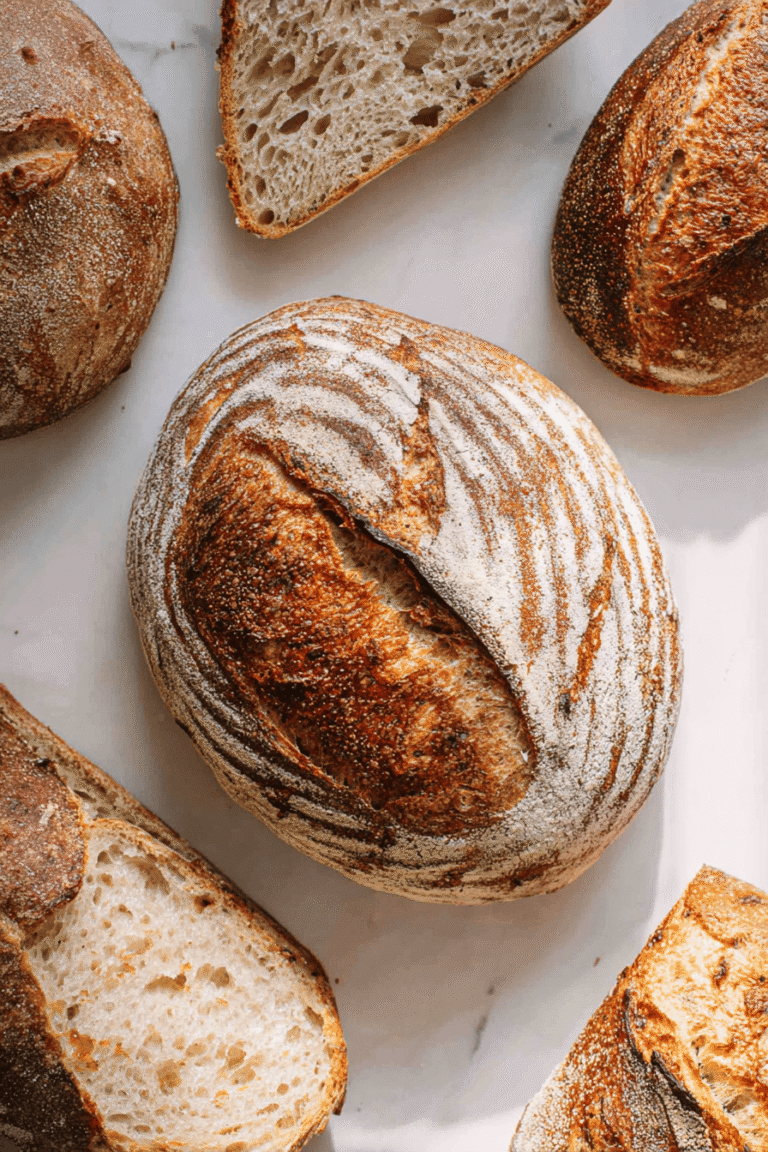
🍞 Learn to bake delicious homemade sourdough bread with this beginner-friendly guide featuring simple steps and basic ingredients.
🌾 Discover how natural fermentation and careful technique can yield a flavorful, crusty loaf perfect for any meal.
- Total Time: 14 hours
- Yield: 1-2 loaves
Ingredients
– 150g bubbly, active sourdough starter
– 250g warm water, preferably filtered
– 25g olive oil
– 500g bread flour (not all-purpose flour)
– 10g fine sea salt
– Fine ground cornmeal or parchment paper for baking
Instructions
1-First: in a large bowl, mix 250g warm water, 150g bubbly active sourdough starter, and 25g olive oil. Then add 500g bread flour and 10g fine sea salt, stirring with a fork or dough whisk until the flour is fully absorbed and the dough looks rough and shaggy. Cover the bowl and let it rest for 30 minutes to 1 hour for the autolyse, which helps the gluten develop without much effort. This step makes the dough easier to handle later.
2-After the rest, shape the dough into a rough ball and cover it with lightly oiled plastic wrap or place it in a lidded container. Let it bulk rise at room temperature, around 68 70°F, until it’s puffy and nearly doubled, which could take 3 to 12 hours depending on your kitchen’s warmth. Optionally, do 1-2 sets of stretch and folds 30 minutes into the rise to strengthen the dough and improve its texture.
3-Shaping and Baking the Loaf Once the bulk rise is done, divide the dough if you’re making two loaves or keep it whole. Shape each part into a round boule by folding the sections toward the center, then turning to build surface tension, flipping seam side down, and rotating to tighten. Prepare a Dutch oven by dusting it with fine ground cornmeal or lining it with parchment paper, then place the dough inside for a second rise of 30 minutes to 1 hour until it’s puffy.
4-Preheat your oven to 450°F during this time. Score the dough with a shallow slash about 2 3 inches long to let steam escape. Bake with the lid on at 400°F for 20 minutes, then remove the lid and bake uncovered for another 40 minutes until the crust is deep golden brown and the internal temperature hits 205 210°F. Cool the bread on a wire rack for at least 1 hour before slicing to get the best texture. For more detailed advice, visit this external guide on sourdough basics.
Last Step:
Please leave a rating and comment letting us know how you liked this recipe! This helps our business to thrive and continue providing free, high-quality recipes for you.Notes
⚖️ Use a digital scale for accurate ingredient measurement.
⏳ Autolyse rest helps gluten develop without kneading.
🔥 Baking in Dutch oven traps steam for better crust and rise.
- Prep Time: 10-15 minutes
- Total Time: 13-14 hours
- Cook Time: 1 hour
- Category: Bread, Baking
- Method: Mixing, Fermenting, Baking
- Diet: Vegan
Nutrition
- Serving Size: 1 slice