
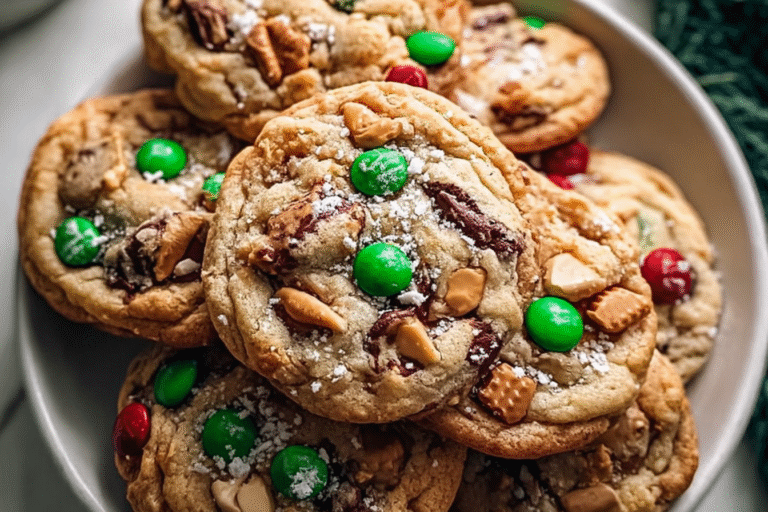
Why You’ll Love This Kitchen Sink Cookies
Kitchen Sink Cookies stand out as a go-to treat for anyone craving a delightful mix of flavors and textures without much hassle. These cookies combine sweet and salty elements for a cookie that truly lives up to its name. Let’s look at what makes this recipe so appealing.
- Ease of preparation: Kitchen Sink Cookies come together in just about 25 minutes from start to finish, making them perfect for busy days. With simple steps like mixing everyday ingredients and a quick bake in the oven, even beginners can whip up a batch without feeling overwhelmed. This simplicity means you can enjoy homemade treats on a weeknight without spending hours in the kitchen.
- Health benefits: These cookies offer some nutritional perks, like a balance of carbs for energy and a touch of protein to keep you full. Each cookie has about 5g of protein and dietary fiber that aids digestion, while ingredients such as pretzels add essential minerals like sodium and potassium. Plus, using real butter and fresh eggs provides vitamins that support overall wellness, making this a smarter choice for occasional indulgences.
- Versatility: Kitchen Sink Cookies adapt easily to different dietary needs, allowing you to swap ingredients for gluten-free flour or plant-based butter if needed. This flexibility lets families with various preferences enjoy the same treat, whether you’re baking for a crowd or adjusting for a specific diet. It’s a recipe that fits into many lifestyles while keeping the fun flavors intact.
- Distinctive flavor: The blend of semi-sweet and milk chocolate chips with caramel and pretzels creates a unique sweet and salty taste that sets these kitchen sink cookies apart. Every bite delivers gooey chocolate, crunchy pretzels, and melted caramel, offering a satisfying contrast that keeps you coming back. This mix makes the cookies feel special and exciting, perfect for sharing or a personal treat.
Including kitchen sink cookies in your baking routine adds variety and joy. For more baking inspiration, check out our recipe for funfetti Greek yogurt muffins to explore other easy treats.
Jump to:
- Why You’ll Love This Kitchen Sink Cookies
- Essential Ingredients for Kitchen Sink Cookies
- How to Prepare the Perfect Kitchen Sink Cookies: Step-by-Step Guide
- First Step: Preheat and Prep Ingredients
- Second Step: Melt the Butter
- Third Step: Mix in Wet Ingredients
- Fourth Step: Incorporate Dry Ingredients
- Fifth Step: Add Mix-Ins and Shape Cookies
- Sixth Step: Bake and Cool
- Dietary Substitutions to Customize Your Kitchen Sink Cookies
- Protein and Main Component Alternatives
- Vegetable, Sauce, and Seasoning Modifications
- Mastering Kitchen Sink Cookies: Advanced Tips and Variations
- Pro Cooking Techniques
- Flavor Variations
- Presentation Tips
- Make-Ahead Options
- How to Store Kitchen Sink Cookies: Best Practices
- FAQs: Frequently Asked Questions About Kitchen Sink Cookies
- How do Kitchen Sink Cookies compare to Panera’s version?
- What size should I make Kitchen Sink Cookies for the best results?
- Are there nuts in traditional Kitchen Sink Cookies or can I add them?
- What ingredients typically go into Kitchen Sink Cookies?
- How should I store Kitchen Sink Cookies to keep them fresh?
- Kitchen Sink Cookies
- Ingredients
- Instructions
- Last Step:
- Notes
- Nutrition
- Did you make this recipe?
Essential Ingredients for Kitchen Sink Cookies
Gathering the right ingredients is key to making delicious kitchen sink cookies. Below is a detailed list of everything you need, complete with precise measurements and a quick explanation of each one’s role. This ensures your cookies turn out just right every time.
- ½ cup unsalted butter (1 stick) – Provides the base for a rich, creamy dough that helps create the soft and chewy texture.
- ½ cup light brown sugar, packed – Adds moisture and a deep molasses flavor that enhances the cookies’ sweetness and chewiness.
- ¼ cup granulated sugar – Balances the flavors with a crisp sweetness and helps with browning during baking.
- 1 large egg – Acts as a binder to hold the dough together and contributes to the cookies’ tender structure.
- 2 teaspoons vanilla extract – Infuses the dough with warm, aromatic notes that elevate the overall taste.
- ½ teaspoon baking soda – Helps the cookies rise and spread, giving them a perfect flat shape.
- ¼ teaspoon salt – Enhances all the flavors and balances the sweetness with a subtle savory touch.
- 1 ¼ cups all-purpose flour (scooped and leveled) – Forms the structure of the cookies, making them sturdy yet soft; ensure it’s measured accurately for the best results.
- 1 cup chocolate chips (half semi-sweet, half milk chocolate; half chopped) – Delivers gooey chocolate goodness; chopping half ensures even distribution for a mix of textures.
- ½ cup chopped pretzels – Adds a salty crunch that contrasts with the sweet elements, making each bite exciting.
- ½ cup chopped caramels (about 10 caramels) – Brings in a chewy, melted caramel flavor that melts perfectly into the cookies.
For special dietary options, consider these swaps to customize your kitchen sink cookies:
- Vegan: Use ½ cup of plant-based butter instead of unsalted butter and a flax egg (1 tablespoon ground flaxseed mixed with 3 tablespoons water) in place of the large egg to keep the dough binding without animal products.
- Gluten-free: Substitute the all-purpose flour with a 1:1 gluten-free flour blend to maintain the same texture and structure.
- Low-calorie: Opt for reduced-sugar alternatives like a sugar substitute for the granulated and brown sugars, but adjust quantities to avoid affecting the cookie’s spread and chewiness.
Using these synonyms like “cookie mix-ins” helps keep things natural while focusing on kitchen sink cookies preparation.
How to Prepare the Perfect Kitchen Sink Cookies: Step-by-Step Guide
Making kitchen sink cookies at home is straightforward and fun, with steps that lead to soft, chewy results. Start by gathering your ingredients and tools for an organized bake. This guide uses the provided recipe to ensure success, including tips for adapting to dietary preferences along the way. Total preparation and baking time is about 25 minutes, so you’ll have fresh cookies soon.
First Step: Preheat and Prep Ingredients
Begin by preheating your oven to 350°F to get it ready for baking. For dietary adaptations, if you’re making gluten-free cookies, double-check your flour blend. Next, chop half of the chocolate chips into small pieces and break up the pretzels; this step ensures even distribution and can be adjusted for nut-free preferences by skipping any additions.
Second Step: Melt the Butter
Melt the ½ cup unsalted butter in a microwave-safe bowl for 30-60 seconds until it’s fully melted and hot. If you’re opting for a vegan version, use plant-based butter here to keep things simple. Stir in the ½ cup packed light brown sugar and ¼ cup granulated sugar until well combined, letting the mixture cool if it’s too hot to avoid cooking the egg prematurely.
Third Step: Mix in Wet Ingredients
Add the 1 large egg and 2 teaspoons vanilla extract to the sugar-butter mix, stirring until smooth. For those with egg allergies, a flax egg works as a great substitute to maintain the dough’s consistency. This step is crucial for binding the ingredients, so mix thoroughly before moving on.
Fourth Step: Incorporate Dry Ingredients
Mix in the ½ teaspoon baking soda and ¼ teaspoon salt, then add the 1 ¼ cups all-purpose flour gradually until fully incorporated. The dough will be wet and sticky at first, but it firms up as it rests; for gluten-free adaptations, use the specified flour blend to keep the texture light. Let the dough sit for 1-2 minutes, adding 1-2 tablespoons of flour if it’s too runny for better handling.
Fifth Step: Add Mix-Ins and Shape Cookies
Fold in the chopped and whole chocolate chips, ½ cup chopped pretzels, and ½ cup chopped caramels to distribute them evenly. For low-calorie options, consider using less sugar or sugar-free chips here. Line a baking sheet with parchment paper, scoop the dough into ¼ cup portions, roll into balls, and flatten them into thick discs for that chewy finish; pressing extra pretzels on top adds more crunch if desired.
Sixth Step: Bake and Cool
Bake the cookies for 12-14 minutes until the edges are slightly brown and the centers look a bit underbaked for that soft texture. If adjusting for smaller sizes, reduce bake time to about 7-8 minutes for 1-tablespoon scoops. After baking, reshape the cookies if needed by gently pressing with a bowl, then cool them on the pan for 10-15 minutes before transferring to a wire rack.
These steps make kitchen sink cookies easy to master, with options for personalization. Remember to check the nutritional info per cookie: around 399 calories, 58g carbs, and 17g fat, which can vary with substitutions. For more cookie ideas, try this guide on chewy chocolate chip cookies.

Dietary Substitutions to Customize Your Kitchen Sink Cookies
Protein and Main Component Alternatives
When swapping main ingredients in kitchen sink cookies, focus on options that keep the structure intact. For instance, replace the egg with a flax egg for vegan diets, ensuring the dough binds well without altering the chewy texture. If flour is an issue, use almond flour as a gluten-free alternative, which adds a nutty flavor while maintaining the cookies’ form; this works great for those with wheat sensitivities.
Vegetable, Sauce, and Seasoning Modifications
For mix-ins, swap pretzels with crushed nuts or seeds to add crunch without the salt, ideal for low-sodium diets. Seasonings can be adjusted by reducing sugar for a less sweet version or adding spices like cinnamon for a seasonal twist. Caramel chunks might be replaced with fresh fruit pieces for a lighter option, helping adapt to preferences like low-calorie needs while keeping the kitchen sink cookies flavorful.
Mastering Kitchen Sink Cookies: Advanced Tips and Variations
Pro Cooking Techniques
To get the best results with kitchen sink cookies, chop half the chocolate chips small for even melting and a richer color in each bite. Use hot melted butter to achieve that flat, chewy shape instead of a puffy one, and let the dough rest to firm up if it’s too sticky. These techniques ensure your cookies turn out perfect every time.
Flavor Variations
Experiment with different mix-ins like adding marshmallows or peanut butter chips for a new twist on kitchen sink cookies. You could also try seasonal flavors, such as pumpkin spice in the fall, to create unique combinations that suit your taste. These changes keep the recipe versatile and exciting for repeated bakes.
Presentation Tips
For a polished look, press extra pretzels on top before baking or sprinkle sea salt flakes for added flair. Serve them on a simple platter to highlight their texture, making them ideal for parties or gifts. This elevates the cookies’ appeal without much extra effort.
Make-Ahead Options
Prepare the dough in advance and freeze it for up to a month, thawing as needed for quick baking. This strategy works well for busy schedules, allowing you to bake fresh kitchen sink cookies on demand. For more ideas, visit mini Earl Grey honey scones for similar prep tips.
How to Store Kitchen Sink Cookies: Best Practices
Proper storage keeps your kitchen sink cookies fresh and tasty. For short-term needs, follow these guidelines to maintain quality.
- Refrigeration: Store cookies in an airtight container in the fridge for up to 3-5 days; this keeps them soft, especially if they include caramel that might harden.
- Freezing: Freeze baked cookies for up to 1 month by placing them in a freezer bag; thaw at room temperature to preserve the chewy texture, as caramel can get firm when frozen.
- Reheating: Warm cookies in the oven at 300°F for a few minutes to restore their softness without making them dry.
- Meal Prep Considerations: Batch cook and store portions for easy snacks, adjusting for dietary needs like using gluten-free ingredients ahead of time.
For more storage insights, check out caramel chocolate chip cookies recipe tips.

FAQs: Frequently Asked Questions About Kitchen Sink Cookies
How do Kitchen Sink Cookies compare to Panera’s version?
Kitchen Sink Cookies made at home can be softer and chewier compared to Panera’s cookies, which some locations tend to overbake causing them to become dry and hard. Homemade recipes often allow for better control over baking time and ingredients, resulting in a cookie that stays moist with gooey centers. Adjusting bake time and ingredient ratios can help replicate or improve upon the texture of Panera’s version.
What size should I make Kitchen Sink Cookies for the best results?
Using a ¼-cup scoop of dough typically yields cookies about 4 inches in diameter, which are thick and chewy. For larger cookies closer to Panera’s size, a ⅓-cup scoop works well. Keep in mind that altitude and humidity levels can affect baking, so you may need to adjust scoop size or bake time slightly for consistent results.
Are there nuts in traditional Kitchen Sink Cookies or can I add them?
Traditional Kitchen Sink Cookies, including Panera’s version, usually do not contain nuts. However, you have the flexibility to customize your cookies by adding nuts such as walnuts or pecans, or other mix-ins like marshmallows, peanut butter chips, or chopped candy to suit your taste preferences.
What ingredients typically go into Kitchen Sink Cookies?
Kitchen Sink Cookies get their name from the variety of mix-ins included. Standard ingredients are flour, butter, sugars, eggs, vanilla, baking soda, and salt. Mix-ins often include chocolate chips, peanut butter chips, butterscotch chips, M&Ms, pretzels, oats, and sometimes coconut flakes. This combination creates a rich, varied texture and flavor.
How should I store Kitchen Sink Cookies to keep them fresh?
To maintain softness and freshness, store Kitchen Sink Cookies in an airtight container at room temperature. Placing a slice of bread inside the container can help retain moisture. If you want to keep them longer, freeze the cookies individually on a baking sheet, then transfer to a freezer bag; thaw at room temperature before serving.
Kitchen Sink Cookies
🍪 This Kitchen Sink Cookies recipe combines a variety of sweet and salty ingredients for a rich, chewy cookie experience.
🥨 Enjoy every bite packed with chocolate shards, caramel chunks, and crunchy pretzels for a delightful mix of flavors and textures.
- Total Time: 25 minutes
- Yield: About 12 cookies
Ingredients
– ½ cup unsalted butter (1 stick) Provides the base for a rich, creamy dough that helps create the soft and chewy texture.
– ½ cup light brown sugar, packed Adds moisture and a deep molasses flavor that enhances the cookies’ sweetness and chewiness.
– ¼ cup granulated sugar Balances the flavors with a crisp sweetness and helps with browning during baking.
– 1 large egg Acts as a binder to hold the dough together and contributes to the cookies’ tender structure.
– 2 teaspoons vanilla extract Infuses the dough with warm, aromatic notes that elevate the overall taste.
– ½ teaspoon baking soda Helps the cookies rise and spread, giving them a perfect flat shape.
– ¼ teaspoon salt Enhances all the flavors and balances the sweetness with a subtle savory touch.
– 1 ¼ cups all-purpose flour (scooped and leveled) Forms the structure of the cookies, making them sturdy yet soft; ensure it’s measured accurately for the best results.
– 1 cup chocolate chips (half semi-sweet, half milk chocolate; half chopped) Delivers gooey chocolate goodness; chopping half ensures even distribution for a mix of textures.
– ½ cup chopped pretzels Adds a salty crunch that contrasts with the sweet elements, making each bite exciting.
– ½ cup chopped caramels (about 10 caramels) Brings in a chewy, melted caramel flavor that melts perfectly into the cookies.
Instructions
1-First Step: Preheat and Prep Ingredients Begin by preheating your oven to 350°F to get it ready for baking. For dietary adaptations, if you’re making gluten-free cookies, double-check your flour blend. Next, chop half of the chocolate chips into small pieces and break up the pretzels; this step ensures even distribution and can be adjusted for nut-free preferences by skipping any additions.
2-Second Step: Melt the Butter Melt the ½ cup unsalted butter in a microwave-safe bowl for 30-60 seconds until it’s fully melted and hot. If you’re opting for a vegan version, use plant-based butter here to keep things simple. Stir in the ½ cup packed light brown sugar and ¼ cup granulated sugar until well combined, letting the mixture cool if it’s too hot to avoid cooking the egg prematurely.
3-Third Step: Mix in Wet Ingredients Add the 1 large egg and 2 teaspoons vanilla extract to the sugar-butter mix, stirring until smooth. For those with egg allergies, a flax egg works as a great substitute to maintain the dough’s consistency. This step is crucial for binding the ingredients, so mix thoroughly before moving on.
4-Fourth Step: Incorporate Dry Ingredients Mix in the ½ teaspoon baking soda and ¼ teaspoon salt, then add the 1 ¼ cups all-purpose flour gradually until fully incorporated. The dough will be wet and sticky at first, but it firms up as it rests; for gluten-free adaptations, use the specified flour blend to keep the texture light. Let the dough sit for 1-2 minutes, adding 1-2 tablespoons of flour if it’s too runny for better handling.
5-Fifth Step: Add Mix-Ins and Shape Cookies Fold in the chopped and whole chocolate chips, ½ cup chopped pretzels, and ½ cup chopped caramels to distribute them evenly. For low-calorie options, consider using less sugar or sugar-free chips here. Line a baking sheet with parchment paper, scoop the dough into ¼ cup portions, roll into balls, and flatten them into thick discs for that chewy finish; pressing extra pretzels on top adds more crunch if desired.
6-Sixth Step: Bake and Cool Bake the cookies for 12-14 minutes until the edges are slightly brown and the centers look a bit underbaked for that soft texture. If adjusting for smaller sizes, reduce bake time to about 7-8 minutes for 1-tablespoon scoops. After baking, reshape the cookies if needed by gently pressing with a bowl, then cool them on the pan for 10-15 minutes before transferring to a wire rack.
Last Step:
Please leave a rating and comment letting us know how you liked this recipe! This helps our business to thrive and continue providing free, high-quality recipes for you.Notes
🍫 Chop half the chocolate chips finely to get chocolate shards in every bite and a nice cookie color.
🧈 Use real butter melted until hot for a signature flat, chewy cookie instead of a puffy one.
🍬 Tear caramel pieces instead of using caramel bits for better melting and texture in the cookies.
- Prep Time: 10 minutes
- Cook Time: 12-14 minutes
- Category: Dessert
- Method: Baking
- Cuisine: American
- Diet: Vegetarian
Nutrition
- Serving Size: 1 cookie
- Calories: 399
- Sugar: 39g
- Sodium: 239mg
- Fat: 17g
- Saturated Fat: 10g
- Unsaturated Fat: 4g
- Trans Fat: 1g
- Carbohydrates: 58g
- Fiber: 1g
- Protein: 5g
- Cholesterol: 49mg