
Why You’ll Love This Crispy Rolled Pork
This recipe for crispy rolled pork is a game-changer for anyone who wants a meal that feels special without a lot of hassle in the kitchen. It’s packed with juicy meat and that irresistible crackling skin that makes every bite a delight. Plus, it’s loaded with benefits that make it a great choice for families juggling busy schedules and health goals, like offering lean protein to keep you full and energized all day.
Think about how easy it is to prepare this method uses simple steps that even beginners can follow, turning out a dish that’s tender inside and crunchy on the outside. You’ll appreciate the health aspects too, as crispy rolled pork provides essential nutrients while letting you tweak things for a lighter touch. Whether you’re cooking for a crowd or just one, this recipe adapts beautifully and delivers flavors that stand out, making it a go-to option for everyday meals or weekend feasts.
One of the best parts is its versatility; you can swap in different herbs or sides to match what you have on hand, keeping things fresh and exciting. Crispy rolled pork brings a unique mix of textures that pairs well with veggies or grains, helping you create balanced plates without much effort. It’s no wonder this dish has become a favorite among home cooks looking for something satisfying yet straightforward to make.
Jump to:
- Why You’ll Love This Crispy Rolled Pork
- Essential Ingredients for Crispy Rolled Pork
- How to Prepare the Perfect Crispy Rolled Pork: Step-by-Step Guide
- Roasting and Monitoring the Pork
- Finishing and Serving the Dish
- Dietary Substitutions to Customize Your Crispy Rolled Pork
- Mastering Crispy Rolled Pork: Advanced Tips and Variations
- How to Store Crispy Rolled Pork: Best Practices
- FAQs: Frequently Asked Questions About Crispy Rolled Pork
- What cut of pork is best for making crispy rolled pork with crackling?
- How should I prepare the pork skin to get it crispy after roasting?
- Do I need to score the pork skin before roasting to get crispy crackling?
- What is the best roasting method to keep the pork tender and the crackling crispy?
- How should leftover crispy pork crackling be stored and reheated?
- Crispy Rolled Pork
- Ingredients
- Instructions
- Last Step:
- Notes
- Nutrition
- Did you make this recipe?
Essential Ingredients for Crispy Rolled Pork
Gathering the right ingredients is key to making this crispy rolled pork recipe turn out just right. Below is a complete list based on what you’ll need, with exact measurements to ensure success in your kitchen. Each item plays a role in creating that perfect balance of tender meat and bubbly crackling skin.
- 1 boneless skin-on pork shoulder with skin intact (typically around 2-3 kg for roasting)
- Cooking or kosher salt (sufficient amount to heavily and evenly salt the pork skin)
- Black pepper (to taste)
- Fennel seeds or other herbs/spices of choice (to taste)
- Olive oil (enough to rub onto the pork flesh and drizzle over the skin)
- 1 garlic bulb, halved horizontally
- 2 onions, halved (brown, white, or red)
- 250 ml dry white wine, alcoholic or non-alcoholic cider, or water as a last resort
- Flour (roughly 2 tablespoons for thickening gravy)
- 500 ml low sodium chicken broth or stock
These ingredients make it simple to adjust for what you have at home, like choosing your favorite herbs or using water if wine isn’t available. Remember, using cooking or kosher salt specifically helps get that crispy skin just right.
How to Prepare the Perfect Crispy Rolled Pork: Step-by-Step Guide
Getting started with crispy rolled pork is all about taking it one step at a time to build that amazing flavor and texture. Begin by patting the pork skin dry with paper towels; if you can, leave it uncovered in the fridge overnight to make it extra dry for the best crackling. This simple prep helps the skin crisp up without any fuss, setting the stage for a delicious meal that everyone will love.
Next, preheat your oven to around 220°C (430°F), then plan to drop it down to a slower 160°C (320°F) or 140°C fan for even cooking. Season the flesh side of the pork with cooking or kosher salt, black pepper, and fennel seeds, rubbing it in with olive oil to lock in those flavors. Drizzle olive oil over the skin and sprinkle on a generous amount of salt to cover it fully this is what gives you that bubbly, golden crackling you’re after.
Roasting and Monitoring the Pork
Place the garlic and onion halves cut side up in a roasting pan, then rest the pork on top with the skin side up for even heat distribution. Carefully pour 250 ml of dry white wine, cider, or water into the pan, making sure not to wet the skin to keep it crisp. Roast uncovered at the lower temperature for about 2 ½ hours, which allows the meat to become tender and juicy inside.
Around 1 ½ hours in, use scrunched balls of foil to level the pork skin, helping it cook evenly and form perfect crackling. If the pan starts drying out, add a bit more liquid, and check for any unsalted spots on the skin, adding more salt as needed to ensure everything crisps up nicely. This step is crucial for avoiding uneven results and getting that satisfying crunch.
Finishing and Serving the Dish
After the slow roast, crank the oven up to 250°C (485°F) or the highest it goes for a final 30 minutes of cooking. Rotate the pan halfway through and use foil patches secured with toothpicks to cover any parts of the crackling that might cook too fast, preventing burning and ensuring an even finish. Once it’s done, take the pork out and let it rest loosely tented with foil for 15-20 minutes so the juices settle without softening the crackling.
Slice the pork using a serrated knife for clean cuts, and serve it with gravy made from the pan drippings remember to pour the gravy beside the crackling to keep it crunchy. For the gravy, skim off 3 tablespoons of fat from the roasting pan into a saucepan, then strain the remaining pan juices, pressing out the garlic and onion before discarding the solids.
Heat the fat and add about 2 tablespoons of flour, cooking it briefly to make a roux, then gradually whisk in 500 ml of chicken broth and the strained juices while stirring to avoid lumps. Simmer until it thickens to a syrup-like consistency, about 3 minutes, and season with salt and pepper to taste. The total prep time is about 15 minutes, with cooking taking around 3 hours and 20 minutes, plus resting making this a rewarding project for any day of the week. For more ideas on pairing, check out this chocolate dessert recipe that could complement your meal nicely.
| Step | Action | Tips |
|---|---|---|
| 1-2 | Dry and preheat | Fridge-drying overnight works wonders |
| 3-4 | Season and oil | Use plenty of salt for crispiness |
| 5-7 | Roast initially | Keep skin dry and uncovered |
| 8-12 | Monitor and finish | Level with foil and rest properly |

Dietary Substitutions to Customize Your Crispy Rolled Pork
Making crispy rolled pork work for different diets is easier than you might think, with simple swaps that keep the dish tasty and inclusive. For instance, if you’re aiming for a leaner option, substitute the pork with turkey breast or chicken thighs to cut down on fat while maintaining that satisfying crunch. The key is to keep the skin preparation the same for the best results, ensuring everyone at the table can enjoy it.
When it comes to herbs and spices, feel free to swap fennel seeds with other options like thyme or rosemary to match your taste or what’s in your pantry. For those following a gluten-free path, use gluten-free flour in the gravy and double-check that your broth is certified gluten-free to avoid any issues. You can also add seasonal veggies, such as roasted carrots, to boost nutrition without changing the core of the recipe.
Remember, for vegan versions, textured vegetable protein or marinated tofu can stand in for the pork, rolled up just like the original. Adjust cooking times based on the size of your main ingredient, and always taste as you go to perfect the flavors. This flexibility makes crispy rolled pork a versatile favorite for baking enthusiasts looking to experiment.
Adapting recipes like this one shows how cooking can be fun and accessible for all, no matter your dietary needs.
Mastering Crispy Rolled Pork: Advanced Tips and Variations
Taking your crispy rolled pork to the next level involves some smart techniques that make a big difference in the final dish. For starters, don’t score the skin too deeply as it can lead to rubbery spots; instead, focus on keeping it dry and salted for that perfect bubble. Use a meat thermometer to hit the ideal internal temperature, ensuring the meat stays tender while the skin gets irresistibly crunchy.
Experiment with flavors by adding spices like smoked paprika to create your own twist, or try different herbs for a fresh vibe each time. When it comes to presentation, slice the pork thinly and arrange it on a platter with herbs and lemon for a look that wows your guests. If you’re prepping ahead, roll and season the pork a day early, then roast it fresh to save time without losing that magic crunch.
- Always use a flat boneless pork shoulder for the best crackling.
- Slow roast first to keep the meat juicy, then blast with high heat.
- Cover faster-crisping areas with foil to prevent burning.
These tips, like learning about pork’s nutrition, can help you refine your skills and make this recipe even better over time.
How to Store Crispy Rolled Pork: Best Practices
Storing your crispy rolled pork the right way helps keep it tasty for leftovers. Pop it in an airtight container in the fridge for up to 3 days to maintain freshness. For longer storage, wrap it tightly in foil and freeze it for up to 3 months, so you can enjoy it later without losing flavor.
When reheating, use the oven at 350°F (175°C) to keep the crackling crisp and the meat moist. Meal prep smart by cooking extra, slicing it up, and portioning for easy meals, but always store parts separately to preserve texture. This approach makes crispy rolled pork a convenient option for busy days.
FAQs: Frequently Asked Questions About Crispy Rolled Pork
What cut of pork is best for making crispy rolled pork with crackling?
The ideal cut for crispy rolled pork crackling is boneless pork shoulder with the skin on. This cut offers enough fat and connective tissue to keep the meat tender while the skin crisps up well. Avoid pork loin as it tends to dry out and does not produce good crackling. Ask your butcher to remove any netting and ensure the skin is dry and flat for the best results.
How should I prepare the pork skin to get it crispy after roasting?
To achieve crispy pork skin, start by patting the skin dry thoroughly with paper towels. For best results, leave the skin uncovered in the fridge overnight to dry out further. Before roasting, rub a generous, even layer of salt onto the skin to draw out moisture and promote bubbly, crisp crackling.
Do I need to score the pork skin before roasting to get crispy crackling?
Scoring the pork skin is not required and can sometimes cause uneven cooking or rubbery patches if the cuts go too deep. If the skin is already scored, it’s fine to roast as is. However, a dry, salted, unscored skin can produce excellent crackling without any scoring at all.
What is the best roasting method to keep the pork tender and the crackling crispy?
Roast the pork at a low temperature (around 160°C or 320°F) for about 2 to 2.5 hours to tenderize the meat. Then increase the oven to a high temperature (250°C or 485°F) for the last 30 minutes. This two-step roasting process allows the meat to remain juicy while the skin crisps up perfectly.
How should leftover crispy pork crackling be stored and reheated?
Separate the crackling from the meat and store it uncovered in an airtight container to maintain its crispiness. To reheat, place the crackling in an oven at 160°C (320°F) for 5 to 8 minutes until hot and crisp again. Avoid reheating crackling in the microwave with the meat, as this makes it soggy.
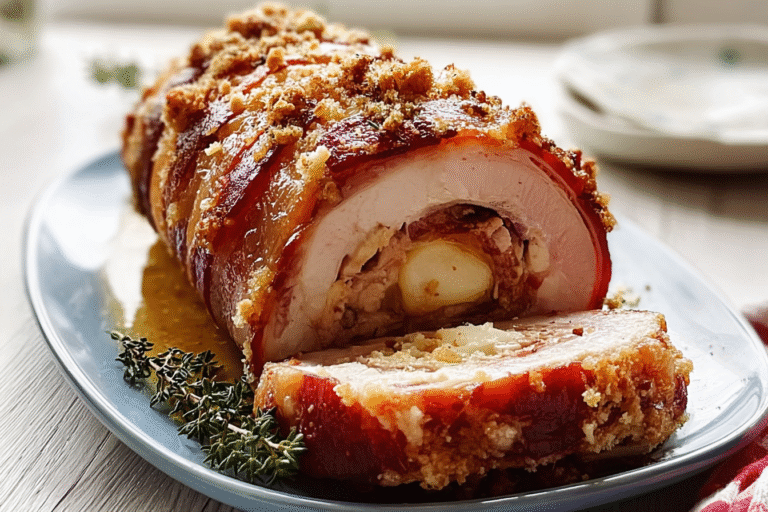
Crispy Rolled Pork
🍖 Experience restaurant-quality pork roast with perfectly crispy, bubbly crackling that shatters with every bite
🔥 Master the art of slow-roasting followed by high-heat finishing for tender, juicy meat that melts in your mouth
- Total Time: 3 hours 50 minutes
- Yield: 10 servings
Ingredients
– 1 boneless skin-on pork shoulder with skin intact (typically around 2-3 kg for roasting)
– Cooking or kosher salt (sufficient amount to heavily and evenly salt the pork skin)
– Black pepper (to taste)
– Fennel seeds or other herbs/spices of choice (to taste)
– Olive oil (enough to rub onto the pork flesh and drizzle over the skin)
– 1 garlic bulb, halved horizontally
– 2 onions, halved (brown, white, or red)
– 250 ml dry white wine, alcoholic or non-alcoholic cider, or water as a last resort
– Flour (roughly 2 tablespoons for thickening gravy)
– 500 ml low sodium chicken broth or stock
Instructions
1-Getting started with crispy rolled pork is all about taking it one step at a time to build that amazing flavor and texture. Begin by patting the pork skin dry with paper towels; if you can, leave it uncovered in the fridge overnight to make it extra dry for the best crackling. This simple prep helps the skin crisp up without any fuss, setting the stage for a delicious meal that everyone will love.
2-Next, preheat your oven to around 220°C (430°F), then plan to drop it down to a slower 160°C (320°F) or 140°C fan for even cooking. Season the flesh side of the pork with cooking or kosher salt, black pepper, and fennel seeds, rubbing it in with olive oil to lock in those flavors. Drizzle olive oil over the skin and sprinkle on a generous amount of salt to cover it fully this is what gives you that bubbly, golden crackling you’re after.
3-Place the garlic and onion halves cut side up in a roasting pan, then rest the pork on top with the skin side up for even heat distribution. Carefully pour 250 ml of dry white wine, cider, or water into the pan, making sure not to wet the skin to keep it crisp. Roast uncovered at the lower temperature for about 2 ½ hours, which allows the meat to become tender and juicy inside.
4-Around 1 ½ hours in, use scrunched balls of foil to level the pork skin, helping it cook evenly and form perfect crackling. If the pan starts drying out, add a bit more liquid, and check for any unsalted spots on the skin, adding more salt as needed to ensure everything crisps up nicely. This step is crucial for avoiding uneven results and getting that satisfying crunch.
5-After the slow roast, crank the oven up to 250°C (485°F) or the highest it goes for a final 30 minutes of cooking. Rotate the pan halfway through and use foil patches secured with toothpicks to cover any parts of the crackling that might cook too fast, preventing burning and ensuring an even finish. Once it’s done, take the pork out and let it rest loosely tented with foil for 15-20 minutes so the juices settle without softening the crackling.
6-Slice the pork using a serrated knife for clean cuts, and serve it with gravy made from the pan drippings remember to pour the gravy beside the crackling to keep it crunchy. For the gravy, skim off 3 tablespoons of fat from the roasting pan into a saucepan, then strain the remaining pan juices, pressing out the garlic and onion before discarding the solids.
7-Heat the fat and add about 2 tablespoons of flour, cooking it briefly to make a roux, then gradually whisk in 500 ml of chicken broth and the strained juices while stirring to avoid lumps. Simmer until it thickens to a syrup-like consistency, about 3 minutes, and season with salt and pepper to taste. The total prep time is about 15 minutes, with cooking taking around 3 hours and 20 minutes, plus resting making this a rewarding project for any day of the week. For more ideas on pairing, check out this chocolate dessert recipe that could complement your meal nicely.
Last Step:
Please leave a rating and comment letting us know how you liked this recipe! This helps our business to thrive and continue providing free, high-quality recipes for you.Notes
🍖 Use a flat boneless pork shoulder with skin intact for the best crackling – avoid pork loin or tenderloin as they dry out before good crackling forms
🔥 Ensure the skin is very dry before cooking, ideally fridge-dried overnight – this is crucial for achieving that perfect bubbly texture
⏰ Level the pork skin with foil balls during roasting for even crackling and cover faster-crisping parts with foil patches to prevent burning
- Prep Time: 15 minutes
- Resting Time: 15-20 minutes
- Cook Time: 3 hours 20 minutes
- Category: Main Course
- Method: Roasting
- Cuisine: European
- Diet: Non-vegetarian
Nutrition
- Serving Size: 1 serving (about 344 grams)
- Calories: 746
- Sugar: 2g
- Sodium: 850mg
- Fat: 58g
- Saturated Fat: 22g
- Unsaturated Fat: 30g
- Trans Fat: 0g
- Carbohydrates: 8g
- Fiber: 1g
- Protein: 48g
- Cholesterol: 185mg