
Why You’ll Love This Homemade Cinnamon Rolls
There is nothing quite like the aroma of fresh homemade cinnamon rolls wafting through the house on a lazy weekend morning. This recipe brings the bakery experience right into your kitchen, delivering warm, gooey, and perfectly sweet treats that everyone will adore. Whether you are a seasoned baker or a beginner trying your hand at yeast doughs for the first time, this guide is designed to help you succeed.- Ease of preparation: Many people assume making yeast dough is difficult, but this recipe simplifies the process. With clear instructions and manageable rise times, you can create impressive soft cinnamon rolls without spending all day in the kitchen. The active prep time is only about 30 minutes, leaving you free to enjoy your morning while the dough works its magic.
- Distinctive flavor: This cinnamon rolls recipe strikes the perfect balance between the soft, pillowy dough and the rich, brown sugar cinnamon filling. The addition of heavy cream poured over the rolls before baking creates a luscious, caramel-like bottom layer that makes these copycat cinnabon cinnamon rolls taste better than the mall originals. Topped with a tangy cream cheese frosting, every bite is a decadent delight.
- Versatility: One of the best things about this homemade cinnamon rolls recipe is how adaptable it is. You can customize the filling with nuts or raisins, or adjust the frosting to suit your taste. It is the perfect base for experimentation, ensuring you can make a version that is exactly right for your family.
- Comfort and connection: Baking from scratch is a labor of love that brings families together. Sharing these warm, sticky treats creates moments of connection and joy, turning an ordinary breakfast into a special occasion.
Jump to:
- Why You’ll Love This Homemade Cinnamon Rolls
- Essential Ingredients for Homemade Cinnamon Rolls
- Main Ingredients
- Special Dietary Options
- How to Prepare the Perfect Homemade Cinnamon Rolls: Step-by-Step Guide
- First Step: Activate the Yeast and Mix the Dough
- Second Step: Knead the Dough
- Third Step: First Rise
- Fourth Step: Prepare the Filling
- Fifth Step: Roll and Fill
- Sixth Step: Slice and Second Rise
- Seventh Step: The Cream Secret and Bake
- Final Step: Frost and Serve
- Protein and Main Component Alternatives
- Flour Variations
- Yeast Options
- Vegetable, Sauce, and Seasoning Modifications
- Fillings and Mix-Ins
- Sauce and Frosting Tweaks
- Mastering Homemade Cinnamon Rolls: Advanced Tips and Variations
- Pro Cooking Techniques
- Make-Ahead Options
- How to Store Homemade Cinnamon Rolls: Best Practices
- Refrigeration
- Freezing
- Reheating
- FAQs: Frequently Asked Questions About Homemade Cinnamon Rolls
- What is cinnamon roll filling made of for homemade rolls?
- What temperature should milk be for cinnamon roll dough?
- How do you roll homemade cinnamon rolls?
- How long to bake homemade cinnamon rolls and at what temperature?
- Why aren’t my homemade cinnamon rolls fluffy and how to fix it?
- Homemade Cinnamon Rolls
- Ingredients
- Instructions
- Last Step:
- Notes
- Nutrition
- Did you make this recipe?
Essential Ingredients for Homemade Cinnamon Rolls
Creating the best homemade cinnamon rolls starts with gathering the right components. Each ingredient plays a vital role in building the flavor and texture of the dough, filling, and frosting.Main Ingredients
1 cup warm milk (115 degrees F) 2 1/2 teaspoons instant dry yeast (or one packet) 2 large eggs at room temperature 1/3 cup salted butter (melted or very softened, not over 110 degrees F) 1/2 cup granulated sugar 1 teaspoon salt 4 1/2 cups bread flour (divided) 1/2 cup salted butter (almost melted) 1 cup packed brown sugar 2 tablespoons cinnamon 1/2 cup heavy cream (for pouring over risen rolls) 6 ounces softened cream cheese 1/3 cup softened salted butter 2 cups powdered sugar 1/2 tablespoon maple or vanilla extractSpecial Dietary Options
- Vegan: To make this easy homemade cinnamon rolls recipe vegan, substitute the dairy milk with almond or soy milk, use vegan butter sticks, and swap the eggs for a flax egg or commercial egg replacer. Ensure your cream cheese alternative is vegan-friendly.
- Gluten-free: While bread flour provides the best chew, you can use a 1-to-1 gluten-free baking flour blend. Note that the texture may be slightly denser, and you may need to adjust the liquid content slightly.
- Low-calorie: For a lighter version, you can reduce the amount of butter in the filling and frosting, or use a low-fat cream cheese alternative. However, keep in mind that this will alter the rich texture of the final product.
Did you know? Using bread flour instead of all-purpose flour increases the protein content, which leads to a chewier, more substantial roll that holds up beautifully to the heavy filling.
How to Prepare the Perfect Homemade Cinnamon Rolls: Step-by-Step Guide
Follow these detailed instructions to master the art of making cinnamon rolls from scratch. This method breaks down the process into manageable stages, ensuring a stress-free baking experience.First Step: Activate the Yeast and Mix the Dough
Begin by pouring 1 cup of warm milk (heated to exactly 115 degrees F) into the bowl of a stand mixer. It is crucial that the milk is warm but not hot, or it will kill the yeast. Sprinkle 2 1/2 teaspoons of instant dry yeast (or one packet) on top of the milk and let it sit for about 3 to 4 minutes. You should see the mixture become frothy, indicating that the yeast is active and ready to work. Once the yeast is frothy, add 2 large eggs (at room temperature), 1/3 cup of melted salted butter (ensure it is not over 110 degrees F), and 1/2 cup of granulated sugar to the bowl. Combine these ingredients on a low speed just until they are incorporated. Next, add 1 teaspoon of salt and 4 cups of the bread flour. Mix briefly until a shaggy dough forms, then let the mixture rest for 5 minutes. This rest period allows the flour to hydrate fully.Second Step: Knead the Dough
After the rest, switch to the dough hook attachment. Knead the dough on medium speed for 5 to 7 minutes. Watch the texture carefully; if the dough is sticking to the sides of the bowl excessively, add the remaining 1/2 cup of flour, one tablespoon at a time. The goal is to achieve a dough that is elastic and slightly tacky, pulling away cleanly from the sides of the bowl. Avoid adding too much flour, as a tacky dough results in softer rolls.Third Step: First Rise
Lightly grease a large bowl with butter or cooking spray. Place the kneaded dough inside, turning it once to coat all sides with oil. Cover the bowl with a warm, damp towel or plastic wrap and set it in a warm, draft-free spot. Let the dough rise until it has nearly doubled in size. This typically takes about 30 minutes, but rising times can vary based on the temperature of your kitchen.Fourth Step: Prepare the Filling
While the dough is rising, prepare the filling. In a small bowl, mix 1/2 cup of salted butter (almost melted), 1 cup of packed brown sugar, and 2 tablespoons of cinnamon. Stir until you have a smooth, spreadable paste. This mixture is the heart of the copycat cinnabon cinnamon rolls, providing that signature sweet and spicy swirl.Fifth Step: Roll and Fill
Once the dough has risen, punch it down gently to release the air. Turn it out onto a lightly floured surface. Using a rolling pin, roll the dough out into a large rectangle, approximately 24×15 inches. Try to keep the rectangle as even as possible to ensure uniform baking. Spread the cinnamon sugar filling evenly over the surface of the dough, leaving a small border around the edges. Starting from one of the long edges, roll the dough tightly into a jelly roll. Use your hands to tuck the dough under as you roll to keep it tight. Once rolled, pinch the seam tightly to seal it shut.Sixth Step: Slice and Second Rise
To cut the rolls without squishing them, use a piece of unflavored dental floss. Slide the floss under the roll, cross the ends over the top, and pull quickly to slice through the dough. Cut the log into 12 even slices. Place the slices in a greased 9×13-inch pan. Cover the pan again and let the rolls rise for a second time, about 20 minutes. Preheat your oven to 375°F during this final rise.Seventh Step: The Cream Secret and Bake
This is the secret step that makes these homemade cinnamon rolls truly irresistible. Warm 1/2 cup of heavy cream (do not let it get hot) and gently pour it over the risen rolls, allowing it to seep into the crevices. Place the pan in the oven and bake for 25 minutes. Check them at the 20-minute mark; if the tops are browning too quickly, cover the pan loosely with foil. The rolls are done when they are lightly golden and the internal temperature reaches 190°F.Final Step: Frost and Serve
While the rolls are baking, prepare the frosting. In a bowl, beat 6 ounces of softened cream cheese, 1/3 cup of softened salted butter, 2 cups of powdered sugar, and 1/2 tablespoon of maple or vanilla extract until smooth and creamy. Once the rolls are out of the oven, let them cool slightly in the pan. Spread the generous layer of frosting over the warm rolls. The heat of the rolls will melt the frosting slightly, creating a gooey glaze that seeps into every layer. Serve warm for the ultimate experience.Protein and Main Component Alternatives
Adapting recipes to fit what you have on hand or specific dietary preferences is part of the fun of baking. Here are some alternatives for the main components of this cinnamon rolls recipe.Flour Variations
The recipe calls for bread flour, which has a higher protein content than all-purpose flour. This protein develops gluten, giving the rolls their satisfying chew and structure. If you only have all-purpose flour, you can certainly use it. The rolls will be softer and slightly more cake-like, which many people actually prefer. For a whole grain option, you can substitute half of the bread flour with whole wheat flour. This will add a nutty flavor and extra fiber, though the rolls may be a bit denser. Keep an eye on the liquid levels, as whole wheat flour absorbs more moisture than white flour.
Yeast Options
We use instant yeast in this homemade cinnamon rolls recipe because it can be mixed directly into the dry ingredients without proofing. However, active dry yeast works just as well. If you use active dry yeast, you must dissolve it in the warm milk first and let it sit for about 5 to 10 minutes until it becomes foamy before adding the other ingredients. If you are in a rush or nervous about working with live yeast, you can look for rapid-rise yeast formulas, which are designed to speed up the fermentation process.
Vegetable, Sauce, and Seasoning Modifications
While the classic cinnamon roll is perfect on its own, adding mix-ins or changing the sauce can take these treats to a new level. Think of these modifications as ways to customize the flavor profile for different seasons or holidays.Fillings and Mix-Ins
Think of the filling as your canvas. While cinnamon and brown sugar are the standards, you can add texture and flavor with “vegetable” and fruit components. Chopped pecans or walnuts add a delightful crunch that contrasts with the soft dough. Raisins or dried cranberries offer a burst of tart sweetness. For a fall-inspired twist, try adding diced apples to the filling along with a little extra cinnamon and nutmeg. If you are feeling adventurous, a tablespoon of cocoa powder mixed into the sugar creates a chocolate cinnamon roll that chocolate lovers will adore.
Sauce and Frosting Tweaks
The frosting is the crowning glory. The classic cream cheese frosting is tangy and rich, but you can switch it up. For a sweeter, simpler glaze, you can skip the cream cheese and mix powdered sugar with milk and vanilla extract. If you love maple flavor, increase the maple extract in the frosting or even use real maple syrup in place of some of the powdered sugar. For a savory contrast, try adding a pinch of sea salt to the frosting to create a salted caramel version. You can also infuse the heavy cream poured over the rolls with coffee for a mocha vibe, or use orange zest in the filling for a bright, citrusy note.
Mastering Homemade Cinnamon Rolls: Advanced Tips and Variations
Once you have mastered the basic recipe, use these advanced tips to refine your technique and impress your guests even further. These insights help you move from a good baker to a great one.Pro Cooking Techniques
One of the most common issues bakers face is dry dough. Remember that the dough should be tacky, not dry. If you add too much flour during kneading, the rolls will be tough. Resist the urge to add flour just because your hands feel sticky; a little bench scraper or a light dusting of flour goes a long way. Another pro tip is using unflavored dental floss to cut the rolls. This method squishes the dough less than a knife, ensuring you get tall, round rolls rather than flat ones. For those who want extra softness, increasing the butter in the dough to 1/2 cup results in a richer, more tender bite.
Make-Ahead Options
One of the best features of easy cinnamon rolls is that they can be prepared ahead of time. To make them the night before, follow the recipe up until the second rise. Instead of letting them rise for 20 minutes, cover the pan tightly with plastic wrap and place it in the refrigerator overnight. In the morning, take the pan out and let the rolls sit on the counter while the oven preheats. They will finish rising and come to room temperature as the oven warms up. You may need to add a few extra minutes to the baking time since they are cold going into the oven.
You can also freeze the shaped rolls. Place the sliced rolls on a baking sheet and freeze them until solid. Then, transfer them to a freezer bag. To bake, thaw them overnight in the refrigerator, place them in the pan, and let them rise until doubled before baking as directed.
How to Store Homemade Cinnamon Rolls: Best Practices
Baking a dozen rolls is a wonderful treat, but you might not eat them all in one sitting. Proper storage ensures that your hard work doesn’t go to waste and that you can enjoy a delicious breakfast even on busy weekdays.
Refrigeration
If you plan to eat the rolls within two or three days, store them in an airtight container at room temperature. However, because of the cream cheese frosting, refrigeration is often safer for longer storage. To store in the fridge, place the rolls in a container with a tight-fitting lid. They will stay fresh for up to a week. Keep in mind that refrigeration can sometimes cause bread to dry out slightly, so you may want to warm them up before eating.
Freezing
For long-term storage, freezing is your best option. You can freeze the rolls either baked or unbaked. If freezing baked rolls, let them cool completely without frosting. Wrap them individually in plastic wrap and then place them in a freezer bag. They can be frozen for up to three months. To reheat, thaw them at room temperature and then warm them in the microwave for about 30 seconds or in a 350°F oven for 10 minutes. Frost them after reheating.
Reheating
Nothing beats a warm cinnamon roll. To reheat refrigerated rolls, the microwave is the fastest method. Place a roll on a plate and microwave for 15-20 seconds. For a crispier exterior, wrap the roll in foil and place it in a 350°F oven for 10 minutes. This method helps restore the fresh-baked texture better than the microwave.

FAQs: Frequently Asked Questions About Homemade Cinnamon Rolls
What is cinnamon roll filling made of for homemade rolls?
Cinnamon roll filling for homemade rolls starts with softened butter, brown sugar, and ground cinnamon. Mix 1/2 cup softened butter with 1 cup brown sugar and 2-3 tablespoons cinnamon until smooth and spreadable. Spread this evenly over rolled-out dough, leaving a 1/2-inch border. For extra texture, fold in 1/2 cup raisins, chopped pecans, or walnuts. This simple combo creates the signature sweet, spicy swirl that bakes into gooey layers. Avoid overfilling to prevent leaks during rolling. Prep time is just 5 minutes, and it pairs perfectly with soft yeast dough for bakery-style results at home. (78 words)
What temperature should milk be for cinnamon roll dough?
Warm the milk to 105-115°F (40-46°C) for cinnamon roll dough to activate the yeast without killing it. Use a kitchen thermometer for accuracy—too hot (over 120°F) kills yeast, causing flat rolls; too cold slows rising. Microwave in short bursts or heat gently on the stove, stirring to avoid hot spots. Combine with 2 1/4 teaspoons instant yeast, a pinch of sugar, and let sit 5-10 minutes until foamy. This step ensures fluffy, risen dough in 1-2 hours. Bread flour works best for structure. (92 words)
How do you roll homemade cinnamon rolls?
After the first rise, punch down dough and roll into a 12×18-inch rectangle on a lightly floured surface. Spread cinnamon filling evenly, then tightly roll from the long edge like a jelly roll, pinching seams to seal. Use unflavored dental floss or a sharp knife to cut into 12 even 1.5-inch slices—floss slides under and saws cleanly without squishing. Place cut-side up in a greased 9×13-inch pan, spacing slightly apart. Cover for second rise until doubled, about 30-60 minutes. This method yields uniform, spiral rolls that bake evenly. (104 words)
How long to bake homemade cinnamon rolls and at what temperature?
Bake homemade cinnamon rolls at 375°F (190°C) for 20-25 minutes until golden brown on top and the centers reach 190°F internally. Ovens vary, so start checking at 18 minutes—overbaking dries them out. Pour 1/2 cup heavy cream around rolls 5 minutes before done for extra gooeyness and caramelized bottoms. Cool 10 minutes in pan before frosting. Yields 12 rolls; store airtight up to 2 days or freeze baked rolls up to 3 months. Toothpick test ensures doneness without cutting. Perfect for brunch crowds. (98 words)
Why aren’t my homemade cinnamon rolls fluffy and how to fix it?
Homemade cinnamon rolls lack fluffiness if yeast didn’t activate (check for foam after milk mix) or dough over-floured during kneading, making it dense. Use bread flour for better gluten and rise; all-purpose works but yields softer chew. Knead until smooth and tacky, not dry—add flour sparingly by hand or mixer. Ensure warm proofing spot (75-85°F) for 1-2 hour rises. If flat, proof longer next time. Quick fix: tent foil if browning too fast. Results in tall, pillowy rolls every time. Common with cool kitchens or expired yeast. (96 words)
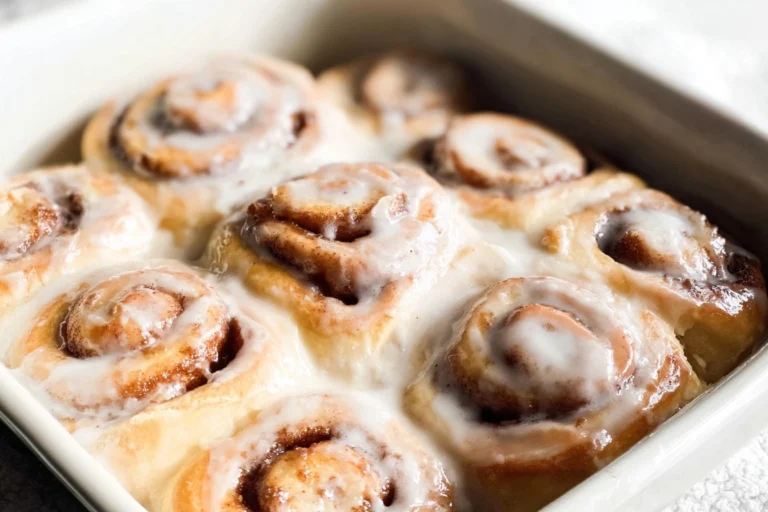
Homemade Cinnamon Rolls
🥐 Fluffy, gooey homemade cinnamon rolls rival bakery copycats with soft dough and swirling cinnamon filling.
🍯 Heavy cream pour creates caramelized, pull-apart tenderness topped with creamy frosting bliss.
- Total Time: 1 hour 45 minutes
- Yield: 12 rolls
Ingredients
– 1 cup warm milk (115 degrees F)
– 2 1/2 teaspoons instant dry yeast (or one packet)
– 2 large eggs at room temperature
– 1/3 cup salted butter (melted or very softened, not over 110 degrees F)
– 1/2 cup granulated sugar
– 1 teaspoon salt
– 4 1/2 cups bread flour (divided)
– 1/2 cup salted butter (almost melted)
– 1 cup packed brown sugar
– 2 tablespoons cinnamon
– 1/2 cup heavy cream (for pouring over risen rolls)
– 6 ounces softened cream cheese
– 1/3 cup softened salted butter
– 2 cups powdered sugar
– 1/2 tablespoon maple or vanilla extract
Instructions
1-First Step: Activate the Yeast and Mix the Dough. Begin by pouring 1 cup of warm milk (heated to exactly 115 degrees F) into the bowl of a stand mixer. It is crucial that the milk is warm but not hot, or it will kill the yeast. Sprinkle 2 1/2 teaspoons of instant dry yeast (or one packet) on top of the milk and let it sit for about 3 to 4 minutes. You should see the mixture become frothy, indicating that the yeast is active and ready to work. Once the yeast is frothy, add 2 large eggs (at room temperature), 1/3 cup of melted salted butter (ensure it is not over 110 degrees F), and 1/2 cup of granulated sugar to the bowl. Combine these ingredients on a low speed just until they are incorporated. Next, add 1 teaspoon of salt and 4 cups of the bread flour. Mix briefly until a shaggy dough forms, then let the mixture rest for 5 minutes. This rest period allows the flour to hydrate fully.
2-Second Step: Knead the Dough. After the rest, switch to the dough hook attachment. Knead the dough on medium speed for 5 to 7 minutes. Watch the texture carefully; if the dough is sticking to the sides of the bowl excessively, add the remaining 1/2 cup of flour, one tablespoon at a time. The goal is to achieve a dough that is elastic and slightly tacky, pulling away cleanly from the sides of the bowl. Avoid adding too much flour, as a tacky dough results in softer rolls.
3-Third Step: First Rise. Lightly grease a large bowl with butter or cooking spray. Place the kneaded dough inside, turning it once to coat all sides with oil. Cover the bowl with a warm, damp towel or plastic wrap and set it in a warm, draft-free spot. Let the dough rise until it has nearly doubled in size. This typically takes about 30 minutes, but rising times can vary based on the temperature of your kitchen.
4-Fourth Step: Prepare the Filling. While the dough is rising, prepare the filling. In a small bowl, mix 1/2 cup of salted butter (almost melted), 1 cup of packed brown sugar, and 2 tablespoons of cinnamon. Stir until you have a smooth, spreadable paste. This mixture is the heart of the copycat cinnabon cinnamon rolls, providing that signature sweet and spicy swirl.
5-Fifth Step: Roll and Fill. Once the dough has risen, punch it down gently to release the air. Turn it out onto a lightly floured surface. Using a rolling pin, roll the dough out into a large rectangle, approximately 24×15 inches. Try to keep the rectangle as even as possible to ensure uniform baking. Spread the cinnamon sugar filling evenly over the surface of the dough, leaving a small border around the edges. Starting from one of the long edges, roll the dough tightly into a jelly roll. Use your hands to tuck the dough under as you roll to keep it tight. Once rolled, pinch the seam tightly to seal it shut.
6-Sixth Step: Slice and Second Rise. To cut the rolls without squishing them, use a piece of unflavored dental floss. Slide the floss under the roll, cross the ends over the top, and pull quickly to slice through the dough. Cut the log into 12 even slices. Place the slices in a greased 9×13-inch pan. Cover the pan again and let the rolls rise for a second time, about 20 minutes. Preheat your oven to 375°F during this final rise.
7-Seventh Step: The Cream Secret and Bake. This is the secret step that makes these homemade cinnamon rolls truly irresistible. Warm 1/2 cup of heavy cream (do not let it get hot) and gently pour it over the risen rolls, allowing it to seep into the crevices. Place the pan in the oven and bake for 25 minutes. Check them at the 20-minute mark; if the tops are browning too quickly, cover the pan loosely with foil. The rolls are done when they are lightly golden and the internal temperature reaches 190°F.
8-Final Step: Frost and Serve. While the rolls are baking, prepare the frosting. In a bowl, beat 6 ounces of softened cream cheese, 1/3 cup of softened salted butter, 2 cups of powdered sugar, and 1/2 tablespoon of maple or vanilla extract until smooth and creamy. Once the rolls are out of the oven, let them cool slightly in the pan. Spread the generous layer of frosting over the warm rolls. The heat of the rolls will melt the frosting slightly, creating a gooey glaze that seeps into every layer. Serve warm for the ultimate experience.
Last Step:
Please leave a rating and comment letting us know how you liked this recipe! This helps our business to thrive and continue providing free, high-quality recipes for you.Notes
🌡️ Warm milk activates yeast perfectly—too hot kills it, too cold slows rise.
🧵 Slice rolls with unflavored dental floss for clean, squish-free cuts.
🥛 Pour heavy cream pre-bake for signature gooey caramelized centers.
- Prep Time: 30 minutes
- Rising: 50 minutes
- Cook Time: 25 minutes
- Category: Breads
- Method: Baking
- Cuisine: American
- Diet: Vegetarian
Nutrition
- Serving Size: 1 roll
- Calories: 618 kcal
- Sugar: 47g
- Sodium: 427mg
- Fat: 28g
- Saturated Fat: 17g
- Unsaturated Fat: 11g
- Trans Fat: 0g
- Carbohydrates: 85g
- Fiber: 1g
- Protein: 7g
- Cholesterol: 109mg