
Why You’ll Love This Grilled Vegetables
If you’re looking for a simple yet delicious way to enjoy fresh produce, grilled vegetables are the perfect solution. This recipe combines vibrant colors, smoky flavors, and incredible versatility into one easy-to-make dish that works as a side or main course. Here’s why this grilled vegetables recipe should become a regular part of your summer cooking rotation:Ease of Preparation
This grilled vegetables recipe comes together in just 25 minutes with minimal prep work. The cooking process is straightforward and requires only basic techniques that even beginners can master. No complicated seasoning blends or lengthy marinating times are needed, making this perfect for busy weeknight dinners or last-minute cookouts. The quick cooking time means you can have a healthy, flavorful dish on the table faster than ordering takeout.Health Benefits
Grilled vegetables pack a powerful nutritional punch while being low in calories. According to health experts, grilling vegetables preserves many of their nutrients while adding unique flavors through the caramelization process. This recipe uses heart-healthy olive oil and features vegetables rich in vitamins, minerals, and antioxidants. It’s naturally gluten-free and suitable for vegetarian diets, making it an excellent choice for those looking to add more plant-based meals to their routine.Versatility
One of the best things about grilled vegetables is their incredible adaptability. They complement almost any main dish, from grilled meats to pasta dishes, or can stand alone as a satisfying vegetarian main course. You can easily customize the vegetables based on what’s in season or available in your refrigerator. The recipe works well for meal prep, as leftovers can be incorporated into salads, wraps, frittatas, or grain bowls throughout the week.Distinctive Flavor
Grilling transforms vegetables by intensifying their natural sweetness and adding a subtle smoky flavor that can’t be achieved through other cooking methods. The combination of charred edges and tender interiors creates a satisfying texture contrast. Simple seasoning with sea salt and freshly ground black pepper allows the true flavors of each vegetable to shine, while the slight caramelization from the grill adds complexity without overwhelming the natural taste.Jump to:
- Why You’ll Love This Grilled Vegetables
- Ease of Preparation
- Health Benefits
- Versatility
- Distinctive Flavor
- Essential Ingredients for Grilled Vegetables
- Main Ingredients
- Special Dietary Options
- How to Prepare the Perfect Grilled Vegetables: Step-by-Step Guide
- First Step: Preparation and Mise en Place
- Second Step: Prepare the Grill
- Third Step: Assemble the Vegetable Skewers
- Fourth Step: Season Before Grilling
- Fifth Step: Grill to Perfection
- Final Step: Finish and Serve
- Dietary Substitutions to Customize Your Grilled Vegetables
- Protein and Main Component Alternatives
- Vegetable, Sauce, and Seasoning Modifications
- Mastering Grilled Vegetables: Advanced Tips and Variations
- Pro Cooking Techniques
- Flavor Variations
- Presentation Tips
- Make-Ahead Options
- How to Store Grilled Vegetables: Best Practices
- Refrigeration
- Freezing
- Reheating
- Meal Prep Considerations
- FAQs: Frequently Asked Questions About Grilled Vegetables
- What are the best vegetables to grill?
- How do you prepare vegetables for grilling?
- What skewers should I use for grilling vegetables?
- How long do you grill vegetable skewers?
- What seasonings and sauces go with grilled vegetables?
- Grilled Vegetables
- Ingredients
- Instructions
- Last Step:
- Notes
- Nutrition
- Did you make this recipe?
Essential Ingredients for Grilled Vegetables
The beauty of this grilled vegetables recipe lies in its simplicity and quality ingredients. Here’s everything you’ll need to create this colorful and flavorful dish: Ingredients: Cooking spray for the grill1 yellow squash, cut into rounds
1 zucchini, cut into rounds
8 ounces cremini mushrooms, stems removed
1 small red onion, cut into 1-inch pieces
1 red bell pepper, cut into 1-inch pieces
1 green bell pepper, cut into 1-inch pieces
1 ear fresh corn, cut into 1-inch rounds
Olive oil for drizzling
Sea salt
Freshly ground black pepper
Optional sauce or dressing for serving
Main Ingredients
- Yellow squash and zucchini – These summer squashes have a mild, slightly sweet flavor that pairs beautifully with the smoky grill taste. They become tender but hold their shape well during cooking.
- Cremini mushrooms – Also known as baby bellas, these mushrooms provide a meaty texture and rich umami flavor that adds depth to the vegetable mix.
- Red onion – When grilled, red onions become sweeter and less pungent, adding a pleasant bite and vibrant color to the skewers.
- Bell peppers – Both red and green bell peppers contribute sweetness, crunch, and brilliant colors that make the dish visually appealing.
- Fresh corn – Grilled corn kernels develop a nutty sweetness that contrasts nicely with the other vegetables, adding both flavor and textural interest.
- Olive oil – A light coating of olive oil helps the vegetables cook evenly, promotes caramelization, and carries the seasonings for even distribution.
- Sea salt and black pepper – These simple seasonings allow the natural flavors of the vegetables to shine while adding essential flavor depth.
Special Dietary Options
| Dietary Need | Adaptations |
|---|---|
| Vegan | This recipe is naturally vegan as written. No substitutions needed. |
| Gluten-free | All ingredients are naturally gluten-free. Just ensure any sauce or dipping options are certified gluten-free. |
| Low-calorie | Use olive oil sparingly or substitute with a light cooking spray. Season generously with herbs to add flavor without calories. |
Remember that fresh, high-quality vegetables will yield the best results. Visit your local farmers market for the most flavorful seasonal produce!
How to Prepare the Perfect Grilled Vegetables: Step-by-Step Guide
Follow these simple steps to create perfectly grilled vegetables with tender-crisp texture and delicious charred flavor. The process is straightforward and the results are impressive, making this recipe a crowd-pleaser for any summer gathering.First Step: Preparation and Mise en Place
Start by washing all vegetables thoroughly under cool running water. Pat them dry with clean paper towels to remove excess moisture, which can cause steaming instead of grilling. Cut the yellow squash and zucchini into uniform rounds about 1/2 inch thick. Remove the stems from the cremini mushrooms and leave them whole if small, or halve if larger. Cut the red onion into 1-inch pieces, separating the layers slightly for even cooking. Seed the bell peppers and cut them into 1-inch squares. Cut the corn into 1-inch rounds, working carefully with a sharp knife. Having all vegetables prepped before you begin heating the grill will make the cooking process smooth and efficient.Second Step: Prepare the Grill
Heat your grill to medium-high temperature, approximately 400-450°F. For gas grills, this usually means setting the burners to medium-high and preheating for 10 minutes with the lid closed. For charcoal grills, arrange the coals so they’re evenly distributed and allow them to ash over before cooking. Once the grill is hot, clean the grates with a grill brush to remove any residue from previous use. Then, coat the grates generously with cooking spray to prevent sticking. This preparation step is crucial for achieving those beautiful grill marks without losing half your vegetables to the fire.Third Step: Assemble the Vegetable Skewers
Thread the prepared vegetables onto 4 metal skewers, alternating colors and types for an attractive presentation. Thread tightly enough that the vegetables won’t spin on the skewer when turned, but leave a small gap between pieces to allow heat to circulate evenly. A pattern like squash, mushroom, onion, pepper, corn repeated throughout the skewer looks beautiful and ensures a variety of flavors in each bite. If you’re using wooden skewers, soak them in water for at least 30 minutes before threading to prevent burning, though metal skewers are recommended for this recipe as they conduct heat and help vegetables cook more evenly.Fourth Step: Season Before Grilling
Place the skewers on a baking sheet or platter and drizzle evenly with olive oil, using about 1-2 tablespoons total. Rotate the skewers to ensure all vegetables get a light coating. Season generously with sea salt and freshly ground black pepper, rotating again to distribute the seasonings evenly. This pre-grilling seasoning is essential for developing flavor and promoting caramelization on the grill. You can also add dried herbs like oregano or thyme at this stage if desired, though keeping it simple often yields the best results. Let the skewers sit for a few minutes while the grill finishes preheating, allowing the seasonings to adhere to the vegetables.Fifth Step: Grill to Perfection
Place the vegetable skewers on the preheated grill, leaving space between them for heat circulation. Grill for 8 minutes on the first side without moving them to allow good char marks to form. After 8 minutes, carefully flip each skewer using tongs or a grill spatula. Grill for another 8 minutes on the second side, for a total cooking time of 16 minutes. The vegetables should be tender when pierced with a fork and lightly charred in spots. If you notice vegetables charring too quickly, move them to a cooler part of the grill or reduce the heat slightly. The goal is tender vegetables with nice char, not burnt pieces.Final Step: Finish and Serve
Remove the skewers from the grill and transfer to a clean serving platter. While still hot, season again with a pinch of sea salt and freshly ground black pepper to taste. You can also drizzle with a bit more olive oil or squeeze fresh lemon juice over the vegetables for added brightness. Serve the grilled vegetables warm with your choice of sauce or dressing on the side. Popular options include tzatziki, pesto, or a simple balsamic glaze. Remove vegetables from skewers if preferred before serving, or present them on the skewers for a festive presentation. These vegetables pair wonderfully with grilled meats or can stand alone as a satisfying vegetarian main course.
Dietary Substitutions to Customize Your Grilled Vegetables
Protein and Main Component Alternatives
While this recipe focuses on vegetables, you can easily add protein to make it a more substantial meal. Thread cubed firm tofu, halloumi cheese, or tempeh between the vegetables for a plant-based protein boost that grills beautifully. For meat-eaters, add chunks of marinated chicken breast, shrimp, or beef to create a complete meal on a skewer. Just remember that protein items may have different cooking times, so you might need to adjust your grilling strategy accordingly. Cubed paneer is another excellent option that adds creaminess and protein while complementing the vegetables’ flavors. Consider also adding cubed sweet potatoes or parboiled new potatoes for extra substance that transforms these skewers from side dish to main course.Vegetable, Sauce, and Seasoning Modifications
Feel free to customize the vegetable selection based on seasonal availability or personal preferences. Eggplant, cherry tomatoes, asparagus, and Brussels sprouts all grill wonderfully and can replace or supplement the vegetables in this recipe. For different flavor profiles, try seasoning with curry powder, cumin, or smoked paprika before grilling. A maple-soy glaze adds Asian-inspired sweetness, while a lemon-herb dressing provides Mediterranean flair. After grilling, toss vegetables with pesto, chimichurri, or a yogurt-based sauce for added creaminess and flavor complexity. If you’re avoiding nightshates, substitute the peppers and tomatoes with additional squash, carrots, or green beans. The possibilities for customization are endless, making this recipe a versatile template for countless delicious variations.Mastering Grilled Vegetables: Advanced Tips and Variations
Pro Cooking Techniques
For the best results, avoid overcrowding the grill, which lowers the temperature and prevents proper charring. Leave space between skewers and cook in batches if necessary. If using wooden skewers, consider the double-skewer method: thread vegetables onto two parallel skewers for better stability and easier turning. This prevents individual pieces from spinning when you flip the skewers. For vegetables that fall through grates easily, use a grill basket or create aluminum foil packets with small ventilation holes. These techniques help you control the cooking process and achieve consistent results regardless of vegetable size or type.Flavor Variations
Experiment with different seasoning combinations to create global flavor profiles. Try Italian seasoning with parmesan cheese for a Mediterranean twist, or cumin, coriander, and lime for a Mexican-inspired variation. An Asian flavor profile can be achieved with sesame oil, soy sauce, and ginger. Consider marinating the vegetables for 30 minutes before grilling for deeper flavor penetration. A simple marinade of olive oil, balsamic vinegar, garlic, and herbs adds complexity without overwhelming the natural vegetable flavors. For a smoky kick, add a dash of smoked paprika or chipotle powder to your seasoning blend.Presentation Tips
Presentation elevates the dining experience and makes even simple dishes feel special. Arrange skewers on a large platter garnished with fresh herbs like parsley, cilantro, or basil. Sprinkle with crumbled feta or goat cheese just before serving for a creamy contrast to the charred vegetables. Lemon wedges, edible flowers, or microgreens add color and sophistication. Consider serving the vegetables removed from skewers in a large bowl for family-style dining, or present individual skewers for a more formal presentation. The vibrant colors of these grilled vegetables make them naturally photogenic, so take a moment to arrange them thoughtfully on the serving dish.Make-Ahead Options
Grilled vegetables are excellent for meal prep and can be made in advance with great results. You can prep all vegetables up to 24 hours before grilling, storing cut vegetables in airtight containers in the refrigerator. For parties, grill the vegetables a few hours ahead and serve at room temperature, as they maintain their texture and flavor well. Leftover grilled vegetables store beautifully and can be repurposed throughout the week in salads, wraps, grain bowls, or frittatas. They also freeze well for up to 3 months if you want to preserve peak summer produce for later use in soups, stews, or pasta dishes.Grilled vegetables pair wonderfully with summer desserts like Strawberry Shortcake Crunch Cake for a complete seasonal meal that celebrates the best of fresh produce.
How to Store Grilled Vegetables: Best Practices
Refrigeration
Store leftover grilled vegetables in an airtight container in the refrigerator for up to 4-5 days. Allow them to cool completely before storing to prevent condensation that can make them soggy. For best quality, layer vegetables between paper towels to absorb excess moisture. They can be enjoyed cold in salads, at room temperature as a side dish, or gently reheated. To refresh refrigerated grilled vegetables, a quick reheat in a skillet over medium-high heat for 3-5 minutes will help restore some of the grilled texture.Freezing
Grilled vegetables freeze remarkably well for long-term storage. Cool completely before transferring to freezer-safe bags or containers. Label with the date and use within 3 months for best quality. Consider freezing in portion sizes to make future meal prep easier. To prevent pieces from freezing together, freeze them in a single layer on a baking sheet first, then transfer to bags once frozen. Thaw frozen grilled vegetables in the refrigerator overnight before using in cooked dishes like soups, stews, or pasta where texture changes won’t be noticeable.Reheating
For the best results, reheat grilled vegetables in a skillet over medium-high heat with a small amount of olive oil. This method helps restore some of the charred texture and flavor that may be lost during storage. Heat for 3-5 minutes, stirring occasionally until warmed through. Alternatively, reheat in the oven at 350°F for 10-15 minutes, or briefly in the microwave if you’re pressed for time. Avoid overheating, which can make vegetables mushy. For a quick option, toss cold grilled vegetables into a hot pasta dish for the last minute of cooking to warm through.Meal Prep Considerations
Grilled vegetables are ideal for batch cooking and weekly meal prep. Make a double batch on the weekend to use throughout the week in various dishes. They’re excellent in grain bowls with quinoa or rice, added to omelets or frittatas, tossed with pasta, or used as filling for wraps and sandwiches. Pre-portion into containers for ready-to-go lunches. Their versatility means you can enjoy the same batch of vegetables in completely different ways throughout the week, preventing meal fatigue while reducing food waste and cooking time.
FAQs: Frequently Asked Questions About Grilled Vegetables
What are the best vegetables to grill?
The best vegetables for grilling include bell peppers, summer squash like zucchini, onions, mushrooms, corn on the cob, asparagus, eggplant, and portobello mushrooms. These choices cook at similar rates, around 8-12 minutes total, and develop smoky flavors with nice char marks. Peppers and onions add sweetness, squash and eggplant provide creamy texture, while mushrooms and corn offer earthiness. Aim for firm veggies that hold up to high heat without falling apart. Prep by slicing into 1-inch pieces for even cooking. This mix creates balanced skewers or baskets with varied colors and tastes, perfect for sides or mains. Grilling at 400-450°F brings out natural sugars for caramelization.
How do you prepare vegetables for grilling?
Start by washing and drying vegetables thoroughly to remove excess moisture, which prevents steaming. Cut them into uniform 1-1.5 inch pieces or thick slices—same size ensures even cooking and avoids burnt edges or raw centers. For skewers, thread tightly but leave small gaps for heat circulation. Toss with 2-3 tablespoons olive oil, salt, and pepper per pound to promote browning and flavor adhesion. Soak wooden skewers in water for 30 minutes if using, but prefer metal for easy reuse. For loose grilling, use a perforated basket. Pat dry again before the grill. This method yields tender-crisp veggies with grill marks in 8-15 minutes.
What skewers should I use for grilling vegetables?
Use flat metal skewers—they grip food better than round ones, preventing spin during flips, and conduct heat evenly for faster cooking. Avoid thin wooden skewers as they burn easily over direct flames; if using wood or bamboo, soak them in water for at least 30 minutes beforehand. Double-skewer for stability with heavier loads. Stainless steel options are durable, rust-proof, and dishwasher-safe. For 1 lb of veggies, 8-10 inch skewers hold 6-8 pieces each. Alternatives like veggie baskets or grill mats work for small or delicate items like cherry tomatoes, keeping everything off the grates without skewers.
How long do you grill vegetable skewers?
Grill vegetable skewers over medium-high heat (400-450°F) for 8-12 minutes total, turning every 3-4 minutes for even charring. Flip halfway—about 8 minutes per side—until tender with light grill marks and a fork pierces easily. Times vary: onions and peppers take 10-12 minutes, zucchini 8-10, mushrooms 6-8. Test doneness by texture; aim for crisp-tender, not mushy. Close the lid for indirect heat if flare-ups occur. On gas grills, preheat 10 minutes; charcoal needs hot coals pushed aside. Rest 2 minutes post-grill for juices to settle, enhancing flavor.
What seasonings and sauces go with grilled vegetables?
Before grilling, coat with olive oil, kosher salt, black pepper, and garlic powder for basics. Add herbs like rosemary, thyme, or paprika for depth. Post-grill, squeeze lemon for brightness or balsamic glaze for sweetness. Top sauces include tzatziki for cooling tang, pesto for herby richness, tahini for creaminess, or chimichurri for spice. Hummus or yogurt-based dips pair well too. For variety, try a simple vinaigrette: 3 parts oil to 1 part vinegar with mustard. These elevate plain veggies into a meal; serve warm. Nutrition bonus: grilled veggies retain vitamins and gain antioxidants from charring.
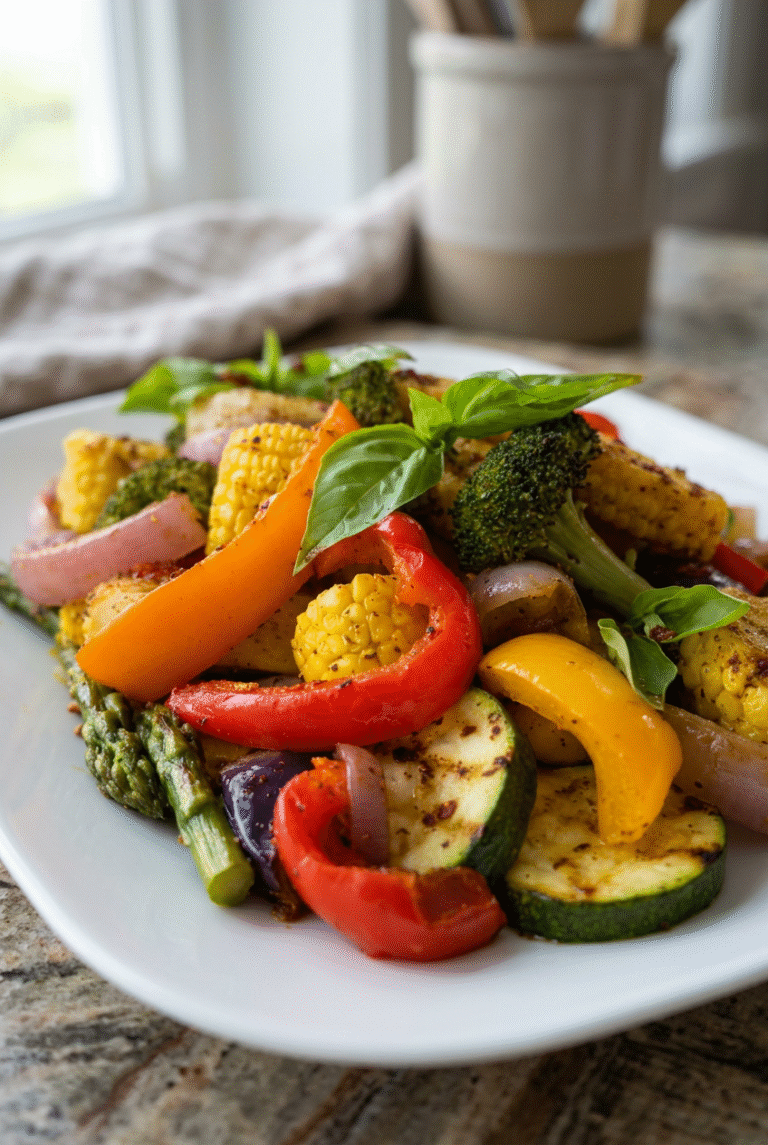
Grilled Vegetables
🌽 Fire up the grill for this easy summer side dish packed with fresh, colorful veggies that bring smoky flavor and nutrition to any barbecue!
🥗 Low-calorie, vegan delight that’s quick to prep and perfect for healthy eating without sacrificing taste.
- Total Time: 25 minutes
- Yield: 4 servings
Ingredients
– Cooking spray for the grill
– 1 yellow squash
– 1 zucchini
– 8 ounces cremini mushrooms
– 1 small red onion
– 1 red bell pepper
– 1 green bell pepper
– 1 ear fresh corn
– Olive oil for drizzling
– Sea salt
– Freshly ground black pepper
Instructions
1-First Step: Preparation and Mise en Place Start by washing all vegetables thoroughly under cool running water. Pat them dry with clean paper towels to remove excess moisture, which can cause steaming instead of grilling. Cut the yellow squash and zucchini into uniform rounds about 1/2 inch thick. Remove the stems from the cremini mushrooms and leave them whole if small, or halve if larger. Cut the red onion into 1-inch pieces, separating the layers slightly for even cooking. Seed the bell peppers and cut them into 1-inch squares. Cut the corn into 1-inch rounds, working carefully with a sharp knife. Having all vegetables prepped before you begin heating the grill will make the cooking process smooth and efficient.
2-Second Step: Prepare the Grill Heat your grill to medium-high temperature, approximately 400-450°F. For gas grills, this usually means setting the burners to medium-high and preheating for 10 minutes with the lid closed. For charcoal grills, arrange the coals so they’re evenly distributed and allow them to ash over before cooking. Once the grill is hot, clean the grates with a grill brush to remove any residue from previous use. Then, coat the grates generously with cooking spray to prevent sticking. This preparation step is crucial for achieving those beautiful grill marks without losing half your vegetables to the fire.
3-Third Step: Assemble the Vegetable Skewers Thread the prepared vegetables onto 4 metal skewers, alternating colors and types for an attractive presentation. Thread tightly enough that the vegetables won’t spin on the skewer when turned, but leave a small gap between pieces to allow heat to circulate evenly. A pattern like squash, mushroom, onion, pepper, corn repeated throughout the skewer looks beautiful and ensures a variety of flavors in each bite. If you’re using wooden skewers, soak them in water for at least 30 minutes before threading to prevent burning, though metal skewers are recommended for this recipe as they conduct heat and help vegetables cook more evenly.
4-Fourth Step: Season Before Grilling Place the skewers on a baking sheet or platter and drizzle evenly with olive oil, using about 1-2 tablespoons total. Rotate the skewers to ensure all vegetables get a light coating. Season generously with sea salt and freshly ground black pepper, rotating again to distribute the seasonings evenly. This pre-grilling seasoning is essential for developing flavor and promoting caramelization on the grill. You can also add dried herbs like oregano or thyme at this stage if desired, though keeping it simple often yields the best results. Let the skewers sit for a few minutes while the grill finishes preheating, allowing the seasonings to adhere to the vegetables.
5-Fifth Step: Grill to Perfection Place the vegetable skewers on the preheated grill, leaving space between them for heat circulation. Grill for 8 minutes on the first side without moving them to allow good char marks to form. After 8 minutes, carefully flip each skewer using tongs or a grill spatula. Grill for another 8 minutes on the second side, for a total cooking time of 16 minutes. The vegetables should be tender when pierced with a fork and lightly charred in spots. If you notice vegetables charring too quickly, move them to a cooler part of the grill or reduce the heat slightly. The goal is tender vegetables with nice char, not burnt pieces.
6-Final Step: Finish and Serve Remove the skewers from the grill and transfer to a clean serving platter. While still hot, season again with a pinch of sea salt and freshly ground black pepper to taste. You can also drizzle with a bit more olive oil or squeeze fresh lemon juice over the vegetables for added brightness. Serve the grilled vegetables warm with your choice of sauce or dressing on the side. Popular options include tzatziki, pesto, or a simple balsamic glaze. Remove vegetables from skewers if preferred before serving, or present them on the skewers for a festive presentation. These vegetables pair wonderfully with grilled meats or can stand alone as a satisfying vegetarian main course.
Last Step:
Please leave a rating and comment letting us know how you liked this recipe! This helps our business to thrive and continue providing free, high-quality recipes for you.Notes
🍆 Cut all vegetables into similar 1-inch sizes for even cooking and great flavor distribution.
🔥 Use metal skewers to avoid burning; soak wooden ones if using.
🔄 Flip skewers halfway through grilling for perfect char on all sides.
- Prep Time: 9 minutes
- Cook Time: 16 minutes
- Category: Side Dish
- Method: Grilling
- Cuisine: American
- Diet: Vegan, Vegetarian, Gluten-Free
Nutrition
- Serving Size: 1 skewer
- Calories: 150 kcal
- Sugar: 8g
- Sodium: 150mg
- Fat: 7g
- Saturated Fat: 1g
- Unsaturated Fat: 5g
- Trans Fat: 0g
- Carbohydrates: 20g
- Fiber: 4g
- Protein: 4g
- Cholesterol: 0mg