
Why You’ll Love This Baked Salmon In Foil Recipe
Imagine coming home after a long day and whipping up a meal that’s both straightforward and packed with flavor that’s exactly what this baked salmon in foil recipe offers. It’s perfect for anyone looking to add a healthy dish to their routine without spending hours in the kitchen. Let’s break down why this recipe stands out and becomes a favorite for home cooks.
- Ease of preparation: This recipe is a breeze to put together, taking just about 30 minutes from start to finish, including 15 minutes of prep. You’ll appreciate how simple it is to layer the ingredients and pop it in the oven, making it ideal for busy parents, students, or working professionals who need a quick dinner without fuss.
- Health benefits: Salmon is a powerhouse of nutrients, rich in omega-3 fatty acids that support heart and brain health, along with protein and essential minerals like potassium and selenium. Each serving of 5.3 ounces delivers around 180 calories, 28 grams of protein, and only 6 grams of fat, making it a smart choice for diet-conscious folks or those aiming for balanced meals.
- Versatility: You can tweak this recipe to fit various dietary needs, whether you’re serving it to family or guests. It’s adaptable for different herbs, sides like roasted vegetables or rice, and even works for meal prep, appealing to travelers, newlyweds, or party hosts looking for easy customization.
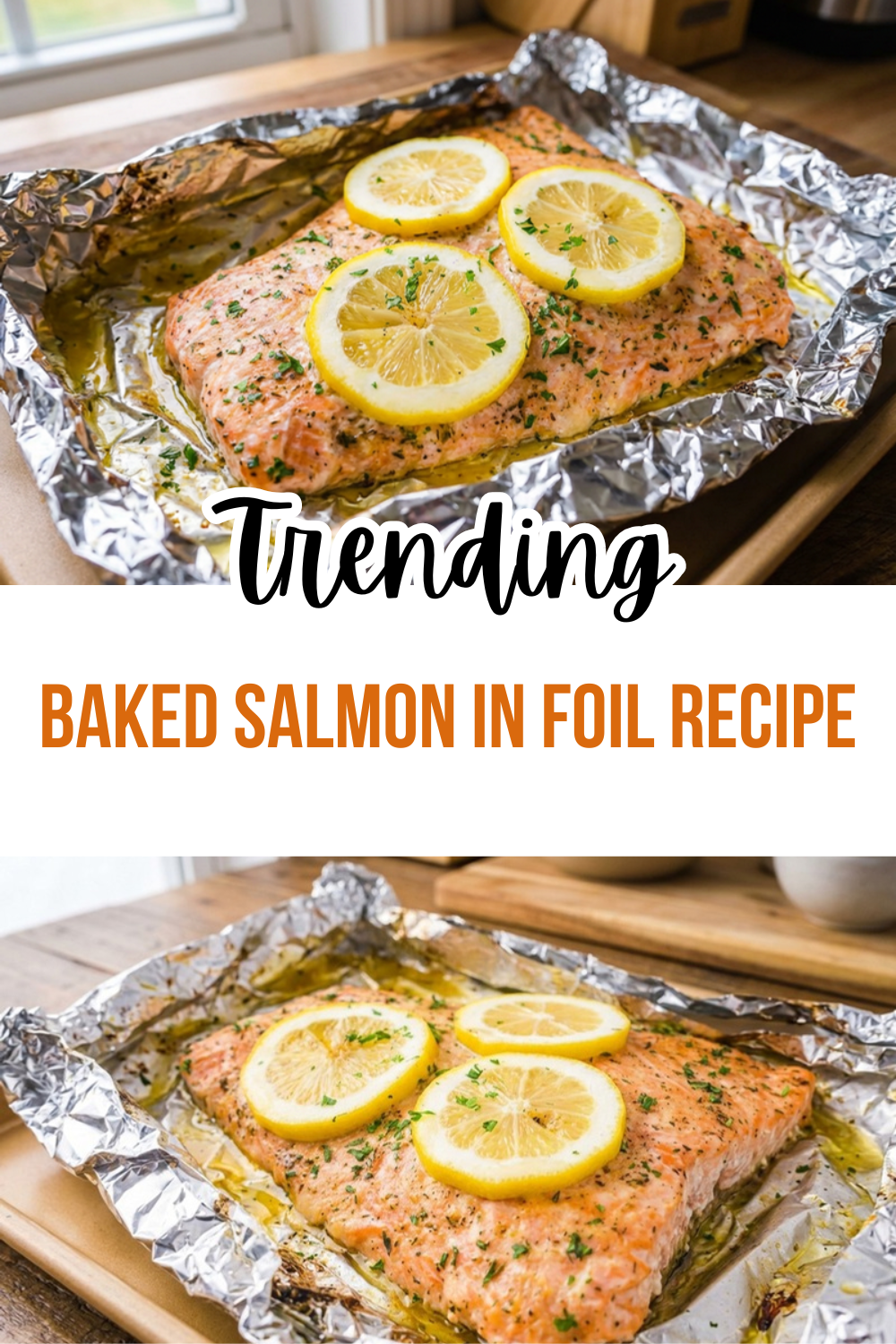
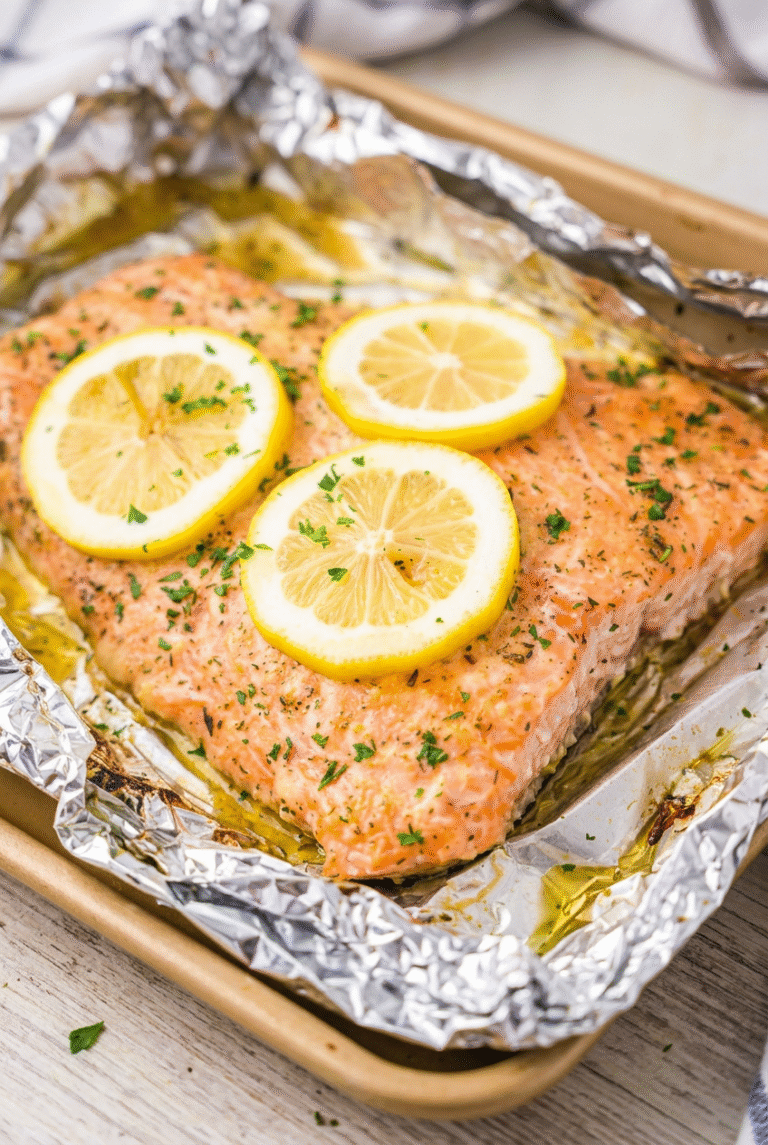
- Distinctive flavor: The combination of fresh rosemary, garlic, and lemon infuses the salmon with a bright, zesty taste that’s hard to beat. Baking in foil keeps the fish moist and tender, locking in those natural flavors for a dish that feels gourmet yet effortless.
This approach not only simplifies cooking but also ensures every bite is juicy and full of goodness, making it a go-to for food enthusiasts of all levels. If you’re new to fish recipes, this one will build your confidence while delivering a meal that pairs well with your favorite sides.
Jump to:
- Why You’ll Love This Baked Salmon In Foil Recipe
- Essential Ingredients for Baked Salmon In Foil Recipe
- Main Ingredients
- Special Dietary Options
- How to Prepare the Perfect Baked Salmon In Foil Recipe: Step-by-Step Guide
- First Step: Preparation and Mise en Place
- Second Step: Layering the Flavors
- Third Step: Seasoning the Salmon
- Fourth Step: Sealing and Baking
- Fifth Step: Broiling for the Finish
- Final Step: Resting and Serving
- Dietary Substitutions to Customize Your Baked Salmon In Foil Recipe
- Protein and Main Component Alternatives
- Vegetable, Sauce, and Seasoning Modifications
- Mastering Baked Salmon In Foil Recipe: Advanced Tips and Variations
- Pro Cooking Techniques
- Flavor Variations
- Presentation Tips
- Make-Ahead Options
- How to Store Baked Salmon In Foil Recipe: Best Practices
- FAQs: Frequently Asked Questions About Baked Salmon In Foil Recipe
- How long do I bake salmon in foil?
- What temperature do I bake salmon in foil?
- How do I know when salmon baked in foil is done?
- Should I bake salmon in foil with the skin on or off?
- How do I store and reheat leftover baked salmon in foil?
- Baked Salmon In Foil Recipe
- Ingredients
- Instructions
- Last Step:
- Notes
- Nutrition
- Did you make this recipe?
Essential Ingredients for Baked Salmon In Foil Recipe
Gathering the right ingredients is key to making this baked salmon in foil recipe shine, and each one plays a role in creating a flavorful, healthy dish. Below is a detailed list with precise measurements and quick explanations to help you understand why they’re important.
Main Ingredients
- 2 pound side of salmon, boneless, skin on or off, preferably wild caught – This is the star of the dish, providing high-quality protein and omega-3s; wild-caught offers better flavor and texture for a superior result.
- 5 sprigs fresh rosemary or other fresh herbs – These add a fragrant, earthy aroma and enhance the salmon’s taste, ensuring no dried herbs are used for the freshest flavor infusion.
- 2 small lemons divided, plus extra for serving – One lemon is sliced for layering and the other squeezed for juice, delivering bright acidity that brightens the fish and balances the richness.
- 2 tablespoons olive oil – This helps coat the salmon, adding moisture and a subtle richness while preventing it from sticking to the foil.
- 1 teaspoon salt – Provides essential seasoning to bring out the natural flavors of the salmon without overwhelming it.
- 1/4 teaspoon pepper – Adds a mild kick and depth, enhancing the overall taste profile of the dish.
- 4 cloves garlic, peeled and roughly chopped – Infuses a pungent, savory note that pairs perfectly with the herbs and lemon for a robust flavor.
- Optional: additional fresh herbs such as basil, thyme, parsley, dill, or green onion – These can be sprinkled on top for extra freshness and customization, making the meal even more vibrant.
Special Dietary Options
- Vegan: Swap the salmon for a plant-based alternative like firm tofu or tempeh, using the same herbs and lemon to keep the flavors intact while maintaining a similar texture.
- Gluten-free: This recipe is naturally gluten-free, as all ingredients are free of gluten; just double-check your baking spray if using one.
- Low-calorie: Opt for a smaller portion of salmon and reduce oil to 1 tablespoon to cut calories, focusing on the herbs and lemon for flavor without adding extra fats.
With these ingredients, you’re set for a nutritious meal that’s easy to adjust. Remember, fresh, high-quality items like wild-caught salmon make a big difference in the final taste.
How to Prepare the Perfect Baked Salmon In Foil Recipe: Step-by-Step Guide
Ready to dive into cooking? This baked salmon in foil recipe is designed for beginners and pros alike, with clear steps that take the guesswork out. We’ll walk through everything from getting started to serving up a delicious plate, using simple tools you likely have on hand. Timing is key, so let’s break it down for a total of about 30 minutes.
First Step: Preparation and Mise en Place
Start by taking the 2 pound side of salmon out of the refrigerator and letting it sit at room temperature for 10 minutes this helps it cook evenly. While that’s happening, preheat your oven to 375 degrees Fahrenheit and line a baking sheet with aluminum foil. Lightly coat the foil with baking spray to prevent sticking, and get your other ingredients ready, like slicing one of the small lemons thinly and chopping the 4 cloves of garlic.
Second Step: Layering the Flavors
Arrange 2 sprigs of the fresh rosemary down the center of the foil on the baking sheet. Layer half the thinly sliced lemon over the herbs for a fresh base. Place the salmon on top, skin side down if it’s on, to build that flavorful foundation.
Third Step: Seasoning the Salmon
Drizzle the salmon with 2 tablespoons of olive oil, then sprinkle on 1 teaspoon of salt and 1/4 teaspoon of pepper. Rub these seasonings gently into the fish for even coverage. Scatter the chopped garlic over the top, and add the remaining 3 sprigs of rosemary along with the rest of the lemon slices. Finally, squeeze the juice from the second small lemon over everything to lock in moisture and brightness.
Fourth Step: Sealing and Baking
Fold the sides of the foil over the salmon to create a sealed packet, leaving a little room inside for air to circulate this steams the fish perfectly. If needed, use a second piece of foil to fully enclose it. Slide the baking sheet into the preheated oven and bake for 15 to 20 minutes, adjusting based on the salmon’s thickness to ensure it’s almost cooked through at the thickest part.
Fifth Step: Broiling for the Finish
Once baking is done, carefully open the foil to uncover the top of the fish watch out for steam. Switch your oven to broil and pop it back in for about 3 minutes until the salmon and garlic turn lightly golden. Keep a close eye to avoid burning, and remember, the fish is ready when it flakes easily with a fork.
Final Step: Resting and Serving
If the salmon seems a tad underdone after broiling, loosely tent it with foil and let it rest for a few minutes it’ll finish cooking just right. Serve it cut into portions, sprinkled with optional fresh herbs like basil or dill, and maybe an extra squeeze of lemon for zing. Pair it with sides such as roasted vegetables or rice for a complete meal in under 30 minutes. For more baking ideas, check out our high-altitude baked donuts recipe if you’re exploring other easy bakes.
This method keeps everything simple and flavorful, perfect for a quick weeknight dinner. To add nutritional context, here’s a quick table of the per-serving info:
| Nutrient | Amount per 5.3 ounces |
|---|---|
| Calories | 180 |
| Carbohydrates | 4 grams |
| Protein | 28 grams |
| Fat | 6 grams |
| Saturated Fat | 1 gram |
| Cholesterol | 60 milligrams |
| Fiber | 1 gram |

Dietary Substitutions to Customize Your Baked Salmon In Foil Recipe
Protein and Main Component Alternatives
If salmon isn’t your thing or you need a change, try swapping it for other proteins like chicken breast or firm tofu for a lighter option. For those watching calories, use a smaller portion or opt for white fish such as cod, which cooks similarly in about 15 minutes at 375 degrees Fahrenheit.
Vegetable, Sauce, and Seasoning Modifications
Feel free to mix in veggies like asparagus or zucchini right into the foil packet for added nutrition, adjusting cook time to around 20 minutes if needed. For sauces, swap lemon for lime and herbs for a spicy rub, or use pesto instead of olive oil to cater to different tastes while keeping the recipe under 30 minutes total.
Mastering Baked Salmon In Foil Recipe: Advanced Tips and Variations
Pro Cooking Techniques
To get the best results, use a food thermometer to hit an internal temperature of 137-140 degrees Fahrenheit before resting. Parchment paper works as a foil alternative, just skip the spray for a cleaner bake that still infuses flavors.
Flavor Variations
Experiment with herbs like basil or thyme, or add garlic butter for a richer twist these changes keep prep under 15 minutes. For Asian vibes, try a marinade with soy sauce, making the dish versatile for various meals.
Presentation Tips
Garnish with fresh parsley for a pop of color, and serve on a bed of greens to make it visually appealing. Plating like this turns a simple dinner into something special.
Make-Ahead Options
Prep the packet in advance and refrigerate for up to a day, then bake when ready, perfect for busy schedules. If you’re into more make-ahead bakes, our banana bread coffee cake is a great companion recipe.
How to Store Baked Salmon In Foil Recipe: Best Practices
Proper storage keeps your baked salmon fresh and tasty, so let’s cover the basics. For short-term needs, follow these guidelines to maintain quality.
- Refrigeration: Store leftovers in an airtight container in the fridge for 1-2 days to keep them safe and flavorful.
- Freezing: Freeze portions in foil for up to 3 months, ensuring they thaw properly in the fridge before reheating.
- Reheating: Warm gently in a skillet or microwave to preserve flakiness, avoiding high heat that could dry it out.
- Meal Prep Considerations: Batch cook and store in portions for easy weeknight meals, pairing with veggies for balance.
FAQs: Frequently Asked Questions About Baked Salmon In Foil Recipe
How long do I bake salmon in foil?
Baking time for salmon in foil depends on portion size and thickness. For a 2-pound side at 375°F, bake 15-20 minutes. Individual 6-ounce fillets at 400°F take 12-14 minutes. Check thickness: 1-inch thick pieces need about 12 minutes per side at higher heat. Always preheat the oven and seal the foil packet tightly to trap steam. Test doneness by inserting a fork—it should flake easily. Overcooking dries it out, so start checking early. These times work for most fresh salmon; frozen may add 5-10 minutes after thawing. (78 words)
What temperature do I bake salmon in foil?
Bake salmon in foil at 375°F for larger sides (around 2 pounds) to cook evenly without drying. For smaller 6-ounce fillets, use 400-425°F for quicker results and crispier edges after opening the foil. Higher heat suits thinner pieces under 1 inch thick. Place the foil packet on a baking sheet in the center rack. No need to flip. This method steams the fish gently inside the foil, keeping it moist. Pair with veggies in the packet for a one-pan meal. Adjust based on oven quirks. (92 words)
How do I know when salmon baked in foil is done?
Salmon baked in foil is done when it flakes easily with a fork and has slight translucency in the center. Use a food thermometer: aim for 145°F internal temperature per USDA guidelines, though many chefs pull at 135-140°F as it carries over 5-10°F while resting under foil. Cut a small slit to peek without fully opening the packet. Resting 3-5 minutes post-bake firms it up. Avoid overcooking past 145°F to prevent dryness. Color shifts from bright orange to pale pink. (89 words)
Should I bake salmon in foil with the skin on or off?
You can bake salmon in foil with skin on or off. Skin on helps retain moisture and lifts off easily after baking. Ask your fishmonger to remove it beforehand for convenience or presentation. Skin is edible and nutritious with omega-3s, but baking makes it soft—try pan-frying for crispiness instead. Place skin-side down in foil with seasonings and butter. It protects the flesh and adds flavor. For skinless, add extra oil to prevent sticking. Both ways yield juicy results in 12-20 minutes. (94 words)
How do I store and reheat leftover baked salmon in foil?
Store leftover baked salmon in an airtight container in the fridge up to 2 days, or freeze up to 3 months (texture may soften). To reheat without drying: use a skillet on medium with a splash of water or broth, covered, for 3-5 minutes per side. Microwave at 50% power in 30-second bursts. Oven at 275°F wrapped in foil works too. Flake into salads or patties if needed. Avoid high heat to preserve flakiness. Pairs well with roasted veggies or rice from your original meal. (92 words)
Baked Salmon In Foil Recipe
🐟 Enjoy this baked salmon recipe that’s simple, flaky, and packed with omega-3s for heart health and easy weeknight meals full of fresh flavors.
🍋 Discover the delight of foil-baked salmon infused with lemon and herbs—tender, juicy results in just 30 minutes for nutritious, restaurant-quality dinners at home.
- Total Time: 40 minutes
- Yield: 4 servings
Ingredients
– 2 pound side of salmon, boneless, skin on or off, preferably wild caught
– 5 sprigs fresh rosemary or other fresh herbs
– 2 small lemons divided, plus extra for serving
– 2 tablespoons olive oil
– 1 teaspoon salt
– 1/4 teaspoon pepper
– 4 cloves garlic, peeled and roughly chopped
– Optional: additional fresh herbs such as basil, thyme, parsley, dill, or green onion
Instructions
1-First Step: Preparation and Mise en Place Start by taking the 2 pound side of salmon out of the refrigerator and letting it sit at room temperature for 10 minutes this helps it cook evenly. While that’s happening, preheat your oven to 375 degrees Fahrenheit and line a baking sheet with aluminum foil. Lightly coat the foil with baking spray to prevent sticking, and get your other ingredients ready, like slicing one of the small lemons thinly and chopping the 4 cloves of garlic.
2-Second Step: Layering the Flavors Arrange 2 sprigs of the fresh rosemary down the center of the foil on the baking sheet. Layer half the thinly sliced lemon over the herbs for a fresh base. Place the salmon on top, skin side down if it’s on, to build that flavorful foundation.
3-Third Step: Seasoning the Salmon Drizzle the salmon with 2 tablespoons of olive oil, then sprinkle on 1 teaspoon of salt and 1/4 teaspoon of pepper. Rub these seasonings gently into the fish for even coverage. Scatter the chopped garlic over the top, and add the remaining 3 sprigs of rosemary along with the rest of the lemon slices. Finally, squeeze the juice from the second small lemon over everything to lock in moisture and brightness.
4-Fourth Step: Sealing and Baking Fold the sides of the foil over the salmon to create a sealed packet, leaving a little room inside for air to circulate this steams the fish perfectly. If needed, use a second piece of foil to fully enclose it. Slide the baking sheet into the preheated oven and bake for 15 to 20 minutes, adjusting based on the salmon’s thickness to ensure it’s almost cooked through at the thickest part.
5-Fifth Step: Broiling for the Finish Once baking is done, carefully open the foil to uncover the top of the fish watch out for steam. Switch your oven to broil and pop it back in for about 3 minutes until the salmon and garlic turn lightly golden. Keep a close eye to avoid burning, and remember, the fish is ready when it flakes easily with a fork.
6-Final Step: Resting and Serving If the salmon seems a tad underdone after broiling, loosely tent it with foil and let it rest for a few minutes it’ll finish cooking just right. Serve it cut into portions, sprinkled with optional fresh herbs like basil or dill, and maybe an extra squeeze of lemon for zing. Pair it with sides such as roasted vegetables or rice for a complete meal in under 30 minutes. For more baking ideas, check out our high-altitude baked donuts recipe if you’re exploring other easy bakes.
Last Step:
Please leave a rating and comment letting us know how you liked this recipe! This helps our business to thrive and continue providing free, high-quality recipes for you.Notes
📦 Using foil packets locks in moisture for perfectly tender salmon while infusing bold lemon and herb flavors effortlessly.
🌡️ Let salmon rest briefly after cooking to allow juices to redistribute for the juiciest, most flavorful results.
🔥 Watch closely during broiling to achieve a golden finish without overcooking—adjust time based on your oven’s heat.
- Prep Time: 15 minutes
- Resting Time: 5 minutes
- Cook Time: 20 minutes
- Category: Main Course
- Method: Baking
- Cuisine: Mediterranean
- Diet: Heart-Healthy
Nutrition
- Serving Size: 6 ounces
- Calories: 180 calories
- Sugar: 1g
- Sodium: 400mg
- Fat: 6g
- Saturated Fat: 1g
- Unsaturated Fat: 5g
- Trans Fat: 0g
- Carbohydrates: 4g
- Fiber: 1g
- Protein: 28g
- Cholesterol: 60mg