
Why You’ll Love This Fruit Salad Recipe
This fruit salad recipe is perfect for anyone seeking a quick and healthy option that fits into a busy lifestyle. Its ease comes from minimal prep work, like chopping fruit into bite-sized pieces, which takes about 30 minutes total and requires no cooking at all. You’ll appreciate how it delivers a burst of fresh flavors while supporting your health goals.
Packed with vitamins, minerals, antioxidants, and dietary fiber from fruits such as pineapple, strawberries, and blueberries, this salad boosts immune health and aids digestion without any guilt. The natural sugars from the fruit provide a gentle energy lift, making it a smart choice for diet-conscious folks. Plus, it’s versatile enough to adapt to vegan, gluten-free, or low-calorie needs, ensuring everyone can enjoy it.
One of the best parts is its adaptability to seasonal ingredients, letting you swap fruits like mandarins for mango or peaches to keep things exciting. This means you can make it your own while still enjoying a delightful mix of sweet and tart tastes that stand out. Whether you’re preparing it for a quick snack or a family gathering, this recipe will quickly become a favorite.
To make it even more appealing, focus on using fresh fruit for the best texture and flavor, as suggested in expert tips. You’ll also love how chilling the salad enhances the flavors, creating a refreshing treat that’s ideal for warm days. Overall, this fruit salad recipe combines simplicity, nutrition, and endless customization to make healthy eating fun and effortless.
Key Benefits at a Glance
- Simple assembly withingredients that are easy to find and prepare.
- Rich in nutrients that support overall wellness and energy levels.
- Flexible for various diets, including options for plant-based sweeteners.
For more ideas on healthy eating, check out our guide to creating nutritious Greek yogurt bowls that pair well with fruit salads.
Jump to:
- Why You’ll Love This Fruit Salad Recipe
- Key Benefits at a Glance
- Essential Ingredients for Fruit Salad Recipe
- Main Ingredients
- Dressing Ingredients
- Optional Substitutions
- How to Prepare the Perfect Fruit Salad Recipe: Step-by-Step Guide
- Step-by-Step Breakdown
- Dietary Substitutions to Customize Your Fruit Salad Recipe
- Mastering Fruit Salad Recipe: Advanced Tips and Variations
- How to Store Fruit Salad Recipe: Best Practices
- FAQs: Frequently Asked Questions About Fruit Salad Recipe
- What fruits are best for making a fresh fruit salad?
- Can I replace mandarins with other fruits in the fruit salad?
- Is it better to use fresh fruit or canned/frozen fruit for fruit salad?
- How should I store leftover fruit salad to keep it fresh?
- Can fruit salad be prepared in advance, and how does chilling affect it?
- Fruit Salad Recipe
- Ingredients
- Instructions
- Last Step:
- Notes
- Nutrition
- Did you make this recipe?
Essential Ingredients for Fruit Salad Recipe
Gathering the right ingredients is key to making a vibrant and delicious fruit salad. This recipe focuses on fresh, seasonal fruits that provide a balance of sweetness, tartness, and texture. Below is a comprehensive list of all the ingredients needed, based on the exact recipe details, to ensure you have everything for a perfect outcome.
Main Ingredients
- 1 medium pineapple, peeled, cored, and chopped into ½-inch pieces (about 5 cups)
- 1 pound of strawberries, hulled and chopped
- 3 kiwis, peeled, quartered lengthwise, and sliced
- 2 cups of seedless grapes, halved
- 1 pint of blueberries
- 3 mandarin oranges, peeled and segmented
Dressing Ingredients
- Juice of 1 lime
- Juice of 1 mandarin orange
- 1 tablespoon of honey or maple syrup
Optional Substitutions
- 1 peeled and diced mango in place of mandarins
- 2 chopped peaches in place of mandarins
This structured list makes it simple to measure and prepare each item accurately, ensuring the salad turns out fresh and flavorful. Remember, using fresh fruit enhances the texture and overall taste, so choose the ripest options available.
How to Prepare the Perfect Fruit Salad Recipe: Step-by-Step Guide
Creating this fruit salad recipe is straightforward and fun, with a total prep time of about 30 minutes. First, start by washing all the fresh fruit thoroughly to ensure it’s clean and ready for use. This step helps maintain safety and brings out the best flavors from ingredients like pineapple and strawberries.
Next, chop the fruit into similar-sized pieces for even coating and easy eating, such as cutting the pineapple into ½-inch pieces and halving the grapes. In a large bowl, combine all the prepared fruit including the strawberries, kiwis, blueberries, and mandarin oranges. Meanwhile, whisk the dressing ingredients separately: the juice of 1 lime, the juice of 1 mandarin orange, and 1 tablespoon of honey or maple syrup until well mixed.
Once the fruit is in the bowl, pour the dressing over it and gently toss to coat everything evenly. This allows the flavors to blend beautifully, with tips like adding lime zest or grated fresh ginger to enhance the dressing further. Serve the salad immediately for a fresh burst or chill it for a few hours to let the tastes meld together.
Step-by-Step Breakdown
- Gather and wash all fruit to remove any dirt.
- Chop fruits into bite-sized pieces for uniform texture.
- Mix fruits in a bowl and prepare the dressing separately.
- Toss everything together and chill if desired.
This method keeps the salad light and refreshing, and you can customize it by substituting fruits seasonally to avoid browning issues. For related healthy recipes, explore our page on fun and easy Greek yogurt muffins that complement fruit-based dishes.

Dietary Substitutions to Customize Your Fruit Salad Recipe
Making this fruit salad recipe work for your needs is easy with a few smart swaps. For instance, if you’re looking to add healthy fats, substitute banana with avocado for a creamy twist, though the original recipe avoids bananas to prevent browning. You can also replace mango with papaya or peaches based on what’s in season, keeping the tropical vibe alive.
When it comes to the dressing, opt for a citrus-based mix like lime or lemon juice instead of honey to cut calories. Adding vegetables such as cucumber slices can bring extra crunch, while a sprinkle of chili powder introduces a mild spice. These changes help maintain the salad’s nutritional value and flavor, making it suitable for various preferences.
Always remember to use fresh ingredients for the best results, as they provide superior texture and taste. This approach ensures the salad remains a healthy, adaptable option for everyone from busy parents to diet-conscious individuals.
Mastering Fruit Salad Recipe: Advanced Tips and Variations
Taking your fruit salad recipe to the next level involves some expert techniques and creative twists. Start by gently macerating the fruits with a sprinkle of sugar and citrus juice to deepen flavors without losing their structure. Chopping everything into similar-sized pieces, like the ½-inch pineapple chunks, ensures even mixing and a pleasing bite.
For flavor variations, experiment with exotic additions such as dragon fruit or pomegranate seeds to add unique textures and tastes. Enhance the dressing by incorporating lime zest or grated fresh ginger, as suggested, to create a more complex profile. Presentation is key too-serve in clear glass bowls with a garnish of fresh mint for an eye-catching display that impresses at any gathering.
| Tip Category | Description |
|---|---|
| Preparation | Chill the salad to meld flavors, but add delicate fruits last. |
| Substitutions | Use seasonal fruits like mango instead of mandarins for variety. |
| Enhancements | Add ginger to dressing for an extra zing. |
Make-ahead options include preparing the base a day in advance, but add fruits like kiwi just before serving. These tips make the recipe more versatile and enjoyable for all skill levels.
How to Store Fruit Salad Recipe: Best Practices
Proper storage keeps your fruit salad recipe fresh and tasty for as long as possible. Keep it in an airtight container in the refrigerator, where it lasts up to 2 days, preserving the vibrant flavors from fruits like blueberries and strawberries. Freezing portions can extend shelf life to about a month, but expect some softening in texture upon thawing.
Avoid reheating the salad, as it works best when served cold or at room temperature to maintain its crispness. For meal prep, mix the dressing in just before eating to prevent the fruit from getting soggy. Following these steps ensures safety and quality, making it easy for busy professionals or families to enjoy leftovers.
The key to great storage is freshness-start with ripe fruit and handle it gently to avoid bruising.
FAQs: Frequently Asked Questions About Fruit Salad Recipe
What fruits are best for making a fresh fruit salad?
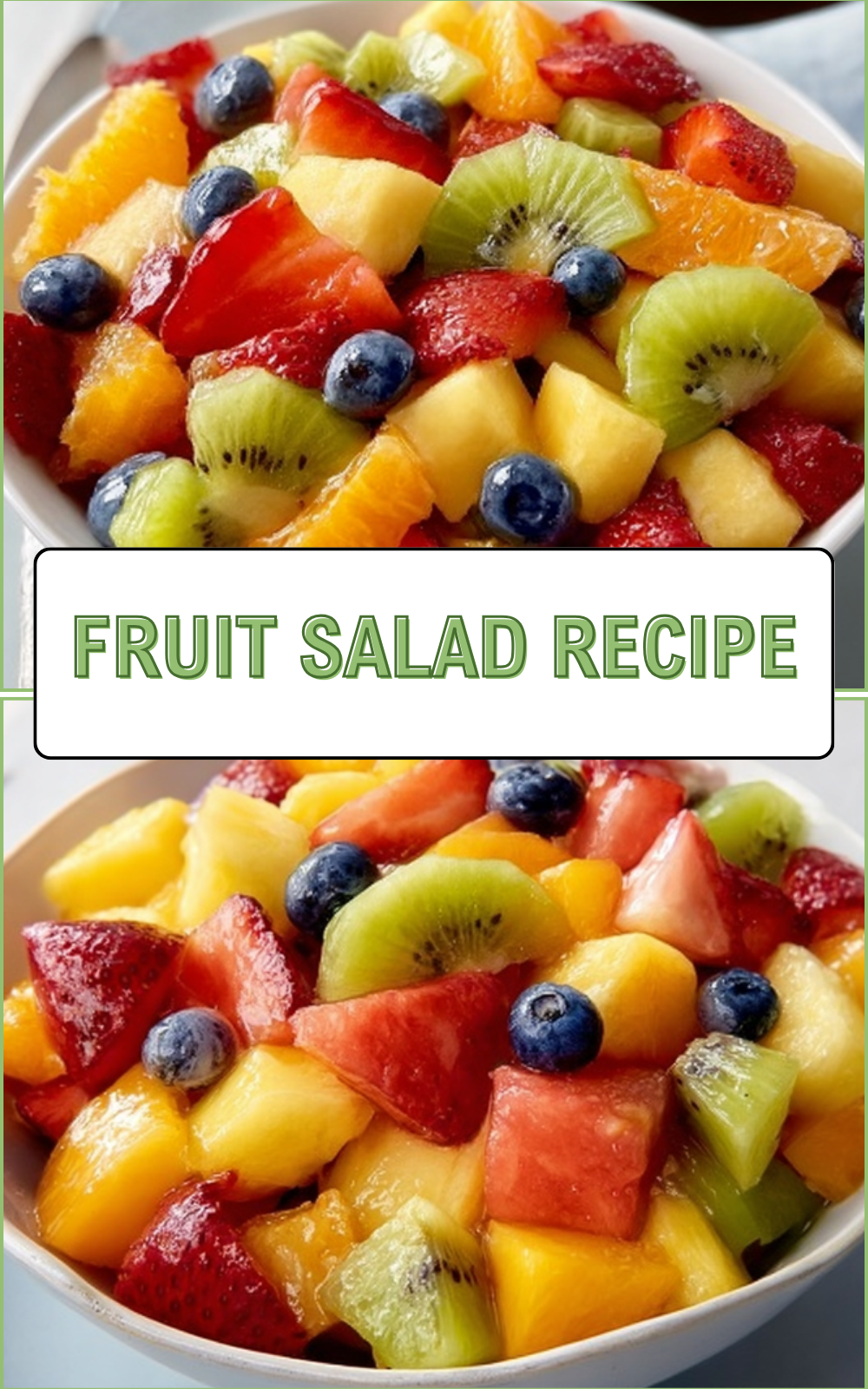
A mix of seasonal fruits works best for a fresh fruit salad. Common choices include pineapple, mandarin oranges, blueberries, strawberries, grapes, and kiwi. These fruits offer a good balance of sweet and tart flavors as well as varied textures. You can also customize the salad by adding fruits like mango, peaches, or nectarines depending on your taste and availability.
Can I replace mandarins with other fruits in the fruit salad?
Yes, mandarins can be substituted with fruits such as peeled and diced mango, chopped peaches, or nectarines. These provide a similar juicy sweetness and complement the overall flavor profile of the salad while adding variety.
Is it better to use fresh fruit or canned/frozen fruit for fruit salad?
Fresh fruit is preferred because it maintains a crisp texture and vibrant flavor. Canned or frozen fruit tends to be softer and can make the salad mushy, which impacts the texture and taste negatively. If using frozen fruits, thaw thoroughly and drain excess liquid before adding to the salad.
How should I store leftover fruit salad to keep it fresh?
Store leftover fruit salad in an airtight container and keep it refrigerated. It’s best consumed within two days to prevent the fruit from becoming mushy and to retain its fresh taste. Lime or lemon juice in the dressing can help slow browning but won’t prevent texture changes over time.
Can fruit salad be prepared in advance, and how does chilling affect it?
Fruit salad can be made a few hours ahead of serving, and chilling it in the refrigerator helps the flavors blend together, enhancing the overall taste. However, avoid making it too far in advance, as some fruits release juice and soften, which may change the texture negatively. Serving within the same day is ideal.
Fruit Salad Recipe
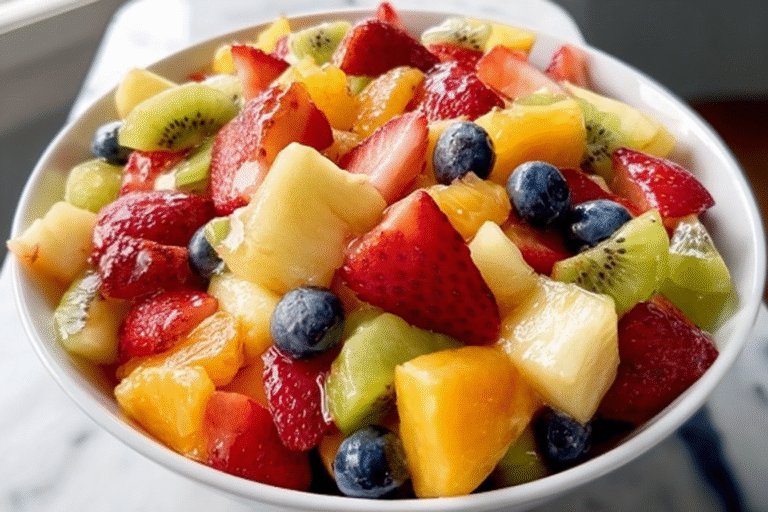
🍍 Enjoy a refreshing and vibrant Easy Fruit Salad bursting with fresh seasonal ingredients that are both delicious and nutritious.
🍊 This recipe is packed with vitamins, antioxidants, and fiber for a healthy and colorful addition to any meal or snack.
- Total Time: 30 minutes
- Yield: 6 servings 1x
Ingredients
1 medium pineapple, peeled, cored, and chopped into ½-inch pieces (about 5 cups)
1 pound of strawberries, hulled and chopped
3 kiwis, peeled, quartered lengthwise, and sliced
2 cups of seedless grapes, halved
1 pint of blueberries
3 mandarin oranges, peeled and segmented
Juice of 1 lime
Juice of 1 mandarin orange
1 tablespoon of honey or maple syrup
1 peeled and diced mango in place of mandarins
2 chopped peaches in place of mandarins
Instructions
1-Gather and wash all fruit to remove any dirt.
2-Chop fruits into bite-sized pieces for uniform texture.
3-Mix fruits in a bowl and prepare the dressing separately.
4-Toss everything together and chill if desired.
Last Step:
Please leave a rating and comment letting us know how you liked this recipe! This helps our business to thrive and continue providing free, high-quality recipes for you.Notes
🍓 Use fresh, high-quality fruit for the best texture and flavor.
🍑 Substitute fruits seasonally but avoid apples, pears, or bananas to prevent browning.
🍋 Enhance the dressing with lime zest or freshly grated ginger for extra zing.
- Prep Time: 30 minutes
- Category: Salad
- Method: Mixing
- Cuisine: American
- Diet: Vegetarian
Nutrition
- Serving Size: 1 cup
- Calories: 90 kcal
- Sugar: 15 g
- Sodium: 1 mg
- Fat: 0.2 g
- Saturated Fat: 0 g
- Unsaturated Fat: 0.2 g
- Trans Fat: 0 g
- Carbohydrates: 23 g
- Fiber: 3 g
- Protein: 1 g
- Cholesterol: 0 mg