
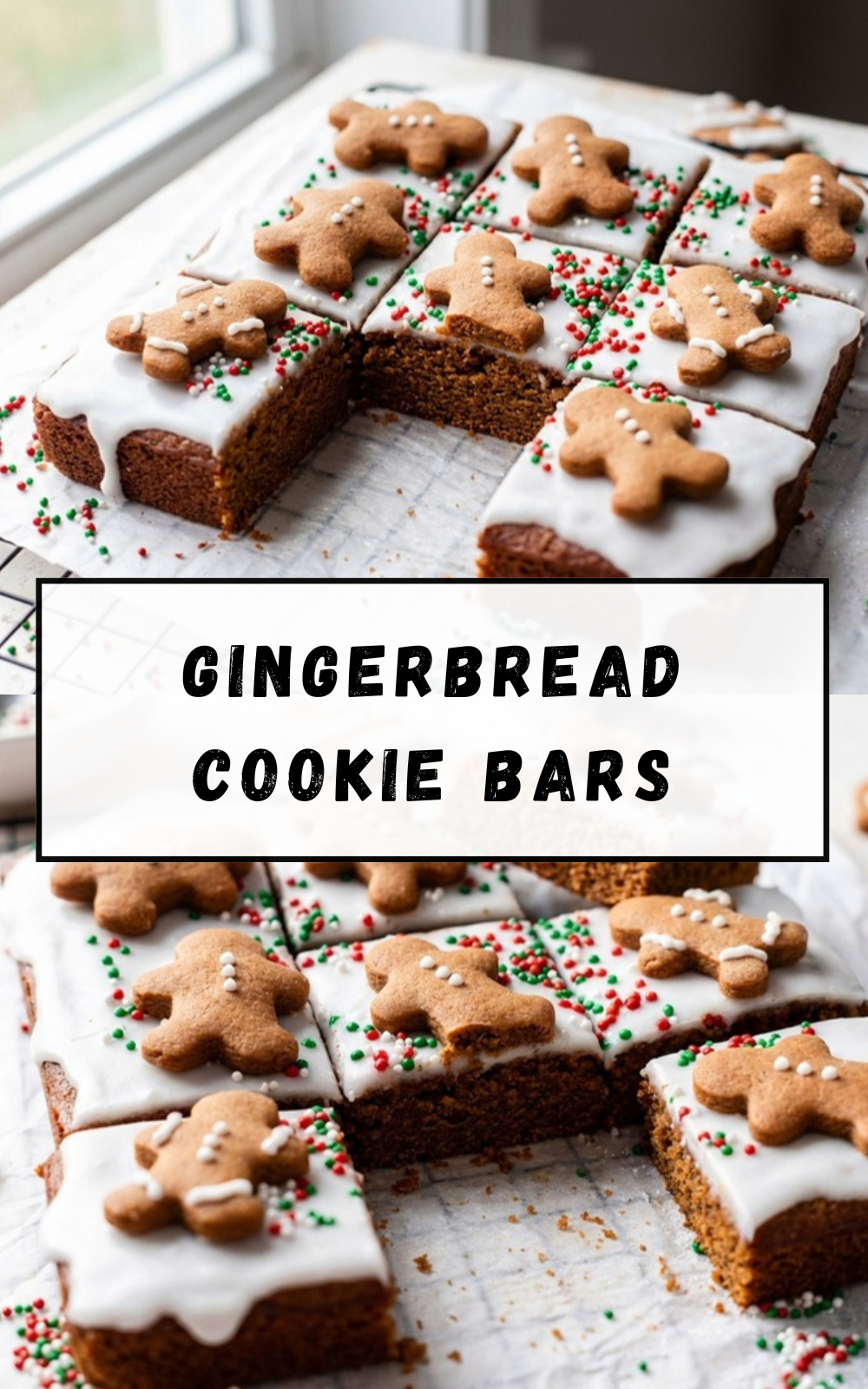
Why You’ll Love This Gingerbread Cookie Bars
If you’re searching for a treat that captures all the warm, cozy flavors of the holidays without the fuss of rolling and cutting individual cookies, you’ve found it! These Gingerbread Cookie Bars are about to become your new favorite holiday tradition, and here’s why they’re so special:- Ease of preparation: No rolling pin required! Simply mix the dough, press it into a pan, and bake. With just 15 minutes of prep time, these soft gingerbread bars come together faster than traditional gingerbread cookies. The dough requires minimal tools and can be made even by baking beginners. Whether you’re a busy parent or a student with limited time, this recipe fits perfectly into your schedule.
- Health benefits: Ginger, the star ingredient, offers impressive wellness properties. The generous amount of ground ginger in this recipe provides not only that classic spicy kick but also digestive support and anti-inflammatory benefits. Additionally, these bars offer a good source of energy with balanced macronutrients to keep you satisfied without overindulging. The molasses adds natural minerals like iron and calcium, making these a slightly more nutritious treat compared to some other holiday sweets.
- Versatility: These cookie bars adapt beautifully to different dietary needs and occasions. They’re perfect for school events, office parties, or family gatherings where you need to feed a crowd. The soft texture makes them ideal for all ages, from toddlers to seniors. Plus, they pair wonderfully with warm beverages like tea, coffee, or hot cocoa, making them a versatile addition to any seasonal menu. You can also adjust the spices to your preference, making them as mild or bold as you like.
- Distinctive flavor: What sets these gingerbread bars apart is the perfect balance of warm spices and molasses sweetness. The combination of ginger, cinnamon, nutmeg, and cloves creates a complex flavor profile that’s reminiscent of traditional European gingerbread but with a softer, more approachable American-style texture. The molasses adds depth and richness without overwhelming the palate, while the frosting provides a delightful contrast that makes these bars truly unforgettable.
Jump to:
- Why You’ll Love This Gingerbread Cookie Bars
- Essential Ingredients for Gingerbread Cookie Bars
- Gingerbread Dough Ingredients
- Frosting Options
- Buttercream Frosting Ingredients
- Cream Cheese Frosting Ingredients
- Special Dietary Options
- Vegan
- Gluten-free
- Low-calorie
- How to Prepare the Perfect Gingerbread Cookie Bars: Step-by-Step Guide
- First Step: Preparation and Organization
- Second Step: Creating the Wet Mixture
- Third Step: Mixing Dry Ingredients
- Fourth Step: Combining Mixtures and Forming Dough
- Fifth Step: Baking to Perfection
- Final Step: Frosting and Serving
- Dietary Substitutions to Customize Your Gingerbread Cookie Bars
- Protein and Main Component Alternatives
- Vegetable, Sauce, and Seasoning Modifications
- Mastering Gingerbread Cookie Bars: Advanced Tips and Variations
- Pro Cooking Techniques
- Flavor Variations
- Presentation Tips
- Make-Ahead Options
- How to Store Gingerbread Cookie Bars: Best Practices
- Refrigeration
- Freezing
- Reheating
- Meal Prep Considerations
- FAQs: Frequently Asked Questions About Gingerbread Cookie Bars
- What’s the best molasses to use for gingerbread cookie bars?
- What’s the best frosting for gingerbread cookie bars?
- How do you cut frosted gingerbread cookie bars without messing up the edges?
- How do you store gingerbread cookie bars?
- Can you freeze gingerbread cookie bars?
- Gingerbread Cookie Bars
- Ingredients
- Instructions
- Last Step:
- Notes
- Nutrition
- Did you make this recipe?
Essential Ingredients for Gingerbread Cookie Bars
Creating the perfect soft gingerbread bars starts with gathering the right ingredients. Each component plays a crucial role in achieving that characteristic soft texture and warm spice profile. Here’s everything you’ll need:Gingerbread Dough Ingredients
- ¾ cup melted butter (1 ½ sticks) – Provides moisture and richness to the dough
- ¾ cup brown sugar – Adds moisture and deep caramel-like flavor
- ¼ cup sugar – Creates sweetness and helps with texture
- 1 room temperature egg – Binds ingredients together and provides structure
- ½ cup molasses – The signature ingredient that gives gingerbread its distinctive color and rich flavor
- 3 cups all-purpose flour – Forms the base of the dough
- 1 teaspoon baking soda – Helps the bars rise slightly and become tender
- ½ teaspoon salt – Enhances all the other flavors in the bars
- 1 tablespoon ground ginger – Provides the primary spicy flavor
- 1 tablespoon cinnamon – Adds warmth and sweetness
- ½ teaspoon nutmeg – Contributes to the complex spice profile
- ½ teaspoon ground cloves – Adds depth and a bit of intensity to the spice blend
Frosting Options
You have two delicious choices for topping your gingerbread bars:
Buttercream Frosting Ingredients
- ½ cup room temperature butter – Creates a creamy base
- ¼ cup milk – Adjusts the consistency for easy spreading
- 1 teaspoon vanilla extract – Adds flavor depth
- 3 cups sifted powdered sugar – Provides sweetness and structure
Cream Cheese Frosting Ingredients
- 6 oz softened cream cheese – Adds tanginess and creaminess
- ¼ cup melted butter – Richness and structure
- 2 cups powdered sugar – Sweetness to balance the tangy cream cheese
- 2 tablespoons milk – For spreading consistency
- 1 teaspoon vanilla extract – Enhances flavor
Special Dietary Options
Want to adapt these gingerbread cookie bars for specific dietary needs? Here are some substitutions:
Vegan
- Replace butter with plant-based butter or coconut oil
- Use a flax egg (1 tablespoon ground flaxseed + 3 tablespoons water)
- Substitute regular milk with almond, oat, or soy milk in the frosting
Gluten-free
- Replace all-purpose flour with a 1-to-1 gluten-free baking blend
- Ensure all other ingredients are certified gluten-free
Low-calorie
- Reduce sugar by 25% and increase spices slightly for flavor balance
- Use a lighter frosting option with less sugar
- Make smaller portions to enjoy the treat with fewer calories per serving
How to Prepare the Perfect Gingerbread Cookie Bars: Step-by-Step Guide
Ready to bake the most delicious soft gingerbread cookie bars? Follow this detailed guide to ensure perfect results every time. This easy gingerbread cookie bars recipe breaks down the process into simple steps that even novice bakers can master with confidence.
First Step: Preparation and Organization
Before you begin, preheat your oven to 350 degrees Fahrenheit. This ensures your bars will bake evenly from the moment they enter the oven. Gather all your ingredients and equipment to make the process smooth and efficient. You’ll need a large mixing bowl, a smaller bowl for dry ingredients, a 9×13 inch baking dish, and a spatula or wooden spoon for mixing.
Take your butter and eggs out of the refrigerator ahead of time so they can come to room temperature. Room temperature ingredients combine more easily and create a better texture in your final bars. If you’re short on time, you can gently warm the butter in the microwave, but be careful not to melt it completely for the egg it should just no longer be cold to the touch.
Second Step: Creating the Wet Mixture
In your large mixing bowl, combine ¾ cup melted butter (that’s 1 ½ sticks) with both sugars ¾ cup brown sugar and ¼ cup regular sugar. Mix them together until they form a smooth, well-blended mixture. The melted butter approach makes these bars exceptionally soft and gives them a wonderfully dense, fudgy texture that traditional creamed butter methods sometimes lack.
Next, stir in one room temperature egg, mixing until it’s fully incorporated. Then add ½ cup of molasses. The molasses is what gives these easy soft gingerbread cookie bars their characteristic deep color and rich flavor. It’s a bit thicker than other liquid ingredients, so take your time to mix it in thoroughly, ensuring it’s evenly distributed throughout the mixture.
Third Step: Mixing Dry Ingredients
In a separate bowl, combine all your dry ingredients. Start with 3 cups of all-purpose flour, then add 1 teaspoon of baking soda and ½ teaspoon of salt. These leavening and seasoning ingredients are essential for structure and flavor enhancement.
Now it’s time for the spices that make gingerbread so distinctive: add 1 tablespoon of ground ginger, 1 tablespoon of cinnamon, ½ teaspoon of nutmeg, and ½ teaspoon of ground cloves. This generous amount of spice is what gives your gingerbread bars their authentic holiday flavor. The combination of ginger and cinnamon provides the main flavor notes, while the nutmeg and cloves add depth and complexity that makes these bars taste professionally crafted.
Whisk these dry ingredients together thoroughly to ensure the baking soda and spices are evenly distributed throughout the flour. This step is crucial because it prevents pockets of intense spice flavor in your finished bars.
Fourth Step: Combining Mixtures and Forming Dough
Gradually add your dry ingredients to the wet mixture, mixing just until a soft dough forms. It’s important not to overmix at this stage, as too much mixing can develop the gluten in the flour and make your bars tough instead of tender. The dough will be somewhat thick and sticky this is normal!
Prepare your 9×13 inch baking dish by greasing it thoroughly with butter or cooking spray. A helpful tip is to sprinkle a small amount of flour over the greased surface, which will prevent the dough from sticking to the pan.
Press the dough evenly into the prepared pan. The dough is thick, so you may need to use your hands or a spatula to spread it to all corners. Aim for uniform thickness across the entire pan so the bars bake evenly. If the dough sticks to your hands, lightly flour them or use a piece of parchment paper between your hands and the dough.
Fifth Step: Baking to Perfection
Place the pan in your preheated 350-degree Fahrenheit oven and bake for 16-20 minutes. The edges should be set and beginning to pull slightly away from the sides of the pan, while the center may still appear a bit soft. This slight underbaking is what ensures your bars remain soft and chewy rather than dry and crumbly.
If you’re using a glass baking dish, you might need to adjust your baking time slightly, as glass conducts heat differently than metal pans. Start checking for doneness at the 15-minute mark and adjust accordingly.
Once baked, remove the pan from the oven and place it on a wire rack. Allow the bars to cool completely in the pan before frosting. This is crucial if you try to frost warm bars, the frosting will melt and slide off, creating a messy appearance and compromising the texture.
Final Step: Frosting and Serving
While your bars are cooling, prepare your frosting. For the buttercream option, beat ½ cup of room temperature butter until smooth, then gradually add 3 cups of sifted powdered sugar along with 1 teaspoon of vanilla extract. Add the ¼ cup of milk as needed to achieve a spreadable consistency.
For the cream cheese frosting alternative, beat 6 oz of softened cream cheese with ¼ cup of melted butter until smooth. Add 2 cups of powdered sugar, 2 tablespoons of milk, and 1 teaspoon of vanilla extract, beating until creamy and smooth.
Once the bars are completely cool, spread your chosen frosting evenly over the top. An offset spatula works perfectly for this task, allowing you to create a smooth, professional-looking finish. Cut the bars into 24 squares or rectangles and serve. These gingerbread cookie bars are perfect on their own or paired with a warm cup of tea or coffee for the ultimate cozy treat!

Dietary Substitutions to Customize Your Gingerbread Cookie Bars
Protein and Main Component Alternatives
Adapting your gingerbread bars to meet various dietary needs is simple with a few thoughtful substitutions. For the egg, which provides structure and binding in the recipe, several excellent alternatives exist. Flax eggs work wonderfully simply mix one tablespoon of ground flaxseed with three tablespoons of water and let it sit for a few minutes until it becomes gelatinous. Chia eggs work similarly using the same ratio. For a store-bought option, commercial egg replacers specifically designed for baking create excellent results in these bars without compromising texture.
If you need to adjust for dairy allergies or preferences, the butter can be replaced with high-quality plant-based butter sticks or coconut oil. Coconut oil adds a subtle coconut flavor that actually complements the warm spices nicely. For the frosting, dairy-free butter alternatives work well in the buttercream version, while using a dairy-free cream cheese alternative creates a delicious vegan cream cheese frosting option. Just make sure whatever substitute you choose has a similar fat content to butter to maintain the desired texture.
Vegetable, Sauce, and Seasoning Modifications
While traditional gingerbread bars rely on the classic spice combination, there’s room for personalization based on taste preferences and what you have available in your pantry. If you find cloves too intense, feel free to reduce the amount or substitute with allspice for a milder flavor profile. For those who love extra spice, adding a pinch of white pepper or a dash of cayenne can create a warming sensation that’s particularly delightful during colder months.
The molasses can be adjusted based on your flavor preferences. For a lighter taste, you can replace half the molasses with maple syrup or honey, though this will slightly alter the traditional flavor profile. If you’re looking to increase the nutritional value, you might consider adding finely grated fresh ginger to boost the flavor while adding additional digestive benefits. Another interesting variation is to incorporate orange zest, which adds a bright citrus note that pairs beautifully with ginger and cinnamon.
For those watching their sugar intake, you can experiment with alternative sweeteners like coconut sugar or date sugar. These will slightly change the flavor and color of your bars but can work well in a pinch. Just keep in mind that liquid sweeteners may require slight adjustments to the flour amounts to maintain the proper dough consistency.
Mastering Gingerbread Cookie Bars: Advanced Tips and Variations
Once you’ve mastered the basic recipe, there are countless ways to elevate your gingerbread cookie bars from delicious to extraordinary. These pro tips and creative variations will help you customize this easy gingerbread cookie bars recipe to suit any occasion or taste preference.
Pro Cooking Techniques
For perfectly soft gingerbread bars with exceptional texture, consider the temperature of your ingredients. While melted butter creates a denser, fudgier bar, some bakers prefer to cream softened butter with the sugars first for a lighter texture. If you choose this method, simply cream the butter and sugars until fluffy before adding the egg and molasses, then proceed with the recipe as written.
Another professional technique is to toast your spices briefly in a dry pan before adding them to the flour mixture. This activates the essential oils in the spices, intensifying their aroma and flavor. Just be careful not to burn them 30 seconds to a minute over medium heat is sufficient.
When pressing the dough into the pan, use the bottom of a measuring cup to create an even surface. This ensures uniform thickness, which leads to even baking. For extra soft bars, underbake slightly by 1-2 minutes the residual heat will continue cooking them as they cool.
Flavor Variations
The beauty of gingerbread cookie bars is their adaptability to different flavor profiles. For a chocolate gingerbread variation, add ¼ cup of cocoa powder to the dry ingredients and reduce the flour by the same amount. The combination of chocolate and warm spices is absolutely divine and creates a richer, more decadent bar.
For a festive holiday twist, mix in ½ cup of dried cranberries and ¼ cup of chopped pecans to the dough before baking. The tart fruit and nutty crunch provide wonderful texture contrast to the soft bars. Citrus lovers might appreciate adding orange zest to both the dough and frosting for bright, complementary notes.
For adults, try soaking ½ cup of chopped crystallized ginger in 2 tablespoons of rum or bourbon for 30 minutes, then adding it to the dough. The alcohol bakes off, leaving just the complex flavor notes that elevate the bars to gourmet status.
Presentation Tips
The appearance of your gingerbread bars can be as impressive as their taste with a few presentation tricks. Once frosted, consider adding a light dusting of cinnamon, nutmeg, or even a mix of both over the top for a professional finish. For the holidays, crushed peppermint candies on the frosting create a beautiful and festive appearance.
Creating a marble effect with your frosting is simple spread half the pan with vanilla frosting and the other half with a cocoa frosting, then gently swirl them together with a knife for a stunning visual effect. You can also use piping bags to create decorative designs on top of the frosting, turning simple bars into elegant treats worthy of any dessert table.
If you’re serving these at a party, consider cutting them into smaller bite-sized pieces and placing them in decorative paper liners. This makes them easy to grab and adds a special touch that guests will appreciate.
Make-Ahead Options
One of the best features of gingerbread cookie bars is how well they lend themselves to advance preparation. The dough can be made up to 2 days ahead and stored in the refrigerator until you’re ready to bake. In fact, chilling the dough for 24 hours can actually deepen the flavors as the spices have time to meld with the other ingredients.
For the busiest bakers, you can bake the bars completely and freeze them unfrosted for up to 2 months. Simply thaw them overnight in the refrigerator, bring to room temperature, and frost before serving. This makes them perfect for holiday prep bake several batches on a weekend when you have more time, then simply frost and serve when needed.
If you prefer to frost ahead of time, the buttercream frosting version freezes better than cream cheese. Frost the bars, freeze them on a tray until solid, then wrap individually and store in the freezer. Thaw in the refrigerator overnight for bars that taste freshly made.
How to Store Gingerbread Cookie Bars: Best Practices
Proper storage is key to maintaining the delicious texture and flavor of your gingerbread bars. Following these guidelines will ensure your treats remain fresh and enjoyable for as long as possible.
Refrigeration
For short-term storage, keep your gingerbread bars in an airtight container or cover the baking dish tightly with plastic wrap or a lid. At room temperature, they’ll stay fresh and moist for 2-3 days. If you’ve used buttercream frosting, refrigeration isn’t necessary unless your kitchen is particularly warm the sugar in the frosting acts as a preservative. However, if you’ve opted for cream cheese frosting, refrigeration is recommended as cream cheese is more perishable. In the refrigerator, cream cheese frosted bars will last up to 5 days, though they’re best enjoyed within the first 2-3 days for optimal texture.
Freezing
These gingerbread cookie bars freeze exceptionally well, making them perfect for advance holiday preparation. Cool the bars completely before freezing. For the best results, cut the bars into individual portions and wrap each one tightly in plastic wrap. Place the wrapped bars in a freezer-safe bag or container, pressing out as much air as possible to prevent freezer burn. Label with the date and contents for easy identification later. Frozen gingerbread bars maintain their quality for up to 3 months. When you’re ready to enjoy them, thaw the bars overnight in the refrigerator or at room temperature for 1-2 hours. The texture remains remarkably similar to freshly baked bars, with no sogginess or loss of flavor.
Reheating
While these bars are delicious at room temperature, gently warming them can enhance the experience. To reheat individual portions, place a bar on a microwave-safe plate and heat for just 10-15 seconds this is enough to warm the bar without melting the frosting. For a crispier edge, you can place them in a 300-degree Fahrenheit oven for 3-5 minutes. If you’re serving a large batch, warming them in the oven is preferable to microwaving, as it maintains better texture throughout the bar. However, avoid reheating frosted bars, as the frosting will likely melt and lose its decorative appeal.
Meal Prep Considerations
For efficient meal prep or party planning, consider making a double batch of gingerbread bars. Since the recipe yields 24 bars, doubling it gives you 48 servings, perfect for larger gatherings or gifts. Prepare the bars on a weekend when you have more time, then freeze them unfrosted. When needed, simply thaw the amount you require, frost, and serve. This approach saves time and ensures you always have homemade treats available without last-minute baking stress. Another meal prep strategy is to pre-measure the dry ingredients for multiple batches, storing them in labeled bags or containers. When you’re ready to bake, simply add the wet ingredients and proceed with the recipe. This makes the process even faster on busy days.
FAQs: Frequently Asked Questions About Gingerbread Cookie Bars
What’s the best molasses to use for gingerbread cookie bars?
Grandma’s molasses is the top choice for gingerbread cookie bars. It’s a light molasses, widely available at grocery stores, and gives the perfect balance of rich flavor without overpowering bitterness. Light molasses keeps the bars soft and chewy while adding that classic gingerbread taste. Avoid blackstrap molasses, as it’s too intense and bitter for baking. If you can’t find Grandma’s, any mild unsulfured molasses works well. Measure it accurately—about 1/2 cup for a standard batch—to ensure the dough isn’t too sticky. This simple swap makes your bars taste bakery-fresh every time. (78 words)
What’s the best frosting for gingerbread cookie bars?
A simple buttercream frosting pairs perfectly with gingerbread cookie bars: beat 1/2 cup softened butter, 2 cups powdered sugar, 1 tsp vanilla extract, and 2-3 tbsp milk until smooth and spreadable. Pour it over cooled bars for easy coverage. For a tangy twist, use cream cheese frosting—mix 8 oz softened cream cheese, 1/4 cup butter, 3 cups powdered sugar, and 1 tsp vanilla. Both hold up well, but buttercream crusts slightly for cleaner cuts. These recipes take under 5 minutes and complement the spicy gingerbread flavor without overpowering it. (92 words)
How do you cut frosted gingerbread cookie bars without messing up the edges?
To get clean cuts on frosted gingerbread cookie bars, chill them in the fridge for 30 minutes first—this firms up the frosting. Use a sharp, thin knife (like a serrated one) and wipe it clean with a paper towel after every cut. Score the bars lightly first to guide your lines, then press straight down firmly. Cut into 24 squares or bars as preferred. This method prevents dragging frosting and gives professional-looking edges. Work quickly once out of the fridge to avoid softening. Your bars will look picture-perfect for sharing or gifting. (89 words)
How do you store gingerbread cookie bars?
Store gingerbread cookie bars in an airtight container or cover the baking dish tightly with plastic wrap or a lid. They stay fresh and moist for 2-3 days at room temperature. For buttercream-frosted bars, no refrigeration is needed unless it’s very warm; they crust slightly and hold up well. Cream cheese-frosted bars should go in the fridge to prevent spoilage— they’ll last up to 5 days chilled. Bring to room temp before serving for best texture. Avoid loose wrapping to keep them from drying out. Perfect for make-ahead holiday treats. (94 words)
Can you freeze gingerbread cookie bars?
Yes, gingerbread cookie bars freeze beautifully for up to 2 months. Cool completely, then frost with buttercream (it sets firmer than cream cheese for freezing). Wrap individual bars in plastic wrap, place in a freezer bag, and squeeze out air. Or freeze the whole pan tightly covered. Thaw overnight in the fridge or at room temp for 1-2 hours. They retain their soft, chewy texture and flavor—no soggy results. Great for holiday prep; bake now, freeze, and serve later. Label with dates for easy tracking. (82 words)
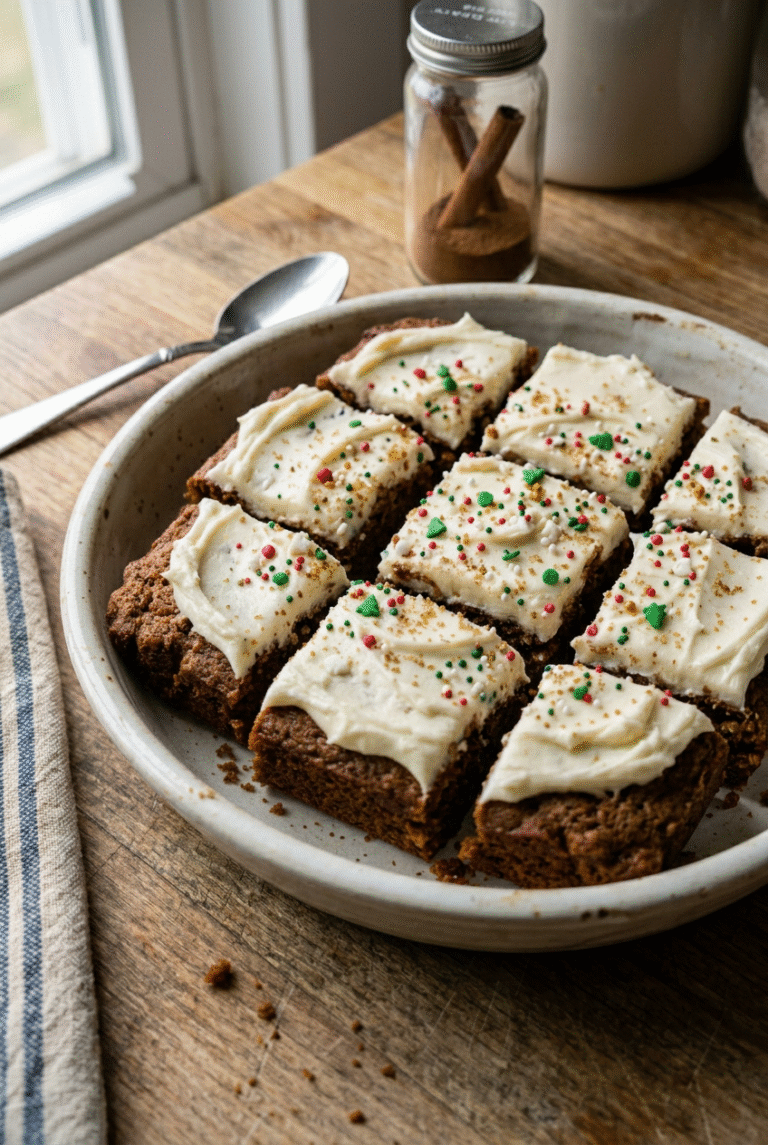
Gingerbread Cookie Bars
🍪 Revel in ultra-soft, chewy gingerbread bars packed with warm spices and molasses, topped with luscious frosting for effortless holiday magic.
🎄 Skip individual cookies – this easy bake yields perfect slices that stay moist for days, ideal for parties or gifting.
- Total Time: 1 hour 10 minutes
- Yield: 24 bars
Ingredients
– ¾ cup melted butter (1 ½ sticks) Provides moisture and richness to the dough
– ¾ cup brown sugar Adds moisture and deep caramel-like flavor
– ¼ cup sugar Creates sweetness and helps with texture
– 1 room temperature egg Binds ingredients together and provides structure
– ½ cup molasses The signature ingredient that gives gingerbread its distinctive color and rich flavor
– 3 cups all-purpose flour Forms the base of the dough
– 1 teaspoon baking soda Helps the bars rise slightly and become tender
– ½ teaspoon salt Enhances all the other flavors in the bars
– 1 tablespoon ground ginger Provides the primary spicy flavor
– 1 tablespoon cinnamon Adds warmth and sweetness
– ½ teaspoon nutmeg Contributes to the complex spice profile
– ½ teaspoon ground cloves Adds depth and a bit of intensity to the spice blend
– ½ cup room temperature butter Creates a creamy base
– ¼ cup milk Adjusts the consistency for easy spreading
– 1 teaspoon vanilla extract Adds flavor depth
– 3 cups sifted powdered sugar Provides sweetness and structure
– 6 oz softened cream cheese Adds tanginess and creaminess
– ¼ cup melted butter Richness and structure
– 2 cups powdered sugar Sweetness to balance the tangy cream cheese
– 2 tablespoons milk For spreading consistency
– 1 teaspoon vanilla extract Enhances flavor
Instructions
1-First Step: Preparation and OrganizationBefore you begin, preheat your oven to 350 degrees Fahrenheit. This ensures your bars will bake evenly from the moment they enter the oven. Gather all your ingredients and equipment to make the process smooth and efficient. You’ll need a large mixing bowl, a smaller bowl for dry ingredients, a 9×13 inch baking dish, and a spatula or wooden spoon for mixing.Take your butter and eggs out of the refrigerator ahead of time so they can come to room temperature. Room temperature ingredients combine more easily and create a better texture in your final bars. If you’re short on time, you can gently warm the butter in the microwave, but be careful not to melt it completely for the egg it should just no longer be cold to the touch.
2-Second Step: Creating the Wet MixtureIn your large mixing bowl, combine ¾ cup melted butter (that’s 1 ½ sticks) with both sugars ¾ cup brown sugar and ¼ cup regular sugar. Mix them together until they form a smooth, well-blended mixture. The melted butter approach makes these bars exceptionally soft and gives them a wonderfully dense, fudgy texture that traditional creamed butter methods sometimes lack.Next, stir in one room temperature egg, mixing until it’s fully incorporated. Then add ½ cup of molasses. The molasses is what gives these easy soft gingerbread cookie bars their characteristic deep color and rich flavor. It’s a bit thicker than other liquid ingredients, so take your time to mix it in thoroughly, ensuring it’s evenly distributed throughout the mixture.
3-Third Step: Mixing Dry IngredientsIn a separate bowl, combine all your dry ingredients. Start with 3 cups of all-purpose flour, then add 1 teaspoon of baking soda and ½ teaspoon of salt. These leavening and seasoning ingredients are essential for structure and flavor enhancement.Now it’s time for the spices that make gingerbread so distinctive: add 1 tablespoon of ground ginger, 1 tablespoon of cinnamon, ½ teaspoon of nutmeg, and ½ teaspoon of ground cloves. This generous amount of spice is what gives your gingerbread bars their authentic holiday flavor. The combination of ginger and cinnamon provides the main flavor notes, while the nutmeg and cloves add depth and complexity that makes these bars taste professionally crafted.Whisk these dry ingredients together thoroughly to ensure the baking soda and spices are evenly distributed throughout the flour. This step is crucial because it prevents pockets of intense spice flavor in your finished bars.
4-Fourth Step: Combining Mixtures and Forming DoughGradually add your dry ingredients to the wet mixture, mixing just until a soft dough forms. It’s important not to overmix at this stage, as too much mixing can develop the gluten in the flour and make your bars tough instead of tender. The dough will be somewhat thick and sticky this is normal!Prepare your 9×13 inch baking dish by greasing it thoroughly with butter or cooking spray. A helpful tip is to sprinkle a small amount of flour over the greased surface, which will prevent the dough from sticking to the pan.Press the dough evenly into the prepared pan. The dough is thick, so you may need to use your hands or a spatula to spread it to all corners. Aim for uniform thickness across the entire pan so the bars bake evenly. If the dough sticks to your hands, lightly flour them or use a piece of parchment paper between your hands and the dough.
5-Fifth Step: Baking to PerfectionPlace the pan in your preheated 350-degree Fahrenheit oven and bake for 16-20 minutes. The edges should be set and beginning to pull slightly away from the sides of the pan, while the center may still appear a bit soft. This slight underbaking is what ensures your bars remain soft and chewy rather than dry and crumbly.If you’re using a glass baking dish, you might need to adjust your baking time slightly, as glass conducts heat differently than metal pans. Start checking for doneness at the 15-minute mark and adjust accordingly.Once baked, remove the pan from the oven and place it on a wire rack. Allow the bars to cool completely in the pan before frosting. This is crucial if you try to frost warm bars, the frosting will melt and slide off, creating a messy appearance and compromising the texture.
6-Final Step: Frosting and ServingWhile your bars are cooling, prepare your frosting. For the buttercream option, beat ½ cup of room temperature butter until smooth, then gradually add 3 cups of sifted powdered sugar along with 1 teaspoon of vanilla extract. Add the ¼ cup of milk as needed to achieve a spreadable consistency.For the cream cheese frosting alternative, beat 6 oz of softened cream cheese with ¼ cup of melted butter until smooth. Add 2 cups of powdered sugar, 2 tablespoons of milk, and 1 teaspoon of vanilla extract, beating until creamy and smooth.Once the bars are completely cool, spread your chosen frosting evenly over the top. An offset spatula works perfectly for this task, allowing you to create a smooth, professional-looking finish. Cut the bars into 24 squares or rectangles and serve. These gingerbread cookie bars are perfect on their own or paired with a warm cup of tea or coffee for the ultimate cozy treat!
Last Step:
Please leave a rating and comment letting us know how you liked this recipe! This helps our business to thrive and continue providing free, high-quality recipes for you.Notes
🧈 Use salted butter for better flavor; add ½ tsp extra salt if using unsalted.
🔪 Heat knife in hot water and wipe dry between cuts for neat, professional slices.
❄️ Freeze baked bars up to 3 months; thaw overnight in fridge for fresh taste anytime.
- Prep Time: 15 minutes
- Cool: 30 minutes
- Cook Time: 18 minutes
- Category: Desserts
- Method: Baking
- Cuisine: American
- Diet: Vegetarian
Nutrition
- Serving Size: 1 bar
- Calories: 344 kcal
- Sugar: 39 g
- Sodium: 217 mg
- Fat: 14 g
- Saturated Fat: 9 g
- Unsaturated Fat: 5 g
- Trans Fat: 0.5 g
- Carbohydrates: 52 g
- Fiber: 1 g
- Protein: 3 g
- Cholesterol: 45 mg