

Why You’ll Love This Homemade Bone Broth
Homemade bone broth is a comforting staple that’s easy to prepare at home, making it ideal for anyone looking to boost their nutrition with minimal effort. This recipe stands out because it delivers a rich, nourishing broth that can enhance your favorite meals while fitting into various lifestyles. Whether you’re a busy parent or a health-conscious student, discovering how simple it is to make this broth at home can change the way you approach everyday cooking.
One of the best parts about this homemade bone broth is its straightforward process that fits into even the busiest schedules. It requires minimal active time as the broth simmers away on its own, drawing out deep flavors and essential nutrients from the bones. Plus, it’s versatile enough to serve as a base for soups, stews, and even sipping on its own, which makes it a go-to option for home cooks and diet-focused individuals alike.
You’ll appreciate the health perks too, as this broth is loaded with collagen, minerals, and amino acids that support overall wellness, from better digestion to stronger joints. Its adaptability allows you to tweak ingredients for specific dietary needs, like paleo or keto diets, without losing that hearty, homemade taste. Overall, this recipe brings a warm, satisfying element to your kitchen that’s both practical and delicious.
The distinctive flavor profile sets it apart from anything store-bought, creating a broth that’s not only nutritious but also incredibly flavorful. Imagine warming up with a cup on a cool evening or using it to elevate your next family meal. For more creative cooking ideas, you can check out our chocolate toffee crunch cupcake recipe to see how simple ingredients can lead to amazing results.
Jump to:
- Why You’ll Love This Homemade Bone Broth
- Essential Ingredients for Homemade Bone Broth
- How to Prepare the Perfect Homemade Bone Broth: Step-by-Step Guide
- Getting Started with Blanching and Roasting
- Simmering and Straining the Broth
- Dietary Variations and Final Touches
- Dietary Substitutions to Customize Your Homemade Bone Broth
- Mastering Homemade Bone Broth: Advanced Tips and Variations
- How to Store Homemade Bone Broth: Best Practices
- FAQs: Frequently Asked Questions About Homemade Bone Broth
- What is homemade bone broth and how is it different from regular broth?
- What bones and ingredients are best for making bone broth at home?
- How long should I simmer homemade bone broth for the best results?
- How do I store homemade bone broth safely, and how long does it last?
- Can bone broth help with joint health and digestion? What does the science say?
- Homemade Bone Broth
- Ingredients
- Instructions
- Last Step:
- Notes
- Nutrition
- Did you make this recipe?
Essential Ingredients for Homemade Bone Broth
Gathering the right ingredients is key to creating a nutritious homemade bone broth that’s packed with flavor and health benefits. This section breaks down everything you need to get started, focusing on precise measurements for a successful batch. By using fresh, high-quality items, you’ll ensure your broth turns out rich and satisfying every time.
Here’s a complete list of ingredients based on the recipe, formatted for easy reference. Remember to use these exact quantities to achieve the best results:
- 10 pounds beef bones (a mix of marrow bones such as femur bones and meaty bones like oxtail, short ribs, knucklebones cut in half)
- 4 large carrots, chopped into 2-inch pieces
- 2 medium onions, quartered
- 2 whole heads of garlic, halved crosswise
- 6 stalks of celery, cut into 2-inch pieces
- 4 bay leaves
- 1/4 cup black peppercorns
- 4 whole star anise (optional)
- 2 cinnamon sticks (optional)
- 2 tablespoons apple cider vinegar
Special dietary options can make this recipe even more flexible. For instance, a vegan version might use vegetable broth concentrates or kombu with mushrooms. If you’re focusing on gluten-free preparation, all these ingredients are naturally suitable, as long as you avoid any added seasonings that contain gluten. To keep it low-calorie, simply cut back on items like carrots and focus on the bones alone.
How to Prepare the Perfect Homemade Bone Broth: Step-by-Step Guide
Making homemade bone broth at home is a rewarding process that turns simple ingredients into a nutrient-packed liquid gold. This step-by-step guide will walk you through the process, starting with preparing the bones to achieve that deep, flavorful result. By following these instructions, you’ll end up with a broth that’s perfect for your daily routine or special meals.
Getting Started with Blanching and Roasting
First, begin by blanching the bones. Divide the 10 pounds of beef bones into two large stockpots, cover them with cold water, and bring to a boil. Then, simmer for 15-20 minutes before draining and rinsing the bones to remove impurities. This step ensures a clearer broth with a cleaner taste, setting the foundation for your recipe.
Next, preheat your oven to 450°F (232°C) and transfer the blanched bones along with the vegetables 4 large carrots chopped into 2-inch pieces, 2 medium onions quartered, 2 whole heads of garlic halved crosswise, and 6 stalks of celery cut into 2-inch pieces to roasting pans. Make sure not to overcrowd the pans. Roast for 30 minutes, then toss gently and roast for another 15-30 minutes until everything is deeply browned but not burnt.
Simmering and Straining the Broth
After roasting, wash the stockpots you used for blanching and return the roasted bones and vegetables to them. Use a spatula to scrape any browned bits from the roasting pans and add them to the pots for extra flavor. Now, add the 4 bay leaves, 1/4 cup black peppercorns, 4 whole star anise if using, 2 cinnamon sticks if desired, and 2 tablespoons apple cider vinegar evenly between the two pots.
Fill each pot with about 12 cups of cold water, just enough to cover the bones by about one inch. Cover with a lid and bring to a gentle boil. Reduce the heat to low and simmer with the lid slightly ajar, skimming off any foam or excess fat occasionally. Let it simmer for at least 8-12 hours, or up to 24 hours for the best nutrient extraction, adding water as needed to keep the bones submerged. If the vegetables become too soft, you can remove them during this time.
Once done, strain the broth through a wire mesh strainer, and if you want it even clearer, strain it again through a fine mesh. Allow it to cool, then remove any remaining meat from the bones for other uses or discard the solids. For storage, cool the broth quickly with ice and refrigerate until the fat solidifies on top, at which point you can remove it if you prefer a lighter version.
Dietary Variations and Final Touches
To customize, you can follow these steps while making adjustments for dietary needs. For example, roast the bones first as described, then add vegetables and simmer as outlined. The final product is ready to store in sealed containers in the refrigerator for up to 5 days or freeze in smaller batches for up to 6 months. Remember, the nutritional info per 1-cup serving includes about 45 calories, 11 grams of protein, 0 grams of carbohydrates and fat, and it’s rich in calcium, magnesium, potassium, phosphorus, vitamins A and K2, zinc, iron, boron, manganese, and selenium.
For more tips on enhancing flavors in your cooking, consider visiting our banana bread coffee cake recipe, which shows how simple tweaks can make a big difference. This guide results in a broth that’s not only tasty but also full of health benefits, like those discussed in health benefits of bone broth.

Dietary Substitutions to Customize Your Homemade Bone Broth
One of the great things about homemade bone broth is how easy it is to adapt to different preferences and dietary restrictions. By swapping a few ingredients, you can make this recipe work for various needs without losing its core benefits. Whether you’re following a specific diet or just experimenting, these changes keep the broth nutritious and flavorful.
For protein and main components, consider alternatives like chicken bones for a lighter taste or fish bones with seaweed for a pescatarian option. Vegan versions can use kombu and shiitake mushrooms to maintain that mineral-rich profile. When it comes to vegetables and seasonings, try replacing carrots with parsnips or sweet potatoes for a seasonal twist, and swap celery with fennel or leeks for new flavors.
Other modifications include using tamari instead of soy sauce to stay gluten-free, and adding herbs like rosemary or thyme to personalize the taste. These adjustments help highlight the broth’s natural essence while accommodating diets such as keto or low-calorie plans. Overall, these tweaks make the recipe versatile for everyone from busy professionals to food enthusiasts.
Mastering Homemade Bone Broth: Advanced Tips and Variations
Taking your homemade bone broth to the next level involves some pro techniques that can save time and boost flavor. For instance, using a pressure cooker cuts down simmering time while still pulling out those essential nutrients, or you could double roast the bones for a deeper taste. These methods make the process more efficient, especially for working professionals or seniors who want high-quality results with less effort.
Flavor variations add excitement too; try including star anise and cinnamon for an Asian-inspired twist, or dried porcini mushrooms for an earthy note. Presentation can elevate your broth serve it chilled with a drizzle of herb oil or topped with fresh herbs and cracked pepper for a visually appealing dish. For make-ahead options, prepare large batches and freeze them in ice cube trays for easy use, or keep refrigerated for up to 5 days to simplify meal prep.
Incorporating tips like these, such as blanching bones to remove impurities or roasting them thoroughly, ensures your broth shines. Keep vegetable quantities minimal to let the bone flavor stand out, and remember to simmer for 8-12 hours for optimal extraction. With these strategies, your homemade bone broth becomes a customizable staple, perfect for party hosts looking to impress guests.
How to Store Homemade Bone Broth: Best Practices
Proper storage is essential to keep your homemade bone broth fresh and safe for later use. Start by refrigerating it in airtight containers for up to 5 days, making sure it’s cooled completely first to prevent any bacterial growth. This method works well for busy parents or students who need quick meal options during the week.
For longer preservation, freeze the broth in freezer-safe containers or bags, leaving room for expansion, and it can last up to 6 months. When reheating, do it gently over low heat to maintain nutrients and avoid boiling. Consider batch cooking and freezing in portion sizes to make meal prep easier, aligning with the needs of travelers or working professionals.
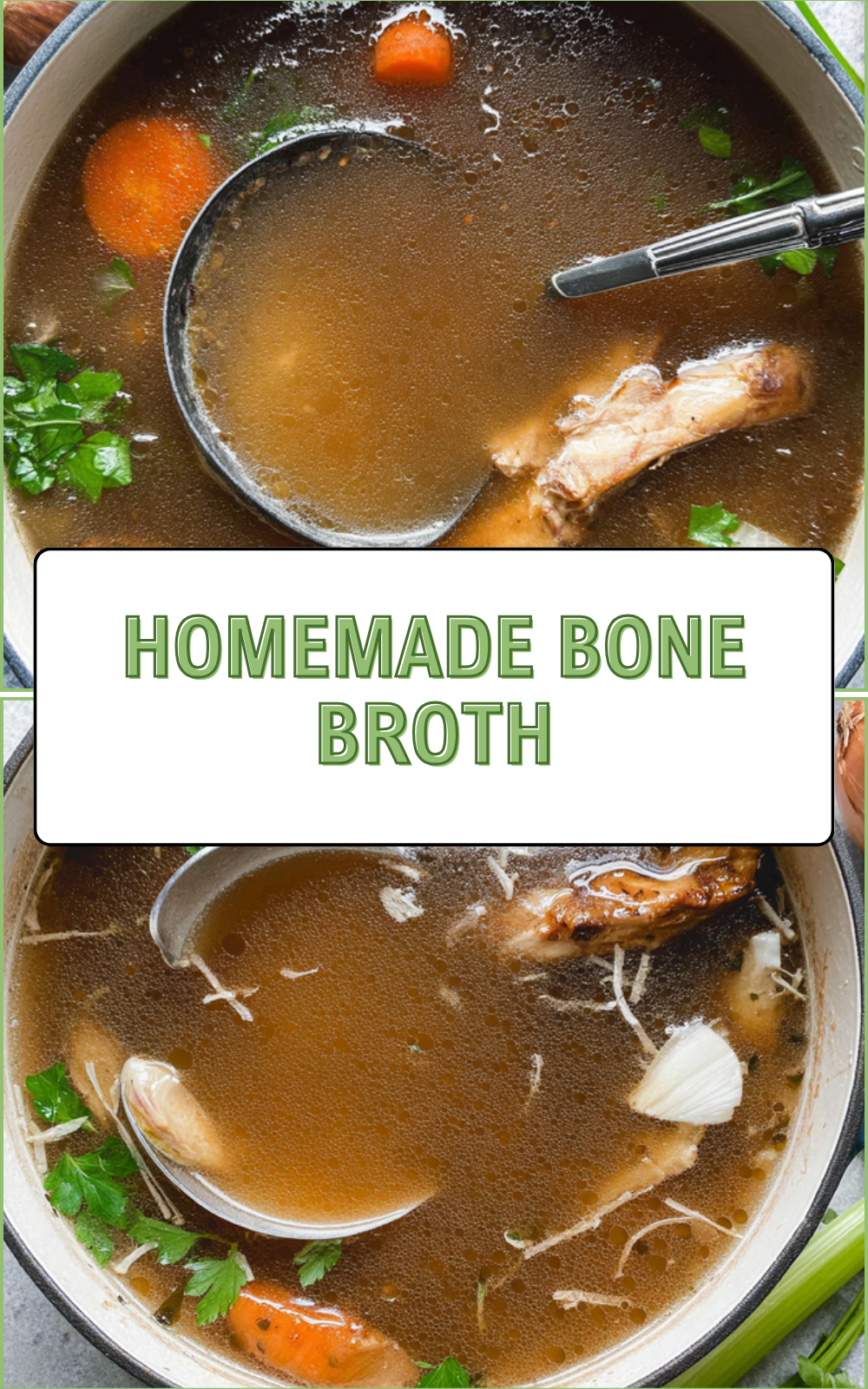
FAQs: Frequently Asked Questions About Homemade Bone Broth
What is homemade bone broth and how is it different from regular broth?
Homemade bone broth is a nutrient-rich liquid made by simmering animal bones, often with connective tissue and marrow, for several hours to extract collagen, minerals, and amino acids. Unlike regular broth, which is typically made by boiling meat or vegetables for a shorter time, bone broth is cooked longer to develop a thicker, gelatinous texture and more concentrated nutrients.
What bones and ingredients are best for making bone broth at home?
The best bones for bone broth are marrow-rich and collagen-heavy, such as beef knuckles, oxtail, chicken feet, or pork joints. Adding vegetables like carrots, onions, celery, garlic, and herbs such as bay leaves and peppercorns enhances flavor. A splash of vinegar helps release minerals and collagen from the bones during cooking.
How long should I simmer homemade bone broth for the best results?
Simmer bone broth for anywhere between 8 to 24 hours depending on the type of bones used; beef bones require longer cooking (12-24 hours) while chicken bones take less time (8-12 hours). Longer simmering extracts more nutrients and gelatin, resulting in a richer, more flavorful broth.
How do I store homemade bone broth safely, and how long does it last?
After cooking, cool the bone broth to room temperature quickly to avoid bacteria growth, then refrigerate in a sealed container for up to 5-6 days. For longer storage, freeze broth in smaller portions for 4-6 months. Always reheat thoroughly before consuming.
Can bone broth help with joint health and digestion? What does the science say?
Bone broth contains collagen, gelatin, and amino acids that may support joint comfort and gut health by helping rebuild connective tissues and improving digestive function. While many people report benefits, scientific evidence is still limited, so bone broth is best used as part of a balanced diet rather than a sole treatment.
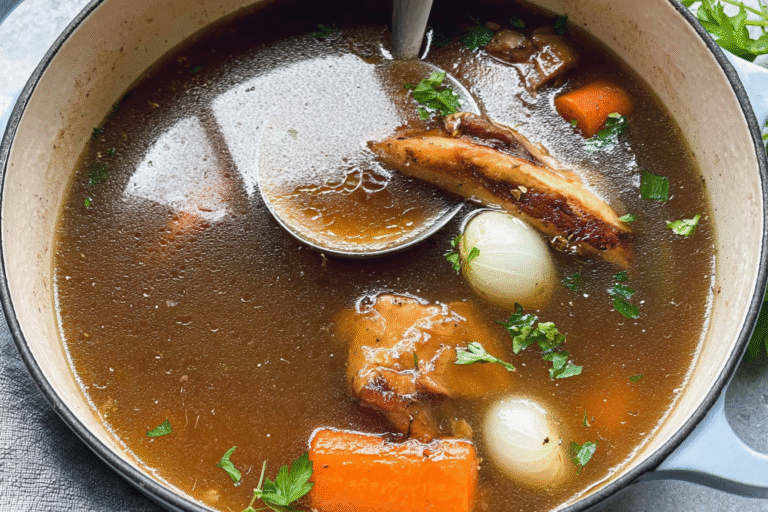
Homemade Bone Broth
🍖 Bone Broth Recipe provides a nutrient-rich, flavorful base perfect for soups, stews, and sipping straight for wellness benefits.
🥄 Making homemade bone broth ensures control over quality and ingredients for a wholesome and nourishing kitchen staple.
- Total Time: 8 hours 30 minutes
- Yield: About 6 quarts of broth
Ingredients
– 10 pounds beef bones (a mix of marrow bones such as femur bones and meaty bones like oxtail, short ribs, knucklebones cut in half)
– 4 large carrots, chopped into 2-inch pieces
– 2 medium onions, quartered
– 2 whole heads of garlic, halved crosswise
– 6 stalks of celery, cut into 2-inch pieces
– 4 bay leaves
– 1/4 cup black peppercorns
– 4 whole star anise (optional)
– 2 cinnamon sticks (optional)
– 2 tablespoons apple cider vinegar
Instructions
1-First, begin by blanching the bones. Divide the 10 pounds of beef bones into two large stockpots, cover them with cold water, and bring to a boil. Then, simmer for 15-20 minutes before draining and rinsing the bones to remove impurities. This step ensures a clearer broth with a cleaner taste, setting the foundation for your recipe.
2-Next, preheat your oven to 450°F (232°C) and transfer the blanched bones along with the vegetables 4 large carrots chopped into 2-inch pieces, 2 medium onions quartered, 2 whole heads of garlic halved crosswise, and 6 stalks of celery cut into 2-inch pieces to roasting pans. Make sure not to overcrowd the pans. Roast for 30 minutes, then toss gently and roast for another 15-30 minutes until everything is deeply browned but not burnt.
3-After roasting, wash the stockpots you used for blanching and return the roasted bones and vegetables to them. Use a spatula to scrape any browned bits from the roasting pans and add them to the pots for extra flavor. Now, add the 4 bay leaves, 1/4 cup black peppercorns, 4 whole star anise if using, 2 cinnamon sticks if desired, and 2 tablespoons apple cider vinegar evenly between the two pots.
4-Fill each pot with about 12 cups of cold water, just enough to cover the bones by about one inch. Cover with a lid and bring to a gentle boil. Reduce the heat to low and simmer with the lid slightly ajar, skimming off any foam or excess fat occasionally. Let it simmer for at least 8-12 hours, or up to 24 hours for the best nutrient extraction, adding water as needed to keep the bones submerged. If the vegetables become too soft, you can remove them during this time.
5-Once done, strain the broth through a wire mesh strainer, and if you want it even clearer, strain it again through a fine mesh. Allow it to cool, then remove any remaining meat from the bones for other uses or discard the solids. For storage, cool the broth quickly with ice and refrigerate until the fat solidifies on top, at which point you can remove it if you prefer a lighter version.
Last Step:
Please leave a rating and comment letting us know how you liked this recipe! This helps our business to thrive and continue providing free, high-quality recipes for you.Notes
🍲 Use a combination of 2-3 different beef bones to enrich flavor and nutrients.
🧼 Blanch bones before roasting to remove impurities and yield clearer broth.
🔥 Roast bones and vegetables thoroughly without burning to develop deep flavor.
⏲️ Simmer broth minimally for 8-12 hours but ideally no longer than 24 hours for best nutrient extraction.
❄️ Refrigerate to solidify fat, which can be removed for a leaner broth or left for richness.
- Prep Time: 30 minutes
- Simmering time: 8-12 hours
- Cook Time: 8-12 hours
- Category: Soup, Broth
- Method: Simmering, Roasting, Blanching
- Cuisine: International
Nutrition
- Serving Size: 1 cup
- Calories: 45 kcal
- Sugar: 0 g
- Sodium: 20 mg (unsalted)
- Fat: 0 g
- Saturated Fat: 0 g
- Unsaturated Fat: 0 g
- Trans Fat: 0 g
- Carbohydrates: 0 g
- Fiber: 0 g
- Protein: 11 g
- Cholesterol: 0 mg