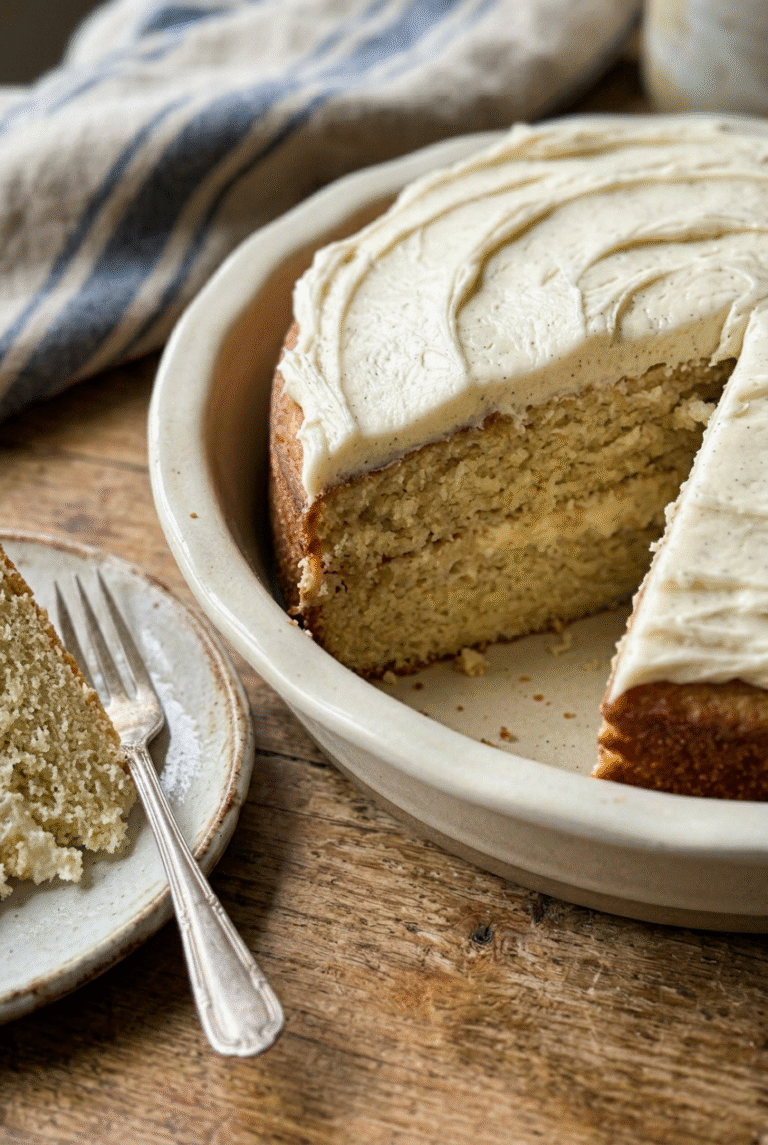
Ingredients
– ½ cup (113 g) unsalted butter, softened to room temperature
– ½ cup (120 ml) avocado, canola, or vegetable oil
– 1 ½ cups (300 g) granulated sugar
– 4 large eggs, room temperature preferred
– 1 tablespoon vanilla extract
– 3 cups (375 g) all-purpose flour (can substitute with 3 1/3 cups cake flour or 375 g cake flour)
– 1 tablespoon baking powder
– ½ teaspoon salt
– 1 ¼ cups (300 ml) full-fat buttermilk, room temperature preferred
– Frosting of choice (e.g., chocolate frosting or other options)
Instructions
1-First Step: Preparing Your Kitchen and Equipment Before mixing your Homemade Vanilla Cake batter, proper preparation is essential. Preheat your oven to 350°F (177°C) and position the rack in the center position for even baking. Prepare your cake pans by cutting parchment paper circles to fit the bottom of two deep 8-inch round pans. Place these in the pans and grease the sides thoroughly with butter or cooking spray. This preparation ensures your cake will release easily after baking without sticking or breaking. Gather all your ingredients and equipment before beginning. For best results, ensure your butter, eggs, and buttermilk have reached room temperature (about 70°F). Room temperature ingredients combine more easily and create a uniform batter, which leads to even baking. Cold ingredients can cause the batter to curdle or separate, affecting the final texture. You’ll need two large mixing bowls, a whisk, a spatula, and an electric mixer (hand or stand) for this recipe.
2-Second Step: Creaming Butter, Oil, and Sugar In a large bowl, combine the softened unsalted butter, your choice of avocado, canola, or vegetable oil, and the granulated sugar. Using an electric mixer on medium speed, beat these together until the mixture is smooth and creamy, approximately 2-3 minutes. This process, called creaming, incorporates air into the batter which helps the cake rise and creates a lighter texture. Scrape down the sides of the bowl periodically to ensure all ingredients are evenly incorporated. For the lightest cake possible, cream the mixture until it appears pale and fluffy. This step is crucial for texture development, so don’t rush it. The sugar crystals should be mostly dissolved into the fats, creating a smooth base for adding the remaining ingredients. The combination of butter and oil is particularly effective here the butter provides structure and flavor, while the oil prevents the cake from becoming tough or dry, even days after baking.
3-Third Step: Adding Eggs and Vanilla With the mixer running on medium-low speed, add the eggs one at a time, beating well after each addition. This gradual incorporation allows each egg to emulsify properly into the batter. After adding all four eggs, mix in the tablespoon of vanilla extract. The high proportion of vanilla extract in this Homemade Vanilla Cake recipe ensures that classic vanilla flavor shines through without being subtle or artificial-tasting. After adding the eggs, the mixture might look slightly curdled or separated, which is normal. It will come back together when you add the dry ingredients. This step should take about 2-3 minutes total. Scrape down the sides and bottom of the bowl to ensure everything is evenly mixed before proceeding to the next step.
4-Fourth Step: Mixing Dry Ingredients In a separate medium bowl, whisk together the all-purpose flour, baking powder, and salt. This dry mixture needs to be combined thoroughly to ensure even distribution of the leavening agent. Whisking for about 30 seconds should be sufficient to blend everything evenly. If you’re using cake flour instead of all-purpose flour, measure it carefully as it’s lighter and more volumetric than all-purpose flour. Make sure your baking powder is fresh for the best rise. Baking powder loses potency over time, and expired leavening agents can lead to dense, flat cakes. If you’re unsure about your baking powder’s freshness, test it by stirring a teaspoon into a half cup of hot water it should bubble vigorously. If not, replace it before proceeding with your Homemade Vanilla Cake.
5-Fifth Step: Combining Wet and Dry Ingredients Add the dry ingredients to the wet mixture in three portions, alternating with the buttermilk in two portions (starting and ending with the dry ingredients). This method, known as the alternating method, helps prevent overmixing, which can develop too much gluten and result in a tough cake. Use a spatula or the mixer on low speed to gently fold the ingredients together, mixing just until combined after each addition. Be careful not to overmix at this stage some small lumps are acceptable and will dissolve during baking. Overmixing can cause your Homemade Vanilla Cake to become dense or develop tunnels. The batter should be smooth but not overly worked. This gentle mixing technique is one of the secrets to achieving a tender, moist crumb that melts in your mouth.
6-Sixth Step: Baking the Cake Layers Divide the batter evenly between your prepared cake pans. Use a kitchen scale for precise measurement, or eyeball it as evenly as possible. Smooth the tops with an offset spatula or the back of a spoon, creating a slight depression in the center (this helps the layers bake evenly flat). Bake both pans on the middle rack of your preheated 350°F (177°C) oven for 30-35 minutes. The cake is done when the top springs back when lightly touched and a toothpick inserted in the center comes out with moist crumbs but no wet batter. Every oven heats differently, so start checking at the 25-minute mark. Rotating the pans halfway through baking can help ensure even browning if your oven has hot spots. The layers should be golden brown on top and pulling slightly away from the edges of the pan.
7-Final Step: Cooling and Frosting Remove the cake layers from the oven and let them cool in the pans for 10-15 minutes. This cooling period allows the structure to set slightly, making the layers easier to handle without breaking. Run a thin knife around the edges of each pan to release the cake, then carefully invert onto wire racks to cool completely. Peel off the parchment paper circles from the bottoms once the cakes are cool enough to handle. Allow the cakes to cool completely before frosting this is crucial for preventing the frosting from melting and sliding off. Depending on your kitchen’s temperature, this may take 1-2 hours. Once completely cool, level the tops if necessary using a serrated knife, then frost with your choice of frosting. Chocolate frosting, vanilla buttercream, cream cheese frosting, or even fruit-based frostings all pair beautifully with this Homemade Vanilla Cake.
Last Step:
Please leave a rating and comment letting us know how you liked this recipe! This helps our business to thrive and continue providing free, high-quality recipes for you.Notes
🧈 Mix butter and oil together for unbeatable moisture and rich buttery flavor.
🌡️ Bring eggs and buttermilk to room temperature for seamless blending and better rise.
⚖️ Spoon and level your flour or use a scale to ensure a light, fluffy texture.
- Prep Time: 30 minutes
- Cook Time: 30-35 minutes
- Category: Dessert
- Method: Baking
- Cuisine: American
- Diet: Vegetarian
Nutrition
- Serving Size: 1 slice
- Calories: 404
- Sugar: 26g
- Sodium: 228mg
- Fat: 20g
- Saturated Fat: 7g
- Unsaturated Fat: 12g
- Trans Fat: 1g
- Carbohydrates: 51g
- Fiber: 1g
- Protein: 6g
- Cholesterol: 85mg