

Why You’ll Love This Lemon Poppy Seed Loaf
If you are looking for a baked treat that strikes the perfect balance between zesty freshness and comforting sweetness, this Lemon Poppy Seed Loaf is about to become your new go-to recipe. It is incredibly simple to make, yet the results taste like they came straight from a fancy bakery. Whether you are serving it for a special brunch or just enjoying a slice with your afternoon tea, this loaf brings a bright, cheerful vibe to the table. Here is why this recipe works so well for home cooks of all skill levels: * **Ease of Preparation:** You do not need to be a professional pastry chef to pull this off. With a total time of just over an hour, including prep and bake, it fits perfectly into a busy schedule. The process involves basic mixing techniques that anyone can master, making it a fantastic project for a relaxed weekend morning. * **Distinctive Flavor Profile:** The combination of bright lemon zest, tart juice, and the subtle nutty crunch of poppy seeds creates a taste sensation that is truly unique. It is not just another sweet bread; the citrus notes cut through the richness, leaving a refreshing aftertaste that keeps you coming back for another slice. * **Versatility:** This Lemon Poppy Seed Loaf is a chameleon in the kitchen. It works beautifully as a breakfast item, a midday snack, or even a light dessert. You can dress it up with the included lemon glaze for a polished look or keep it naked for a more rustic, everyday treat. Beyond just tasting amazing, this recipe offers a wonderful sensory experience. The smell of lemon and butter filling the kitchen while it bakes is simply divine. Plus, because the ingredients are pantry staples, you can likely whip this up without making an extra trip to the grocery store. It is a reliable, crowd-pleasing recipe that delivers consistent results every single time you bake it.Jump to:
- Why You’ll Love This Lemon Poppy Seed Loaf
- Essential Ingredients for Lemon Poppy Seed Loaf
- Main Ingredients
- Ingredient Roles and Benefits
- Special Dietary Options
- How to Prepare the Perfect Lemon Poppy Seed Loaf: Step-by-Step Guide
- First Step: Preparation and Mise en Place
- Second Step: Creaming the Butter and Sugar
- Third Step: Adding Wet Ingredients and Flavor
- Fourth Step: Combining Wet and Dry Mixtures
- Final Step: Baking and Glazing
- Dietary Substitutions to Customize Your Lemon Poppy Seed Loaf
- Protein and Main Component Alternatives
- Vegetable, Sauce, and Seasoning Modifications
- Mastering Lemon Poppy Seed Loaf: Advanced Tips and Variations
- Pro Cooking Techniques
- Flavor Variations
- Presentation Tips
- Make-Ahead Options
- How to Store Lemon Poppy Seed Loaf: Best Practices
- Refrigeration
- Freezing
- Reheating
- Meal Prep Considerations
- FAQs: Frequently Asked Questions About Lemon Poppy Seed Loaf
- What’s the difference between lemon poppy seed loaf and lemon poppy seed bread?
- How much poppy seeds do I need for lemon poppy seed loaf?
- Should butter be softened or melted for lemon poppy seed loaf recipe?
- Can you freeze lemon poppy seed loaf?
- Can I bake lemon poppy seed loaf in mini loaf pans?
- Lemon Poppy Seed Loaf
- Ingredients
- Instructions
- Last Step:
- Notes
- Nutrition
- Did you make this recipe?
Essential Ingredients for Lemon Poppy Seed Loaf
Creating the perfect loaf starts with gathering the right components. Each ingredient plays a specific role in building the structure, moisture, and flavor of the final product. Using high-quality ingredients, especially fresh lemons and good butter, makes a noticeable difference in the overall taste.Main Ingredients
Here is everything you need to make the batter and the optional glaze: * 1 ¾ cups (225g) sifted all-purpose flour * 1 teaspoon baking powder * ½ teaspoon salt * ¾ cup (175g) high quality butter softened at room temperature (not melted) * ¾ cup (165g) sugar * 3 large eggs * 2 tablespoons fresh lemon juice * Zest of 2 lemons * 2 tablespoons poppy seeds * ¾ cup (175 ml) milk * 1 tablespoon lemon juice (for the optional glaze) * 1 cup (120g) powdered sugar sifted (for the optional glaze) * 3 teaspoons milk (for the optional glaze)Ingredient Roles and Benefits
* **All-Purpose Flour:** This provides the structure for your loaf. Sifting it first helps aerate the flour, ensuring a lighter crumb. * **Baking Powder:** The leavening agent that helps the loaf rise and become fluffy rather than dense. * **Salt:** A crucial ingredient that balances the sweetness and accentuates the lemon flavor. * **Butter:** Using softened butter allows you to trap air during the creaming process, which leads to a tender texture. * **Sugar:** Not only for sweetness, but sugar also helps keep the loaf moist and contributes to the golden-brown crust. * **Eggs:** These bind the ingredients together and add richness, helping the loaf set properly as it bakes. * **Lemon Juice and Zest:** The stars of the show! The zest contains essential oils for a potent lemon aroma, while the juice adds acidity and brightness. * **Poppy Seeds:** These add a delightful texture and a mild, nutty flavor that complements the citrus. * **Milk:** Adds necessary liquid to the batter to hydrate the flour and create the right consistency.Special Dietary Options
* **Vegan:** To make this plant-based, substitute the butter with a high-quality vegan butter block or stick. Replace the 3 large eggs with a commercial egg replacer or a flax egg mixture (1 tablespoon ground flaxseed meal mixed with 3 tablespoons water per egg). Use a non-dairy milk like almond or oat milk. * **Gluten-Free:** Swap the all-purpose flour for a 1-to-1 gluten-free baking blend that contains xanthan gum. This helps mimic the structure of gluten without changing the measurement. * **Low-Calorie:** You can reduce the sugar slightly by using a natural sweetener like monk fruit or erythritol, though this may slightly alter the browning. Using applesauce in place of half the butter can also lower the fat content while maintaining moisture.How to Prepare the Perfect Lemon Poppy Seed Loaf: Step-by-Step Guide
Ready to get baking? Follow these detailed steps to ensure your Lemon Poppy Seed Loaf comes out perfectly moist and flavorful every time. Taking your time with the preparation, especially the creaming step, is the secret to getting that professional bakery texture at home.First Step: Preparation and Mise en Place
Start by preheating your oven to 350°F (180°C). It is crucial that the oven is fully hot before the batter goes in, so give it plenty of time to warm up. While the oven heats, grab a 9×5-inch loaf pan and grease it thoroughly. You can use butter, oil, or a non-stick baking spray. For extra insurance, you can line the bottom with parchment paper to make lifting the loaf out later a breeze. Next, sift your dry ingredients. In a medium bowl, sift together the 1 ¾ cups of all-purpose flour, 1 teaspoon of baking powder, and ½ teaspoon of salt. Sifting breaks up any clumps and incorporates air into the flour. Set this bowl aside so it is ready to go when you need it. Ensuring your eggs, milk, and lemon juice are at room temperature will help them mix more evenly with the butter, so take them out of the fridge about 30 minutes before you start.Second Step: Creaming the Butter and Sugar
In a large mixing bowl, combine the ¾ cup of softened butter and ¾ cup of sugar. Using a hand mixer or a stand mixer fitted with a paddle attachment, beat these together on medium speed. You want to cream them until the mixture is pale and fluffy. This process usually takes about 3 to 5 minutes. Do not rush this step! The air bubbles you are creating here are what will make the loaf light and tender. If you notice the mixture looking chunky or curdled at any point, turn off the mixer. Use a rubber spatula to press the butter down against the side of the bowl and smear it. This helps warm it up slightly and smooth out the texture. Once it looks creamy again, continue mixing. Using softened butter rather than melted butter is key here because softened butter holds air pockets, whereas melted butter cannot.Third Step: Adding Wet Ingredients and Flavor
With the mixer on low speed, add the 3 large eggs one at a time. Wait until the first egg is fully incorporated before adding the next. This prevents the batter from separating. Once the eggs are blended in, add the 2 tablespoons of fresh lemon juice, the zest of 2 lemons, and the 2 tablespoons of poppy seeds. Mix these just until they are evenly distributed throughout the batter. The lemon zest is packed with flavor oils, so make sure you are grating just the yellow part and avoiding the white pith underneath, which can be bitter. The poppy seeds should be fresh for the best crunch. Mixing on low speed during this stage is important to prevent generating too much heat, which can melt the butter and ruin the texture you worked so hard to create.Fourth Step: Combining Wet and Dry Mixtures
Now it is time to incorporate the dry ingredients and the milk. With the mixer still on low speed, add about half of the flour mixture to the bowl. Let it mix until just barely combined. Then, pour in half of the ¾ cup of milk. Repeat this process, adding the remaining flour followed by the remaining milk. The key here is to mix only until combined. As soon as you do not see streaks of dry flour, stop the mixer. Overmixing develops gluten, which can make the bread tough and chewy rather than soft and cake-like. It is okay if the batter looks a little thick or lumpy; that is normal. Scrape down the sides of the bowl with a spatula one last time to make sure no pockets of flour are hiding at the bottom.Final Step: Baking and Glazing
Pour the batter into your prepared 9×5-inch loaf pan. Use your spatula to spread the top evenly. Place the pan in the center of your preheated oven. Bake for 50 to 55 minutes. Every oven is different, so start checking for doneness around the 50-minute mark. Insert a wooden toothpick into the center of the loaf. If it comes out clean or with just a few moist crumbs, it is done. Let the loaf cool in the pan for about 10 minutes. This allows it to firm up slightly so it does not break when you remove it. After 10 minutes, carefully turn it out onto a wire cooling rack to cool completely. If you want to add the glaze, wait until the loaf is cool to the touch. Whisk together 1 tablespoon of lemon juice and 1 cup of sifted powdered sugar. Add the 3 teaspoons of milk gradually until you reach a thick but pourable consistency. Spoon this over the top of the loaf and let it harden before slicing.
Dietary Substitutions to Customize Your Lemon Poppy Seed Loaf
One of the best things about baking is how adaptable recipes can be. Whether you have dietary restrictions or just want to experiment with different flavors, you can tweak this Lemon Poppy Seed Loaf to suit your needs without sacrificing taste or texture.Protein and Main Component Alternatives
For those looking to change the protein source or manage dairy intake, there are several excellent swaps. If you are avoiding dairy, high-quality vegan butter sticks are the best substitute for regular butter. They mimic the water and fat content of dairy butter better than oil does, which helps the texture remain fluffy. If you prefer to use oil instead of solid fat, you can use melted coconut oil or vegetable oil, but keep in mind the crumb will be slightly denser and more moist, similar to a muffin. For the eggs, if you have an allergy or follow a vegan diet, you can use commercial egg replacer powders usually found in health food stores. Alternatively, a mixture of 3 tablespoons of aquafaba (the liquid from a can of chickpeas) works well as a binder for each egg. These substitutes help hold the loaf together so it does not crumble when sliced.Vegetable, Sauce, and Seasoning Modifications
While this recipe is classic, you can have fun with the add-ins. If you find poppy seeds too hard or just want a different texture, try substituting them with chia seeds or even chopped nuts like walnuts or pecans for a hearty crunch. For a seasonal twist, you can fold in a cup of fresh blueberries or raspberries to the batter right before baking. The tart berries pair wonderfully with the lemon base. If you want to change the glaze, a simple vanilla glaze made with milk, powdered sugar, and vanilla extract is a classic choice. Alternatively, you could make a cream cheese frosting for a more decadent dessert-style loaf. For the seasoning, a teaspoon of vanilla extract added to the wet ingredients can round out the citrus flavors with a warm, sweet note that many people find comforting.Mastering Lemon Poppy Seed Loaf: Advanced Tips and Variations
Once you have mastered the basic recipe, you might want to refine your technique or try something new. These pro tips will help you take your Lemon Poppy Seed Loaf to the next level, ensuring impressive results for family and friends.Pro Cooking Techniques
* **Room Temperature is Key:** We mentioned this before, but it bears repeating. Room temperature ingredients emulsify perfectly. If your eggs are cold, they can cause the butter to seize up into little chunks, creating a greasy, curdled batter. Planning ahead to set everything out on the counter is the single best thing you can do for this recipe. * **The Reverse Creaming Method:** If you want an incredibly fine, velvety crumb, try the reverse creaming method. Instead of beating butter and sugar first, you mix the flour, sugar, baking powder, and salt together. Then, you add the softened butter and mix until it looks sandy. Finally, add the wet ingredients. This inhibits gluten formation, resulting in a very tender cake.Flavor Variations
* **Lemon Blueberry:** Adding fresh blueberries adds moisture and pockets of sweetness. Toss the berries in a tablespoon of flour before folding them in to prevent them from sinking to the bottom. * **Lavender Lemon:** For a sophisticated floral twist, add 1 to 2 teaspoons of dried culinary lavender to the dry ingredients. This pairs beautifully with the lemon and gives the loaf a rustic, aromatic quality. * **Glazed Lemon Poppy Seed Muffins:** You can easily convert this batter into muffins. Portion the batter into a lined muffin tin and bake for 18 to 22 minutes at the same temperature. This is great for portion control or for packing lunches.Presentation Tips
Presentation matters, especially if you are serving this to guests. Once the loaf is glazed, top it with a few extra strands of lemon zest or a sprinkle of extra poppy seeds while the glaze is still wet. This adds a pop of color and hints at the flavors inside. Serving the loaf on a wooden cutting board or a ceramic cake stand adds a nice rustic touch to your table setting.Make-Ahead Options
This loaf is actually a great candidate for making ahead of time. The flavors tend to meld and develop even more after a day or two. You can bake the loaf, wrap it tightly in plastic wrap, and store it at room temperature for up to two days before serving. If you need to store it longer, freezing is your best bet. You can freeze the whole loaf or individual slices, wrapped well, for up to three months.How to Store Lemon Poppy Seed Loaf: Best Practices
To keep your Lemon Poppy Seed Loaf tasting fresh and delicious, proper storage is essential. Because this loaf contains butter and milk, it behaves differently than dry yeast breads. Following these guidelines will help you maintain that just-baked taste and texture for as long as possible.Refrigeration
If you plan to eat the loaf within three to four days, storing it at room temperature is actually fine, provided the weather is not too hot or humid. Simply wrap it tightly in plastic wrap or store it in an airtight container to keep it from drying out. However, if you live in a warm climate or your kitchen gets hot, it is safer to store the loaf in the refrigerator. Wrap it well to prevent it from absorbing odors from other foods. Just keep in mind that refrigeration can sometimes cause baked goods to dry out slightly faster, so an airtight container is crucial.Freezing
Freezing is an excellent option for long-term storage. For the best results, slice the loaf before freezing. This way, you can thaw exactly what you need rather than having to defrost the entire loaf. Wrap each slice individually in plastic wrap, then place all the wrapped slices into a large freezer-safe bag. Label the bag with the date. You can freeze the loaf for up to three months. When you are ready to eat, take a slice out and let it thaw on the counter for about 30 to 60 minutes. You can also gently warm it in the microwave for a few seconds to restore that fresh-baked softness.Reheating
If your loaf has been refrigerated or frozen and you want to serve it warm, the oven is your best friend. Preheat your oven to a low temperature, around 300°F (150°C). Wrap the loaf or slices in foil to prevent the outside from getting too crusty or the glaze from burning. Heat for about 10 to 15 minutes until warmed through. This method revives the moisture and makes the kitchen smell amazing again. Avoid microwaving unless you are in a rush, as the microwave can make the bread rubbery.Meal Prep Considerations
If you like to prep breakfasts or snacks for the week, this recipe is perfect. Bake a batch on Sunday, slice it, and portion it into containers or bags for easy grab-and-go options throughout the week. It pairs perfectly with a cup of yogurt or a piece of fruit for a balanced breakfast. Having healthy, homemade snacks ready to go prevents you from reaching for processed options when you get busy.
FAQs: Frequently Asked Questions About Lemon Poppy Seed Loaf
What’s the difference between lemon poppy seed loaf and lemon poppy seed bread?
Lemon poppy seed loaf and bread share similar flavors but differ in texture and ingredients. Bread recipes are typically drier, denser, and lower in sugar, designed for slicing and toasting with minimal fat. Loaf recipes, like this one, are richer, buttery, and sweeter, creating a tender, cake-like crumb that’s moist and perfect for snacking or breakfast. The added butter and sugar in loaves give them a soft, indulgent bite without needing extra spreads. If you’re aiming for a quick bread-style treat, go with the loaf—it’s less crumbly and holds up better with a lemon glaze. This distinction helps when adapting recipes or choosing based on your preference for cake-like vs. yeasty textures. (92 words)
How much poppy seeds do I need for lemon poppy seed loaf?
Use exactly 2 tablespoons of poppy seeds for a standard 9×5-inch loaf pan. This amount scatters evenly through the batter, adding a subtle crunch and nutty flavor without overpowering the lemon or drying out the crumb. Too many seeds (over 3 tablespoons) absorb moisture, leading to a tougher texture. Measure them fresh for best results—store extras in an airtight container in the fridge to prevent rancidity. Stir them into the dry ingredients before mixing with wet to ensure even distribution. This precise quantity keeps the loaf moist, tender, and visually appealing with those signature black specks. (98 words)
Should butter be softened or melted for lemon poppy seed loaf recipe?
Always use softened butter at room temperature, not melted, for the best results. Softened butter (left out 1-2 hours until pliable and dented easily by a finger) creams smoothly with sugar, trapping air for a light, fluffy texture. Melted butter makes the batter greasy, resulting in a flat, dense loaf. If your butter-sugar mix looks chunky or curdled, stop the mixer, scrape down with a rubber spatula, and gently press until creamy before adding eggs. Pro tip: Cut butter into tablespoon-sized pieces for even softening. Unsalted is ideal since salt is in the dry mix. This step is key to bakery-quality tenderness. (112 words)
Can you freeze lemon poppy seed loaf?
Yes, freeze individual slices for best results—they thaw quickly and retain moisture. Wrap slices tightly in plastic wrap, then place in a freezer bag for up to 3 months. Thaw at room temperature for 30-60 minutes or microwave for 10-15 seconds. Freezing the whole loaf works but may cause slight dryness upon thawing due to untested expansion; slice first to avoid waste. Label bags with the date. For extra protection, add a layer of foil over the wrap. This makes it easy to enjoy fresh-tasting loaf anytime—great for portion control or meal prep. Avoid refreezing thawed slices to maintain quality. (104 words)
Can I bake lemon poppy seed loaf in mini loaf pans?
Absolutely, mini loaf pans (about 5×3 inches) work great for gifting or smaller servings. Divide batter evenly among 3-4 greased pans. Reduce baking time to 25-35 minutes at 350°F—start checking at 25 minutes with a toothpick for clean crumbs. Pans smaller than standard bake faster due to more edge exposure, so monitor closely to prevent overbrowning. Cool in pans 10 minutes, then on a rack. Yields perfect bite-sized loaves with the same moist texture. Adjust glaze proportionally if using. This adaptation is ideal for parties or freezing extras individually. (96 words)
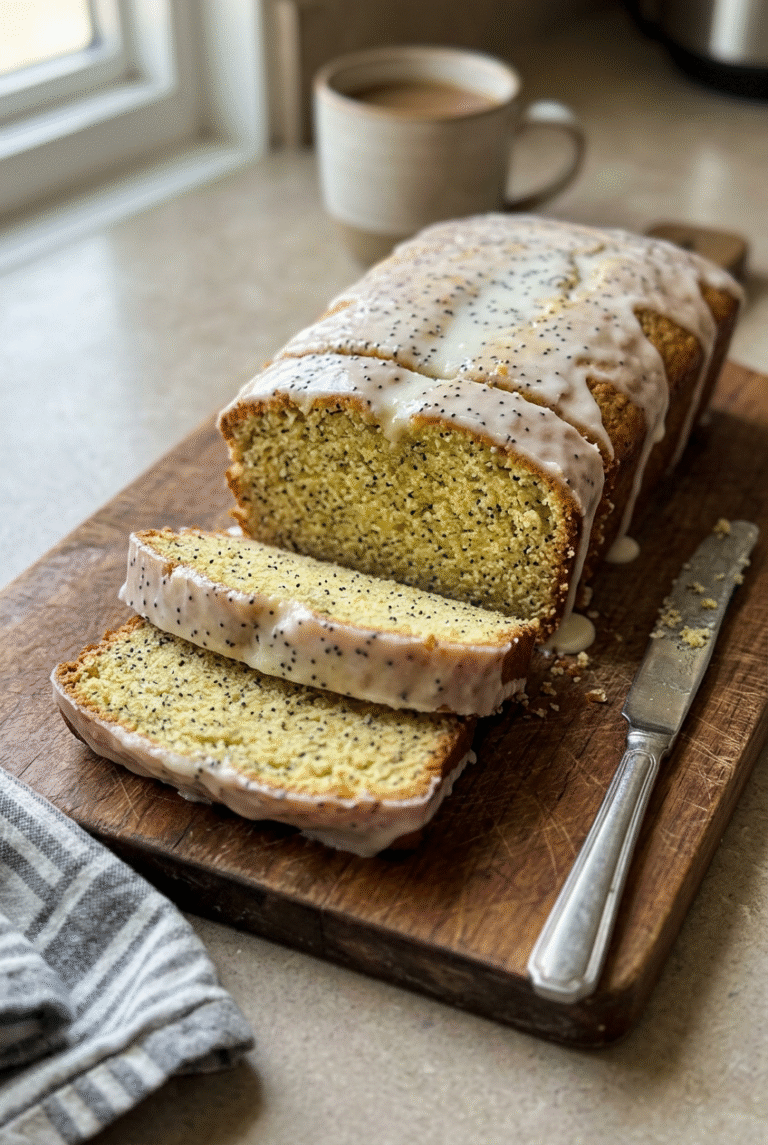
Lemon Poppy Seed Loaf
🍋 Zesty lemon burst with crunchy poppy seeds in a moist, tender loaf – ideal for breakfast, snacks, or tea time delight!
🌿 Easy baking with simple ingredients, optional glaze for glossy sweetness and extra moisture everyone loves!
- Total Time: 1 hour 5 minutes
- Yield: 10 servings
Ingredients
– 1 ¾ cups (225g) sifted all-purpose flour
– 1 teaspoon baking powder
– ½ teaspoon salt
– ¾ cup (175g) high quality butter softened at room temperature (not melted)
– ¾ cup (165g) sugar
– 3 large eggs
– 2 tablespoons fresh lemon juice
– Zest of 2 lemons
– 2 tablespoons poppy seeds
– ¾ cup (175 ml) milk
– 1 tablespoon lemon juice for the optional glaze
– 1 cup (120g) powdered sugar sifted for the optional glaze
– 3 teaspoons milk for the optional glaze
Instructions
1-First Step: Preparation and Mise en Place Start by preheating your oven to 350°F (180°C). It is crucial that the oven is fully hot before the batter goes in, so give it plenty of time to warm up. While the oven heats, grab a 9×5-inch loaf pan and grease it thoroughly. You can use butter, oil, or a non-stick baking spray. For extra insurance, you can line the bottom with parchment paper to make lifting the loaf out later a breeze. Next, sift your dry ingredients. In a medium bowl, sift together the 1 ¾ cups of all-purpose flour, 1 teaspoon of baking powder, and ½ teaspoon of salt. Sifting breaks up any clumps and incorporates air into the flour. Set this bowl aside so it is ready to go when you need it. Ensuring your eggs, milk, and lemon juice are at room temperature will help them mix more evenly with the butter, so take them out of the fridge about 30 minutes before you start.
2-Second Step: Creaming the Butter and Sugar In a large mixing bowl, combine the ¾ cup of softened butter and ¾ cup of sugar. Using a hand mixer or a stand mixer fitted with a paddle attachment, beat these together on medium speed. You want to cream them until the mixture is pale and fluffy. This process usually takes about 3 to 5 minutes. Do not rush this step! The air bubbles you are creating here are what will make the loaf light and tender. If you notice the mixture looking chunky or curdled at any point, turn off the mixer. Use a rubber spatula to press the butter down against the side of the bowl and smear it. This helps warm it up slightly and smooth out the texture. Once it looks creamy again, continue mixing. Using softened butter rather than melted butter is key here because softened butter holds air pockets, whereas melted butter cannot.
3-Third Step: Adding Wet Ingredients and Flavor With the mixer on low speed, add the 3 large eggs one at a time. Wait until the first egg is fully incorporated before adding the next. This prevents the batter from separating. Once the eggs are blended in, add the 2 tablespoons of fresh lemon juice, the zest of 2 lemons, and the 2 tablespoons of poppy seeds. Mix these just until they are evenly distributed throughout the batter. The lemon zest is packed with flavor oils, so make sure you are grating just the yellow part and avoiding the white pith underneath, which can be bitter. The poppy seeds should be fresh for the best crunch. Mixing on low speed during this stage is important to prevent generating too much heat, which can melt the butter and ruin the texture you worked so hard to create.
4-Fourth Step: Combining Wet and Dry Mixtures Now it is time to incorporate the dry ingredients and the milk. With the mixer still on low speed, add about half of the flour mixture to the bowl. Let it mix until just barely combined. Then, pour in half of the ¾ cup of milk. Repeat this process, adding the remaining flour followed by the remaining milk. The key here is to mix only until combined. As soon as you do not see streaks of dry flour, stop the mixer. Overmixing develops gluten, which can make the bread tough and chewy rather than soft and cake-like. It is okay if the batter looks a little thick or lumpy; that is normal. Scrape down the sides of the bowl with a spatula one last time to make sure no pockets of flour are hiding at the bottom.
5-Final Step: Baking and Glazing Pour the batter into your prepared 9×5-inch loaf pan. Use your spatula to spread the top evenly. Place the pan in the center of your preheated oven. Bake for 50 to 55 minutes. Every oven is different, so start checking for doneness around the 50-minute mark. Insert a wooden toothpick into the center of the loaf. If it comes out clean or with just a few moist crumbs, it is done. Let the loaf cool in the pan for about 10 minutes. This allows it to firm up slightly so it does not break when you remove it. After 10 minutes, carefully turn it out onto a wire cooling rack to cool completely. If you want to add the glaze, wait until the loaf is cool to the touch. Whisk together 1 tablespoon of lemon juice and 1 cup of sifted powdered sugar. Add the 3 teaspoons of milk gradually until you reach a thick but pourable consistency. Spoon this over the top of the loaf and let it harden before slicing.
Last Step:
Please leave a rating and comment letting us know how you liked this recipe! This helps our business to thrive and continue providing free, high-quality recipes for you.Notes
🧈 Use fully softened (not melted) butter and cream with sugar until pale and fluffy for best texture.
🌡️ Bring eggs, butter, milk, and lemon juice to room temperature for even mixing and rise.
✅ Sift dry ingredients and check doneness with toothpick, as ovens vary.
- Prep Time: 15 minutes
- Cooling: 10 minutes
- Cook Time: 50-55 minutes
- Category: Dessert
- Method: Baked
- Cuisine: American
- Diet: Vegetarian
Nutrition
- Serving Size: 1 slice
- Calories: 350 kcal
- Sugar: 25g
- Sodium: 220mg
- Fat: 17g
- Saturated Fat: 10g
- Unsaturated Fat: 6g
- Trans Fat: 0g
- Carbohydrates: 45g
- Fiber: 1g
- Protein: 5g
- Cholesterol: 95mg