
Why You’ll Love This Raspberry Jelly
Picture this: you’re in your kitchen, whipping up something simple yet delicious that makes your family smile. This raspberry jelly recipe is wonderfully straightforward, taking just a short time to prepare and fitting perfectly into a busy day. Beyond its ease, it’s packed with goodness from fresh raspberries, offering antioxidants and vitamins that support your daily wellness without overloading on empty calories.
One of the best parts is how versatile it is whether you’re following a vegan diet or looking for gluten-free options, this jelly adapts beautifully. And let’s not forget the burst of tart sweetness that makes every bite feel like a treat, setting it apart from store-bought spreads. It’s no wonder this homemade delight becomes a staple for meals or snacks, appealing to home cooks, busy parents, and everyone in between.
For those exploring new flavors, this raspberry jelly pairs wonderfully with baked goods or fresh fruits. If you’re a baking enthusiast, try spreading it on warm scones for a delightful twist. In fact, you can enhance your breakfast routine with recipes like our mini Earl Grey honey scones, which complement the jelly’s fresh taste perfectly.
Jump to:
- Why You’ll Love This Raspberry Jelly
- Essential Ingredients for Raspberry Jelly
- How to Prepare the Perfect Raspberry Jelly: Step-by-Step Guide
- Finishing and Canning Steps
- Dietary Substitutions to Customize Your Raspberry Jelly
- Protein and Main Component Alternatives
- Vegetable, Sauce, and Seasoning Modifications
- Mastering Raspberry Jelly: Advanced Tips and Variations
- How to Store Raspberry Jelly: Best Practices
- FAQs: Frequently Asked Questions About Raspberry Jelly
- How do I remove raspberry seeds when making raspberry jelly?
- What is the best way to sterilize jars and lids for canning raspberry jelly?
- What is the difference between raspberry jelly and raspberry jam?
- How long does homemade raspberry jelly last when stored properly?
- Can I make raspberry jelly without added pectin?
- Raspberry Jelly
- Ingredients
- Instructions
- Last Step:
- Notes
- Nutrition
- Did you make this recipe?
Essential Ingredients for Raspberry Jelly
Gathering the right ingredients is the first step to creating a jelly that’s both flavorful and easy to make. Below is a complete list based on the recipe, ensuring you have everything needed for success. We’ll focus on the precise measurements to make your cooking experience smooth and reliable.
- 5 cups fresh raspberry juice
- 5 cups granulated sugar
These ingredients form the core of the recipe, providing the perfect balance for a jelly that sets well and tastes amazing. Fresh raspberry juice brings a vibrant, natural flavor, while granulated sugar helps with both sweetness and the setting process. Remember, using fresh items ensures the best results, especially for those watching their diet or seeking a homemade touch.
How to Prepare the Perfect Raspberry Jelly: Step-by-Step Guide
Making raspberry jelly at home is easier than you might think, and it starts with extracting the juice from those juicy berries. First, extract 5 cups of juice from fresh raspberries you can use a juicer for quick seed removal, or cook the raspberries with about 1.5 cups of water for 10 minutes and strain through a fine mesh sieve or cheesecloth.
Next, in a large heavy-bottomed pot that’s at least 5 quarts, combine the 5 cups of raspberry juice with the 5 cups of granulated sugar. Gently heat the mixture over medium heat, stirring frequently until most of the sugar dissolves, which helps prevent any sticking or burning.
Then, crank up the heat to medium-high and bring it to a full rolling boil that keeps bubbling even when stirred. Continue cooking until the temperature hits at least 215 degrees Fahrenheit, usually around 25 minutes, while stirring often to keep things even. Once done, remove the pot from the heat and skim off any foam with a slotted spoon for a clearer jelly.
Finishing and Canning Steps
Now, sterilize your canning jars by boiling them for 5 minutes to ensure they’re ready for storage. Pour the hot jelly into the jars, leaving 1/4 inch of space at the top, then wipe the rims clean, add the lids, and secure the rings carefully.
Process the jars in a boiling water bath for 10 minutes, turn off the heat, and let them sit for another 5 minutes. Finally, remove the jars to a towel-lined surface and listen for those satisfying popping sounds that mean they’re sealed properly. Once cooled, check the seals by pressing the lids if one springs back, refrigerate that jar right away, while sealed ones can last up to 1 year in the pantry.
As an added tip, this process takes about 10 minutes for prep, 25 minutes for cooking, and roughly 1 hour total including canning and cooling. For more inspiration on preserving your creations, check out how to make jam and jelly from reliable sources.

Dietary Substitutions to Customize Your Raspberry Jelly
Everyone’s dietary needs are different, and this raspberry jelly can be tweaked to fit yours without losing its charm. Whether you’re adjusting for health reasons or personal taste, small changes make a big difference.
Protein and Main Component Alternatives
Consider swapping raspberries for other fruits like strawberries or blackberries if they’re in season, keeping the same juice volume for consistency. This keeps the jelly’s base strong while adding variety to your homemade treats.
Vegetable, Sauce, and Seasoning Modifications
To mix things up, try adding natural enhancers like vanilla extract or a dash of cinnamon for extra flavor. Always check that these additions are free from gluten or animal products if you’re catering to specific diets, making your jelly even more inclusive for vegans and gluten-free eaters.
Mastering Raspberry Jelly: Advanced Tips and Variations
Once you’ve got the basics down, it’s time to level up your raspberry jelly game with some pro techniques. For instance, use a candy thermometer to track the exact temperature, ensuring your jelly sets just right every time.
Flavor variations can turn this simple recipe into something special think adding fresh herbs like mint for a refreshing twist. Presentation is key too; serve your jelly in pretty jars topped with a few whole raspberries to impress at your next gathering.
Make-ahead options are a busy person’s dream; prepare a big batch and freeze portions for later. If you’re looking for complementary ideas, our site has great options like Funfetti Greek Yogurt Muffins, which pair wonderfully with your homemade jelly for a fun breakfast.
| Tip Category | Advice |
|---|---|
| Fruit Selection | Use fresh raspberries, including some unripe ones, for better natural pectin and setting. |
| Cooking Method | Avoid overcooking to keep the jelly from darkening; rely on temperature over time. |
| Storage Hack | Keep lids in hot water, not boiling, to protect the seal during canning. |
Remember, maintaining an equal ratio of 5 cups sugar to 5 cups juice is crucial for the best texture and shelf life, so don’t skimp on that sugar.
How to Store Raspberry Jelly: Best Practices
Proper storage keeps your raspberry jelly fresh and tasty for as long as possible. Start by refrigerating it in airtight containers, where it stays good for up to 3 weeks.
For longer-term needs, freezing is a great option just portion it out and thaw in the fridge when you’re ready. When reheating, do it gently on the stove or in the microwave to maintain that perfect texture.
Meal prep enthusiasts will love batching this jelly ahead; it simplifies your routine and keeps flavors vibrant. Plus, with the nutritional info in mind like 697 calories and 179 grams of carbs per recipe you can plan how it fits into your daily eats.
FAQs: Frequently Asked Questions About Raspberry Jelly
How do I remove raspberry seeds when making raspberry jelly?
To remove raspberry seeds for jelly, first crush the raspberries gently. Then, cook them with a small amount of water to soften the fruit. Pour the mixture through a fine mesh sieve, cheesecloth, or jelly bag and press or squeeze to extract the juice without the seeds. Alternatively, a juicer designed to separate seeds can also be used. Removing seeds ensures a smooth, clear jelly texture.
What is the best way to sterilize jars and lids for canning raspberry jelly?
Sterilize jars by placing them in boiling water for at least 5 minutes, then carefully remove and let them dry without touching the inside. For lids, heat them in hot water (not boiling) for about 10 minutes to soften the sealing compound without damaging it. Proper sterilization helps prevent contamination and extends the shelf life of your jelly.
What is the difference between raspberry jelly and raspberry jam?
Raspberry jelly is made from the juice of raspberries and has a clear, firm texture without any fruit pieces. Raspberry jam, on the other hand, uses mashed whole fruit, including pulp and seeds, resulting in a thicker, chunkier spread. Jelly is smoother and often used for glazing or sandwich spreads, while jam offers a fruitier, more textured experience.
How long does homemade raspberry jelly last when stored properly?
When sealed in sterilized jars and stored in a cool, dark place, homemade raspberry jelly typically lasts up to one year. Once opened, it should be refrigerated and consumed within 3 to 4 weeks for best flavor and safety. Proper sealing and storage are key to preventing spoilage and preserving taste.
Can I make raspberry jelly without added pectin?
Yes, you can make raspberry jelly without added pectin by using naturally high-pectin fruits like apples or citrus peels as additives, or by boiling the raspberry juice longer to concentrate natural pectin. However, this may result in a less firm jelly and longer cooking times. Testing the jelly for proper set by chilling a small amount on a plate can help determine readiness.
Raspberry Jelly
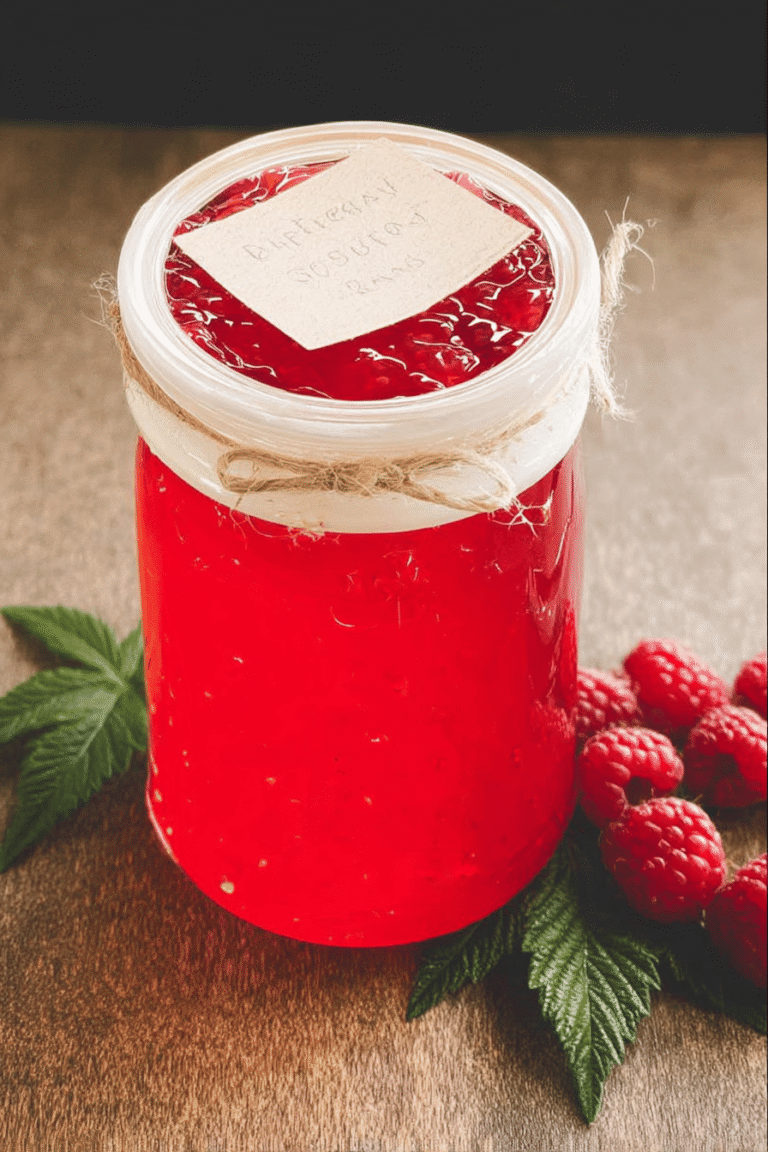
🍇 Enjoy the natural goodness of homemade raspberry jelly without the need for pectin, offering a pure and authentic taste.
🍯 This easy recipe ensures a perfectly set, sweet jelly that’s ideal for spreading on toast or adding to your favorite desserts.
- Total Time: 1 hour
Ingredients
– 5 cups fresh raspberry juice
– 5 cups granulated sugar
Instructions
1-Extract the juice from raspberries: First, extract 5 cups of juice from fresh raspberries you can use a juicer for quick seed removal, or cook the raspberries with about 1.5 cups of water for 10 minutes and strain through a fine mesh sieve or cheesecloth.
2-Combine juice and sugar: Next, in a large heavy-bottomed pot that’s at least 5 quarts, combine the 5 cups of raspberry juice with the 5 cups of granulated sugar. Gently heat the mixture over medium heat, stirring frequently until most of the sugar dissolves, which helps prevent any sticking or burning.
3-Bring to a boil and cook: Then, crank up the heat to medium-high and bring it to a full rolling boil that keeps bubbling even when stirred. Continue cooking until the temperature hits at least 215 degrees Fahrenheit, usually around 25 minutes, while stirring often to keep things even. Once done, remove the pot from the heat and skim off any foam with a slotted spoon for a clearer jelly.
4-Sterilize jars: Now, sterilize your canning jars by boiling them for 5 minutes to ensure they’re ready for storage. Pour the hot jelly into the jars, leaving 1/4 inch of space at the top, then wipe the rims clean, add the lids, and secure the rings carefully.
5-Process jars in boiling water bath: Process the jars in a boiling water bath for 10 minutes, turn off the heat, and let them sit for another 5 minutes. Finally, remove the jars to a towel-lined surface and listen for those satisfying popping sounds that mean they’re sealed properly. Once cooled, check the seals by pressing the lids if one springs back, refrigerate that jar right away, while sealed ones can last up to 1 year in the pantry.
Last Step:
Please leave a rating and comment letting us know how you liked this recipe! This helps our business to thrive and continue providing free, high-quality recipes for you.Notes
🍓 Use fresh raspberries, including some unripe ones, for better natural pectin.
🥄 Maintain equal sugar to juice ratio (5 cups each) to ensure proper setting.
🌡️ Rely on reaching 215°F temperature to set jelly rather than cooking time alone.
- Prep Time: 10 minutes
- Cook Time: 25 minutes
- Cook Time: 25 minutes
- Category: Condiment
- Method: Boiling and Canning
Nutrition
- Calories: 697
- Sugar: 171 g
- Sodium: 3 mg
- Fat: 1 g
- Carbohydrates: 179 g
- Protein: 1 g