Ingredients
– 500 grams veal mince – Adds delicate flavor and tenderness to the ragù
– 500 grams pork mince – Provides richness and moisture to the meat sauce
– 1 carrot, diced into small cubes – Adds subtle sweetness and depth of flavor
– 1 celery stick, diced into small cubes – Contributes aromatic flavor to the soffrito
– ½ brown onion, diced into small cubes – Forms the flavor base of the ragù
– 2 bottles Italian passata (homemade preferred) – Provides the perfect tomato base for the sauce
– 1 glass red wine – Adds acidity and complexity to the meat sauce
– Salt and pepper to taste – Essential for seasoning and balancing flavors
– 200 250 grams provolone cheese – Adds a mild, smoky flavor and perfect melt
– 250 300 grams buffalo mozzarella or fior di latte (well drained) – Provides creamy, stretchy texture
– 120 150 grams grated pecorino or Parmigiano Reggiano – Adds salty, nutty umami notes
– Fresh egg lasagna pasta sheets – The foundation for perfect layers
– Extra virgin olive oil – Adds richness and authentic Italian flavor
– 25 grams butter – Creates the rich base for the white sauce
– 25 grams plain flour (about 1/8 cup) – Thickens the sauce to perfect consistency
– 250 ml milk – Creates the creamy white sauce texture
– Sprinkle of salt – Enhances overall flavor
– Sprinkle of nutmeg – Adds subtle warmth and depth
Instructions
1-First Step: Prepare the Soffrito Begin by dicing your vegetables into small, uniform cubes. You’ll need one carrot, one celery stick, and half a brown onion. Heat a generous amount of extra virgin olive oil in a large, heavy-bottomed pot over medium-low heat. Add the vegetables and cook slowly, stirring occasionally, until softened and translucent. This soffrito forms the aromatic foundation of your ragù, so take your time!
2-Second Step: Brown the Meat Once your soffrito is softened, increase the heat to medium and add both the veal mince and pork mince. Use a wooden spoon to break down the meat as it browns, ensuring you create small, uniform pieces. This technique is crucial for a smooth, cohesive sauce. As the meat browns, add a glass of red wine and let it simmer until completely evaporated. The alcohol will cook off, leaving behind its wonderful flavor compounds.
3-Third Step: Simmer the Ragù Stir in one and a half bottles of Italian passata, reduce the heat to medium-low, cover the pot, and let it simmer for one hour. Stir occasionally to prevent sticking. After the first hour, remove the lid, add a glass of water, and continue cooking uncovered for another hour. This second hour allows the sauce to reduce and thicken properly. The total cooking time for the ragù should be approximately two hours, which is essential for developing the deep, complex flavors characteristic of authentic Italian lasagna.
4-Fourth Step: Prepare the Béchamel While the ragù simmers, prepare your béchamel sauce. Melt 25 grams of butter in a separate saucepan over low heat. Whisk in 25 grams of plain flour until smooth, creating a roux. Gradually add 250 ml of milk, stirring constantly to avoid lumps. Continue cooking over low heat, stirring frequently, until the sauce thickens to a creamy consistency. Season with a sprinkle of salt and a pinch of nutmeg. The nutmeg is a traditional addition that adds a subtle warmth without overwhelming the sauce.
5-Fifth Step: Assemble Your Lasagna Preheat your oven to 180°C (350°F). Lightly oil a baking dish with extra virgin olive oil or melted butter. Cut your fresh egg lasagna pasta sheets to fit your dish. Begin layering: first a thin layer of meat sauce, then pasta sheets, followed by a sprinkle of grated pecorino or Parmigiano Reggiano, slices of provolone, pieces of fresh mozzarella, and finally a moderate layer of béchamel. Repeat this process for 5-6 layers, ending with a final layer of pasta topped with the remaining passata. Cover tightly with aluminum foil to trap steam during baking.
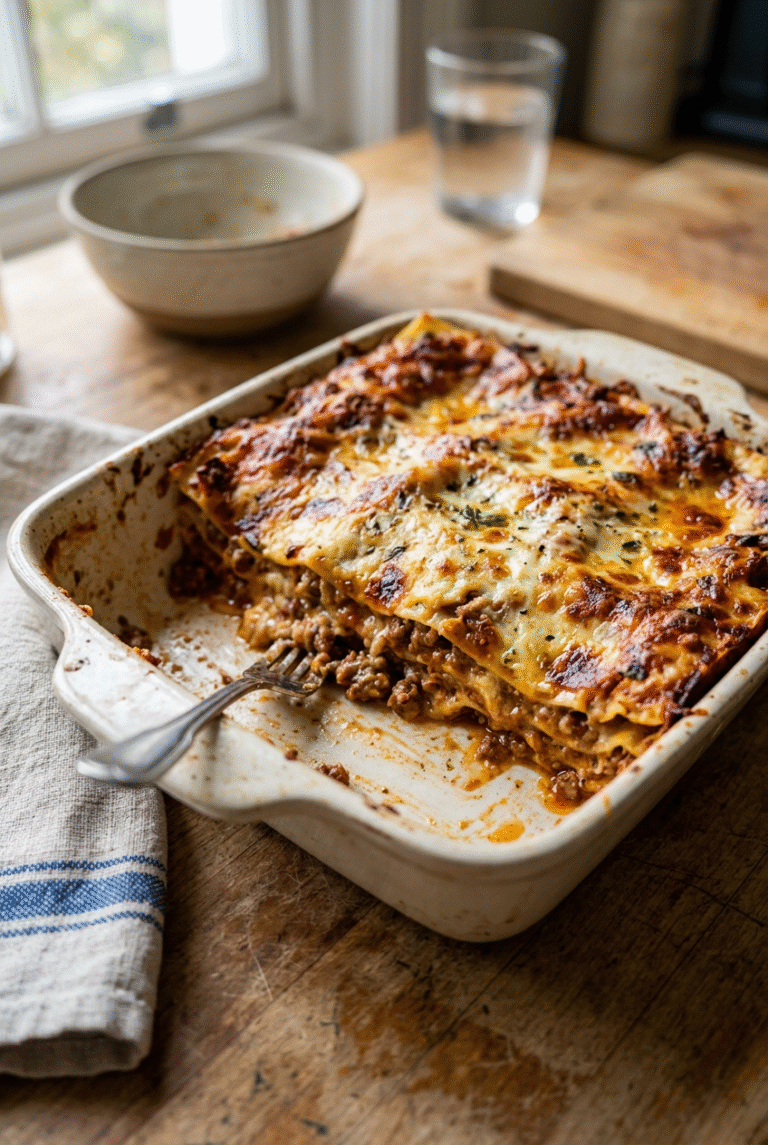
6-Final Step: Bake and Rest Bake the lasagna covered at 180°C (350°F) for 20 minutes. Remove the foil and sprinkle additional grated pecorino or Parmigiano Reggiano over the top. Return to the oven and bake uncovered for 10 more minutes, until the cheese is melted and beginning to brown. This step is crucial for achieving that beautiful golden top! Once out of the oven, let the lasagna cool for at least 15-20 minutes before slicing. This resting period allows the layers to set, ensuring clean, presentable pieces when serving.
Last Step:
Please leave a rating and comment letting us know how you liked this recipe! This helps our business to thrive and continue providing free, high-quality recipes for you.Notes
🍖 Break down the mince thoroughly while browning for a moist, even texture throughout.
🍷 Incorporate red wine early for deeper flavor and tenderness in the sauce.
🧊 Freeze extra ragù sauce in portions for quick future lasagnas or pasta dishes.
- Prep Time: 15 minutes
- Cook Time: 3 hours
- Category: Main Course
- Method: Bake
- Cuisine: Italian
Nutrition
- Serving Size: 1/6 lasagna
- Calories: 685
- Sugar: 8g
- Sodium: 850mg
- Fat: 45g
- Saturated Fat: 20g
- Unsaturated Fat: 25g
- Trans Fat: 0g
- Carbohydrates: 40g
- Fiber: 3g
- Protein: 35g
- Cholesterol: 150mg