
Why You’ll Love This Cabbage Soup
This hearty cabbage soup is more than just a simple bowl of vegetables it’s a nutritious, filling meal that comes together in just 30 minutes. Here’s why this recipe deserves a spot in your regular meal rotation:- Ease of preparation: With just 15 minutes of prep and 15 minutes of cooking, this soup is perfect for busy weeknights. The simple chopping and one-pot cooking method means minimal cleanup and maximum flavor. Even if you’re new to cooking, the straightforward steps make this recipe accessible to home cooks of all skill levels.
- Health benefits: Cabbage is an often-overlooked nutritional powerhouse packed with vitamins C and K, fiber, and antioxidants. According to health experts, this vegetable offers numerous wellness benefits including immune support and digestion aid. This soup delivers 61mg of vitamin C and 3106 IU of vitamin A per serving while remaining low in calories at just 145 calories per bowl.
- Versatility: This recipe adapts easily to whatever you have in your kitchen or dietary preferences you might follow. Whether you’re vegan, vegetarian, or looking to add more protein, the base recipe serves as a perfect canvas for customization. You can transform it with different vegetables, proteins, or seasonings based on what’s in season or what your family enjoys.
- Distinctive flavor: The combination of aromatic vegetables, dried herbs, and a splash of lemon juice creates a depth of flavor that belies the simple ingredient list. The slight sweetness of the cabbage balances beautifully with the savory broth and tomatoes, while the fresh herbs add brightness to each spoonful.
Jump to:
- Why You’ll Love This Cabbage Soup
- Essential Ingredients for Cabbage Soup
- Main Ingredients
- Special Dietary Options
- How to Prepare the Perfect Cabbage Soup: Step-by-Step Guide
- Preparation and Cooking
- Timing and Temperature Guidelines
- Getting the Texture Right
- Protein and Main Component Alternatives
- Meat-Based Protein Options
- Plant-Based Protein Alternatives
- Vegetable, Sauce, and Seasoning Modifications
- Vegetable Variations
- Sauce and Seasoning Twists
- Mastering Cabbage Soup: Advanced Tips and Variations
- Pro Cooking Techniques
- Flavor Variations
- Presentation Tips
- Make-Ahead Options
- How to Store Cabbage Soup: Best Practices
- Refrigeration
- Freezing
- Reheating
- Meal Prep Considerations
- FAQs: Frequently Asked Questions About Cabbage Soup
- What type of cabbage is best for cabbage soup?
- How long does it take to make cabbage soup?
- Can I add protein to cabbage soup?
- How do you store and freeze cabbage soup?
- Can I use frozen vegetables or coleslaw mix in cabbage soup?
- Cabbage Soup
- Ingredients
- Instructions
- Last Step:
- Notes
- Nutrition
- Did you make this recipe?
Essential Ingredients for Cabbage Soup
Creating this delicious cabbage soup requires just a handful of simple ingredients that you might already have in your kitchen. Here’s everything you’ll need:Main Ingredients
- 2 tablespoons oil
- 1 diced onion
- 1 large diced carrot
- 2 diced celery stalks
- 2 minced garlic cloves
- ½ teaspoon dried oregano
- ½ teaspoon dried basil
- ½ teaspoon salt
- half a chopped cabbage (about ½ head)
- 1 (14-ounce) can diced tomatoes
- 4 to 6 cups vegetable broth
- 1 to 2 tablespoons lemon juice
- ¼ cup roughly chopped fresh parsley
- cracked black pepper to taste
Special Dietary Options
| Dietary Need | Substitutes/Notes |
|---|---|
| Vegan | This recipe is naturally vegan when using vegetable broth. No substitutions needed! |
| Gluten-free | All ingredients are naturally gluten-free. Just ensure your vegetable broth is certified gluten-free if that’s a concern. |
| Low-calorie | At just 145 calories per serving, this soup is already diet-friendly. To reduce calories further, decrease the oil to 1 tablespoon. |
How to Prepare the Perfect Cabbage Soup: Step-by-Step Guide
Making this delicious cabbage soup is a straightforward process that yields restaurant-quality results in your own kitchen. Follow these detailed instructions for the perfect bowl every time. For another take on this classic dish, you might want to check out this cabbage soup recipe for additional inspiration.Preparation and Cooking
First Step: Prepare your ingredients by chopping all vegetables before you begin cooking. Dice the onion, carrot, and celery into uniform pieces, mince the garlic cloves, and chop half a head of cabbage into bite-sized pieces. Having everything ready (mise en place) makes the cooking process smooth and stress-free. This preparation takes about 10-15 minutes but is crucial for even cooking and professional results.
Second Step: Heat 2 tablespoons of oil in a large pot or Dutch oven over medium-high heat. Once the oil shimmers, add the diced onion, carrot, and celery stalks. Cook these aromatic vegetables for 4 to 5 minutes, stirring occasionally, until they begin to soften and become fragrant. This step builds the flavor foundation of your soup by releasing the natural sugars in the vegetables.
Third Step: Add the minced garlic cloves and the dried spices (½ teaspoon each of dried oregano, basil, and salt) to the pot. Stir constantly for about 1 minute until the garlic becomes fragrant but not browned. This quick cooking time ensures the spices bloom and release their oils without burning, which can make them taste bitter.
Fourth Step: Add the chopped cabbage to the pot, stirring frequently to coat it with the oil and spices. Let the cabbage “sweat” for 5 minutes, which means cooking it until it begins to wilt and shrink in volume. This step removes excess moisture from the cabbage and concentrates its flavor before adding the liquid components. The cabbage should be slightly translucent and tender but still have some structure.
Fifth Step: Pour in 4 to 6 cups of vegetable broth, depending on your preferred soup consistency. For a thicker, stew-like soup, use 4 cups; for a brothier soup, use the full 6 cups. Add the entire 14-ounce can of diced tomatoes, including the juice, which adds body and acidity to balance the sweetness of the vegetables. Stir everything together to combine.
Sixth Step: Bring the soup to a gentle boil, then reduce the heat to medium-low and let it simmer uncovered for 10 minutes. This cooking time allows all the flavors to meld together and the vegetables to reach perfect tenderness. The cabbage should be soft but not mushy, and the broth should be flavorful and slightly thickened. Stir occasionally during cooking to prevent sticking and ensure even heating.
Final Step: Remove the pot from heat and stir in 1 to 2 tablespoons of fresh lemon juice, which adds a bright note that lifts all the flavors. Add the ¼ cup of chopped fresh parsley and cracked black pepper to taste. The parsley adds a fresh, herbaceous finish while the black pepper provides a gentle warmth. Taste the soup and adjust seasonings if needed, adding more salt or lemon juice to suit your preferences. Serve hot in bowls, perhaps with a slice of crusty bread for a complete meal.
Timing and Temperature Guidelines
Remember, the total time from start to finish is just 30 minutes 15 minutes for preparation and 15 minutes for cooking making this an ideal weeknight meal. The quick cooking time preserves the nutritional content of the vegetables while still developing complex flavors.
To achieve the best results with this cabbage soup, paying attention to timing and temperature is essential. Here are the key temperature checkpoints throughout the cooking process:
| Stage | Temperature | Duration |
|---|---|---|
| Initial sauté | Medium-high heat (375°F/190°C) | 4-5 minutes |
| Spice blooming | Medium-high heat (375°F/190°C) | 1 minute |
| Cabbage sweating | Medium heat (325°F/165°C) | 5 minutes |
| Simmering | Medium-low heat (200°F/93°C) | 10 minutes |
Getting the Texture Right
The texture of your cabbage soup can significantly impact your eating experience. Here are some tips to achieve the perfect consistency:
- Cabbage preparation: Chop your cabbage into uniform pieces, about ½ to 1 inch in size. This ensures even cooking and a pleasant texture in every bite. Avoid chopping too finely, or the cabbage will disintegrate during cooking.
- Broth ratio: Start with 4 cups of broth for a thicker, stew-like consistency. If you prefer a soupier texture, gradually add the remaining broth until you reach your desired consistency. Remember that the vegetables will release some liquid as they cook, affecting the final thickness.
- Cooking time: Simmering for exactly 10 minutes creates a soup where the vegetables are tender but still retain some structure. Overcooking will result in mushy vegetables and a less appealing texture.
- Adjustment method: If your soup becomes too thick after cooking, simply add a little more broth or water. If it’s too thin, continue simmering for a few more minutes to reduce the liquid slightly.
The ideal cabbage soup should have a broth that coats the back of a spoon, with vegetables that offer a slight resistance when bitten, not completely mushy but thoroughly cooked.
Protein and Main Component Alternatives
While this cabbage soup is delicious on its own, adding protein can transform it into a more substantial meal. Here are some excellent options for increasing the protein content:Meat-Based Protein Options
For those who enjoy meat in their soup, several options work wonderfully with cabbage:
- Ground turkey or chicken: Brown 1 pound of ground poultry in the pot before adding the vegetables. Drain excess fat if needed, then proceed with the recipe. This adds approximately 25-30 grams of protein to the entire recipe and makes the soup more filling.
- Ground beef: For a richer flavor, brown 1 pound of lean ground beef (90% lean or higher) before adding the vegetables. The beef pairs exceptionally well with the cabbage and tomatoes, creating a hearty, satisfying meal.
- Italian sausage: Brown 1 pound of mild or hot Italian sausage, breaking it into small pieces as it cooks. Remove excess fat if necessary. The seasonings in the sausage complement the herbs in the soup beautifully.
- Shredded chicken: Add 2-3 cups of cooked, shredded chicken during the last 5 minutes of simmering. This is a perfect way to use leftover roasted chicken or rotisserie chicken.
Plant-Based Protein Alternatives
For vegetarian or vegan versions, or simply to add more plant-based nutrition, consider these protein options:
- Beans: Add 1 can (15 ounces) of drained and rinsed white beans, chickpeas, or kidney beans during the simmering stage. Beans absorb the flavorful broth and provide a creamy texture, adding approximately 15 grams of protein to the recipe.
- Lentils: Red or green lentils work excellently in cabbage soup. Add 1 cup of dried lentils when you pour in the broth, and extend the simmering time to 20-25 minutes until the lentils are tender. This adds about 18 grams of protein and creates a thicker, more substantial soup.
- Tofu: For a lighter protein option, add 1 cup of firm tofu, cut into ½-inch cubes, during the last 5 minutes of cooking. Tofu absorbs the flavors of the soup without overpowering it.
- Tempeh: Crumble 1 cup of tempeh and brown it in the pot before adding the vegetables. Tempeh adds a nutty flavor and approximately 16 grams of protein to the soup.
These protein additions transform the soup from a light starter to a filling main course while keeping the total calories reasonable (typically under 300 calories per serving even with added protein).
Vegetable, Sauce, and Seasoning Modifications
The beauty of this cabbage soup recipe lies in its adaptability. Feel free to customize it based on the season, your taste preferences, or what you have available in your kitchen.Vegetable Variations
While the original recipe features a classic combination of vegetables, many others work wonderfully in this soup:
- Root vegetables: Add 1 diced parsnip or 2 diced turnips along with the carrot for additional earthy sweetness. These root vegetables hold their shape well during cooking and contribute nutritional variety.
- Cruciferous vegetables: Replace half the cabbage with cauliflower florets or broccoli for added texture and nutrients. Add these at the same time as the cabbage, as they have similar cooking times.
- Leafy greens: Stir in 2-3 cups of chopped kale, spinach, or Swiss chard during the last 2-3 minutes of cooking. These wilt quickly and add a burst of color and additional vitamins.
- Peppers: For extra color and flavor, add 1 diced red or green bell pepper along with the other vegetables. This adds a slightly sweet or bitter note depending on the pepper color.
- Summer squash: During warmer months, add 1 diced zucchini or yellow squash during the last 5-7 minutes of cooking. These add bulk without many calories and a subtle, fresh flavor.
- Potatoes: For a heartier soup, add 1-2 diced potatoes (about 1 cup) along with the other vegetables. Potatoes make the soup more filling and add a comforting starch element.
Sauce and Seasoning Twists
Transform the flavor profile of your soup with these sauce and seasoning modifications:
- Spicy variation: Add 1 teaspoon of red pepper flakes or ½ teaspoon of cayenne pepper along with the dried herbs. This creates a warming soup perfect for cold weather.
- Tomato enhancement: Stir in 2 tablespoons of tomato paste along with the canned tomatoes for a deeper, more concentrated tomato flavor. This also adds body to the broth.
- Asian-inspired: Add 1 teaspoon of fresh grated ginger and 2 tablespoons of soy sauce (or tamari for gluten-free) during the last 5 minutes of cooking. Replace the parsley with cilantro for garnish.
- Italian flair: Add 1 teaspoon of dried Italian seasoning blend instead of the individual herbs, and stir in ¼ cup of grated Parmesan cheese just before serving.
- Creamy version: For a richer soup, stir in ½ cup of heavy cream or coconut milk (for dairy-free) after removing the soup from heat. This creates a velvety texture and mellow flavor.
- Mediterranean twist: Add ½ cup of Kalamata olives (pitted and chopped) and 1 tablespoon of capers during the last 5 minutes of cooking. These ingredients add a salty, briny element that contrasts beautifully with the sweet cabbage.
Remember to taste and adjust your seasonings after making any modifications, as added ingredients may change the balance of salt, acid, and heat in the soup.
Mastering Cabbage Soup: Advanced Tips and Variations
Once you’ve mastered the basic cabbage soup recipe, try these advanced techniques and creative variations to take your soup-making skills to the next level.Pro Cooking Techniques
- Mirepoix perfection: Take extra time to finely dice the onion, carrot, and celery into uniform pieces. This attention to detail ensures each vegetable cooks evenly, resulting in a more refined texture and better flavor distribution throughout the soup.
- Spice blooming: Toast your dried spices (oregano, basil, and any additional spices you’re using) in a dry pan for 30 seconds before adding them to the soup. This releases their aromatic oils and intensifies their flavor without adding any extra ingredients.
- Deglazing: After sautéing the vegetables and before adding the cabbage, deglaze the pot with 2 tablespoons of white wine or apple cider vinegar. This technique lifts any flavorful browned bits from the bottom of the pot and adds complexity to the broth.
- Broth enhancement: Simmer your vegetable broth with a Parmesan rind, a piece of kombu (seaweed), or dried mushroom pieces for 15 minutes before adding it to the soup. This adds depth of flavor without extra effort.
- Gentle finish: Remove the pot from heat and let it sit for 5-10 minutes before serving. This resting period allows the flavors to meld and the temperature to stabilize, resulting in a more cohesive dish.
Flavor Variations
- Smoky bacon cabbage soup: Cook 3 slices of chopped bacon before adding the vegetables. Remove most of the rendered fat before proceeding with the recipe. The bacon adds a smoky, savory depth that contrasts beautifully with the sweet cabbage.
- Coconut curry cabbage soup: Replace half the vegetable broth with light coconut milk and add 2 tablespoons of red or green curry paste along with the spices. Finish with fresh cilantro instead of parsley and a squeeze of lime juice instead of lemon.
- Minestrone-style cabbage soup: Add ½ cup of dried small pasta (like ditalini or shells) along with the broth and 1 can of kidney beans. This creates a more substantial soup inspired by the classic Italian dish. For a complete Italian-inspired meal, pair with a delicious dessert.
- Mexican-inspired cabbage soup: Add 1 teaspoon each of ground cumin and chili powder along with the other spices. Finish with avocado slices, a squeeze of lime, and a sprinkle of cilantro.
Presentation Tips
- Garnish generously: Top each bowl with a generous sprinkle of fresh parsley, a drizzle of good quality olive oil, and perhaps some grated Parmesan cheese or a dollop of sour cream if not following a vegan diet.
- Bread accompaniment: Serve with crusty bread, garlic knots, or homemade croutons to add texture and make the meal more satisfying. For a special treat, consider pairing with some homemade banana bread for a complete meal experience.
- Bowl selection: Use wide, shallow bowls rather than deep ones to showcase the colorful vegetables and make eating easier. This presentation also helps the soup cool slightly before serving.
- Color contrast: If using green cabbage, consider adding red pepper flakes, diced red bell pepper, or grated carrots as a garnish to create visual interest and make the dish more appealing.
Make-Ahead Options
- Batch cooking: Double or triple the recipe to enjoy throughout the week. This soup actually improves in flavor after a day or two in the refrigerator as the ingredients continue to meld together.
- Component prep: Prepare all vegetables in advance and store them in airtight containers in the refrigerator. When ready to cook, simply follow the recipe steps dinner will be ready in just 15 minutes.
- Freezer portions: Portion cooled soup into individual servings before freezing. This makes it easy to thaw and reheat exactly what you need for a quick, healthy meal.
- Soup assembly kits: Place all measured ingredients (except broth) in a gallon-sized freezer bag. When ready to cook, simply empty the bag into a pot, add broth, and simmer. This DIY soup kit makes an excellent gift for busy friends or family members.
How to Store Cabbage Soup: Best Practices
Proper storage ensures your cabbage soup remains safe to eat and maintains its quality for as long as possible. Here are the best methods for storing your leftovers.Refrigeration
For short-term storage, keep your cabbage soup in the refrigerator. Allow the soup to cool completely before transferring it to an airtight container. Properly cooled and stored, cabbage soup will maintain its quality for 4 to 5 days in the refrigerator. When storing, consider portioning the soup into individual servings. This makes reheating more convenient and prevents repeatedly cooling and reheating the entire batch, which can affect quality.
Glass containers work exceptionally well for storing soup as they don’t retain odors and allow you to see the contents easily. If using plastic containers, ensure they are BPA-free and food-safe. Always label your containers with the date prepared, so you can track how long the soup has been stored.
Freezing
Cabbage soup freezes beautifully, making it an excellent option for meal prep. For best results, cool the soup completely before freezing. This prevents excess ice crystals from forming and helps maintain the texture of the vegetables.
Portion the soup into freezer-safe bags or containers, leaving about an inch of space at the top to allow for expansion as the soup freezes. This prevents containers from cracking and makes it easier to remove frozen portions. When using freezer bags, lay them flat in the freezer until frozen, then stack them to save space.
Label each container or bag with the date and contents. Properly frozen cabbage soup will maintain its quality for up to 3 months in the freezer. For the best flavor and texture, try to use frozen soup within this timeframe, though it will remain safe to eat beyond that period.
Reheating
When reheating cabbage soup, you have several options depending on your time and equipment:
- Stovetop: Transfer the desired amount of soup to a saucepan and heat over medium-low heat, stirring occasionally until heated through. This method preserves the texture best and allows you to adjust consistency by adding a splash of broth or water if the soup has thickened.
- Microwave: Place individual portions in a microwave-safe container and cover loosely to prevent splatters. Heat in 2-minute intervals, stirring between each interval, until hot throughout. This is the quickest method but may result in uneven heating if not stirred occasionally.
- From frozen: Thaw frozen soup overnight in the refrigerator before reheating using one of the methods above. For a quicker option, you can reheat frozen soup directly in a saucepan over low heat, covered, stirring occasionally and adding a small amount of broth if needed to prevent sticking.
Regardless of the reheating method, ensure the soup reaches a temperature of 165°F (74°C) throughout for food safety. Once reheated, consume the soup immediately and do not refreeze any leftovers.
Meal Prep Considerations
Cabbage soup is an ideal candidate for meal prep due to its excellent storage properties and improved flavor after sitting. Here are some strategies for efficient meal prep:
- Sunday prep: Make a large batch on Sunday and portion it into containers for weekday lunches. This saves time during busy mornings and ensures you have a nutritious meal ready to go.
- Component separation: If you prefer crisper vegetables, consider storing the soup without soft ingredients like potatoes or pasta and adding them when reheating.
- Flavor enhancement: Prepare the soup without the fresh parsley and lemon juice, adding these fresh elements just before serving to maintain their bright flavor and vibrant color.
- Storage rotation: Use the “first in, first out” method to ensure older soup gets eaten before newer batches, reducing waste and ensuring optimal quality.
By following these storage guidelines, you can enjoy delicious, nutritious cabbage soup throughout the week while minimizing food waste and maximizing convenience.

FAQs: Frequently Asked Questions About Cabbage Soup
What type of cabbage is best for cabbage soup?
Green cabbage works best for cabbage soup because it becomes tender and mildly sweet when cooked, holding its shape well in the broth. Napa cabbage is a good alternative if you want a softer texture, though its leaves may wilt more during simmering. Avoid red cabbage, as its color can bleed into the soup and alter the flavor. For the classic recipe, use about half a medium head (roughly 1-1.5 pounds), shredded or chopped into bite-sized pieces. This amount serves 6-8 people and ensures the soup isn’t overly cabbage-heavy. Prep tip: Remove the tough core before chopping for even cooking. (78 words)
How long does it take to make cabbage soup?
Cabbage soup takes about 30 minutes total: 15 minutes to prep and 15 minutes to cook. Start by chopping half a head of cabbage, 2-3 carrots, 1 onion, 2 celery stalks, and 2 bell peppers. Sauté veggies in 1 tablespoon oil for 5 minutes, add 6 cups broth, 1 can diced tomatoes, garlic, and spices, then simmer until cabbage softens. No need to precook cabbage—it wilts quickly. This quick stovetop method yields 8 servings. For Instant Pot, it cuts to 10 minutes high pressure plus quick release. Perfect for weeknight dinners. (92 words)
Can I add protein to cabbage soup?
Yes, add meat or plant-based proteins to cabbage soup for a heartier meal. Brown 1 pound ground turkey, chicken, or beef before adding veggies, or stir in cooked shredded chicken at the end. For vegetarian options, include 1 can drained white beans, chickpeas, or lentils during simmering—they absorb flavors without extra cook time. Tofu cubes work too, added in the last 5 minutes to stay firm. This boosts protein to 15-20g per serving while keeping it low-calorie (under 200 calories). Adjust broth if needed to maintain soup consistency. Great for meal prep. (98 words)
How do you store and freeze cabbage soup?
Cool cabbage soup completely, then store in airtight containers in the fridge for 4-5 days. For freezing, portion into freezer bags or containers, leaving space for expansion; it lasts up to 3 months. Label with dates. Thaw overnight in the fridge or use the microwave defrost setting. Reheat on stovetop over medium heat until bubbling (5-7 minutes) or microwave in 2-minute intervals, stirring between. Add a splash of broth or water if thickened. Freezing preserves texture well since cabbage softens further upon reheating. Avoid repeated freeze-thaw cycles. (94 words)
Can I use frozen vegetables or coleslaw mix in cabbage soup?
Yes, frozen vegetables speed up cabbage soup prep—no chopping needed. Use a 16-ounce bag of mixed frozen carrots, peppers, and onions; add directly to the pot from frozen, increasing simmer time by 2-3 minutes. For cabbage, substitute a 14-16 ounce bag of pre-shredded coleslaw mix (plain cabbage only, skip dressing). It cooks evenly and saves time, though fresh gives better crunch. Both keep calories low at 100-150 per serving. Tip: Rinse coleslaw mix to remove excess moisture. Ideal for busy cooks wanting the same fresh taste. (89 words)
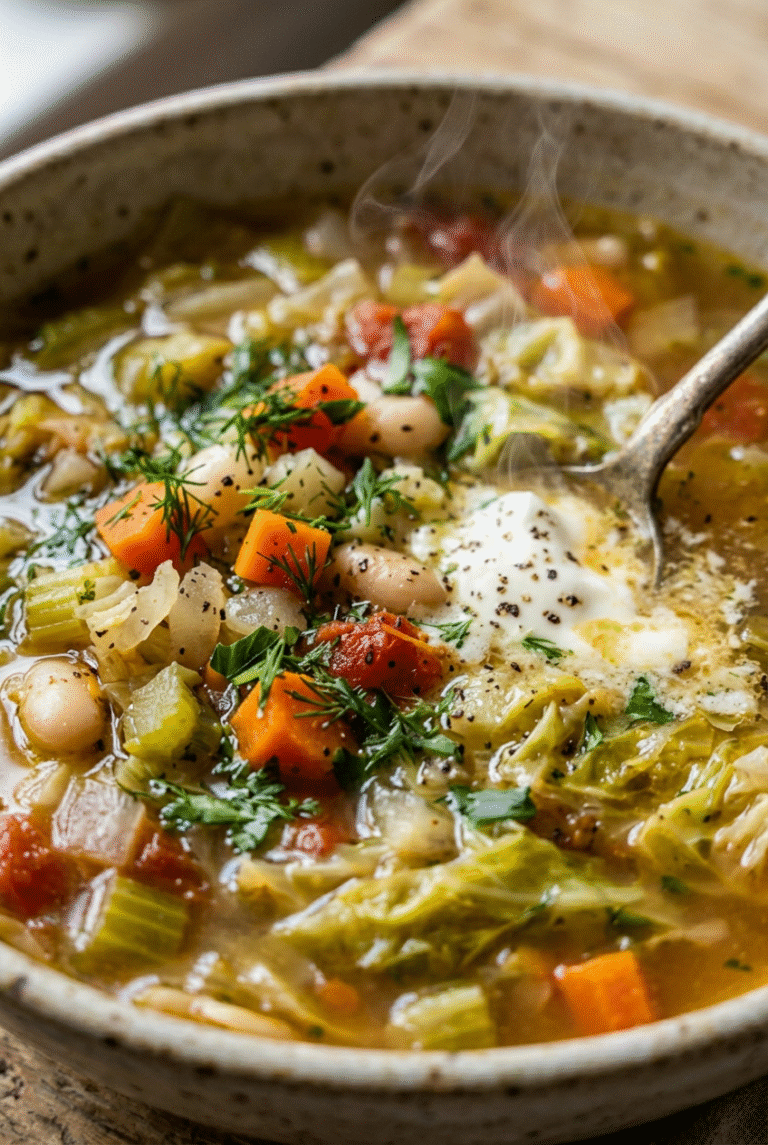
Cabbage Soup
🥬 Hearty, veggie-packed cabbage soup bursting with flavor and nutrients – low-cal comfort that fills you up!
🥣 Ready in just 30 minutes, naturally vegan and endlessly customizable for any dietary needs!
- Total Time: 30 minutes
- Yield: 4 servings
Ingredients
– 2 tablespoons oil
– 1 diced onion
– 1 large diced carrot
– 2 diced celery stalks
– 2 minced garlic cloves
– ½ teaspoon dried oregano
– ½ teaspoon dried basil
– ½ teaspoon salt
– half a chopped cabbage (about ½ head)
– 1 (14-ounce) can diced tomatoes
– 4 to 6 cups vegetable broth
– 1 to 2 tablespoons lemon juice
– ¼ cup roughly chopped fresh parsley
– cracked black pepper to taste
Instructions
1-First Step: Prepare your ingredients by chopping all vegetables before you begin cooking. Dice the onion, carrot, and celery into uniform pieces, mince the garlic cloves, and chop half a head of cabbage into bite-sized pieces. Having everything ready (mise en place) makes the cooking process smooth and stress-free. This preparation takes about 10-15 minutes but is crucial for even cooking and professional results.
2-Second Step: Heat 2 tablespoons of oil in a large pot or Dutch oven over medium-high heat. Once the oil shimmers, add the diced onion, carrot, and celery stalks. Cook these aromatic vegetables for 4 to 5 minutes, stirring occasionally, until they begin to soften and become fragrant. This step builds the flavor foundation of your soup by releasing the natural sugars in the vegetables.
3-Third Step: Add the minced garlic cloves and the dried spices (½ teaspoon each of dried oregano, basil, and salt) to the pot. Stir constantly for about 1 minute until the garlic becomes fragrant but not browned. This quick cooking time ensures the spices bloom and release their oils without burning, which can make them taste bitter.
4-Fourth Step: Add the chopped cabbage to the pot, stirring frequently to coat it with the oil and spices. Let the cabbage “sweat” for 5 minutes, which means cooking it until it begins to wilt and shrink in volume. This step removes excess moisture from the cabbage and concentrates its flavor before adding the liquid components. The cabbage should be slightly translucent and tender but still have some structure.
5-Fifth Step: Pour in 4 to 6 cups of vegetable broth, depending on your preferred soup consistency. For a thicker, stew-like soup, use 4 cups; for a brothier soup, use the full 6 cups. Add the entire 14-ounce can of diced tomatoes, including the juice, which adds body and acidity to balance the sweetness of the vegetables. Stir everything together to combine.
6-Sixth Step: Bring the soup to a gentle boil, then reduce the heat to medium-low and let it simmer uncovered for 10 minutes. This cooking time allows all the flavors to meld together and the vegetables to reach perfect tenderness. The cabbage should be soft but not mushy, and the broth should be flavorful and slightly thickened. Stir occasionally during cooking to prevent sticking and ensure even heating.
7-Final Step: Remove the pot from heat and stir in 1 to 2 tablespoons of fresh lemon juice, which adds a bright note that lifts all the flavors. Add the ¼ cup of chopped fresh parsley and cracked black pepper to taste. The parsley adds a fresh, herbaceous finish while the black pepper provides a gentle warmth. Taste the soup and adjust seasonings if needed, adding more salt or lemon juice to suit your preferences. Serve hot in bowls, perhaps with a slice of crusty bread for a complete meal.
Last Step:
Please leave a rating and comment letting us know how you liked this recipe! This helps our business to thrive and continue providing free, high-quality recipes for you.Notes
🧊 Stores 4-5 days in fridge or freezes up to 3 months – ideal for meal prep!
🌱 Add proteins like beans or meat, extra veggies, grains, or spices to customize.
⏱️ Use pre-shredded cabbage or coleslaw mix to cut prep time even more.
- Prep Time: 15 minutes
- Cook Time: 15 minutes
- Category: Soup
- Method: Stovetop
- Cuisine: American
- Diet: Vegan, Gluten-Free, Low-Calorie
Nutrition
- Serving Size: 1/4 of pot
- Calories: 145 kcal
- Sugar: 9g
- Sodium: 469mg
- Fat: 7g
- Saturated Fat: 1g
- Unsaturated Fat: 6g
- Trans Fat: 0g
- Carbohydrates: 19g
- Fiber: 6g
- Protein: 4g
- Cholesterol: 0mg