Ingredients
– Eggs
– half inch in pot water for steaming method
– small amount baking soda
– salt
Instructions
1-First Step: Choose Your Eggs Start by picking eggs that are close to their expiration date but still good to use, as older eggs peel more easily due to their higher pH. This simple choice sets you up for success and takes just a moment to check. If you only have fresh eggs, don’t worry we’ll adapt the method to handle that too.
2-Second Step: Prepare for Steaming For the steaming method, place half an inch of water in a pot and add a steamer basket with your eggs inside. Cover the pot, bring it to a boil, then reduce the heat and steam for 15 minutes. This gentle approach cooks the eggs evenly and is especially helpful for fresh eggs, keeping the shell from sticking too much. (For more ideas, check out our best egg recipes on the site.)
3-Third Step: Cool the Eggs Once cooking is done, transfer the eggs to an ice bath or cold water for 1-2 minutes to cool them down quickly. This step helps the egg white shrink away from the shell, making peeling a breeze later. Be sure to handle them carefully to avoid cracks before you’re ready.
4-Fourth Step: Alternative Boiling Method If you prefer boiling, place the eggs in cold water in a pot, bring it to a rolling boil, then remove from heat and let them sit for 15 minutes. After that, cool them in an ice bath just like with steaming. This method works well for most eggs and gives you flexibility based on what you have at home. Remember, a longer cooking time can help with peeling if needed.
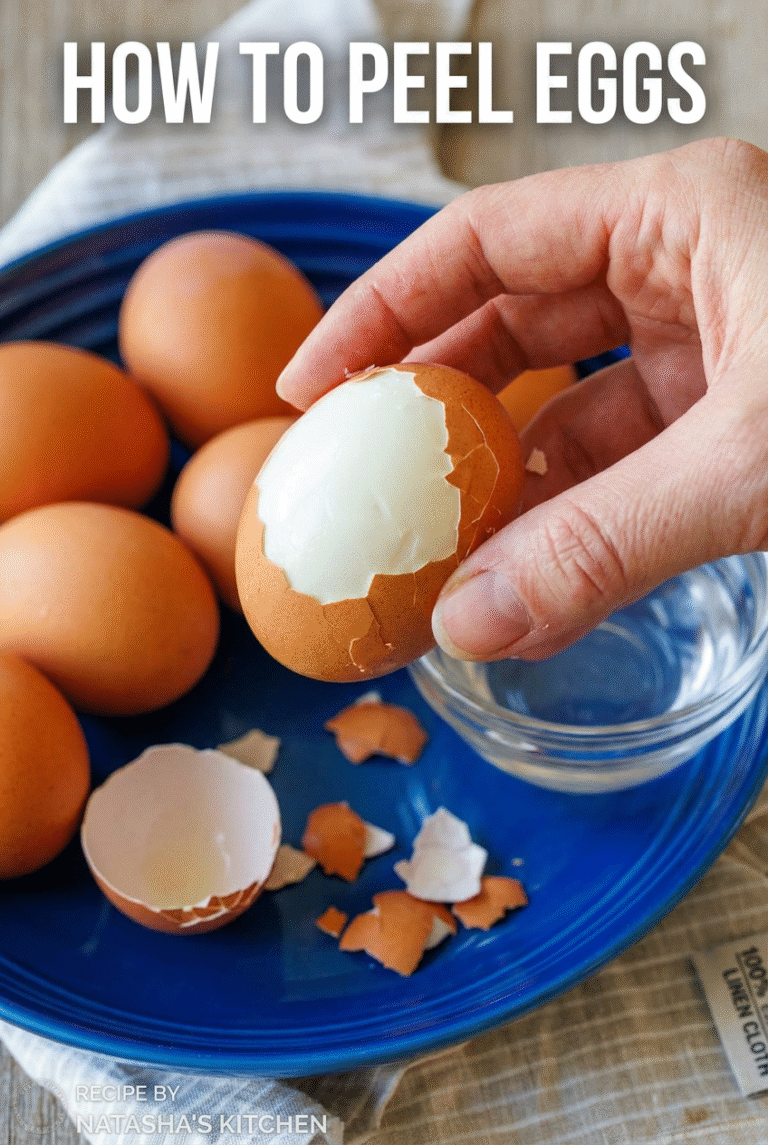
5-Fifth Step: Crack and Peel Now it’s time to crack the eggs by tapping or rolling them on a hard surface, starting at the rounded end where the air bubble is. Peel under running water to separate the membrane from the white, and use a spoon to gently scrape off any stubborn shell if necessary. This works best after steaming for fresh eggs, leaving you with smooth, intact eggs every time. For added insight, you might want to read this external guide on easy peeling tricks.
6-Final Step: Finishing Touches Once peeled, your eggs are ready to use in salads, snacks, or meals. The whole process takes about 15 minutes of cooking plus 1-2 minutes for cooling, totaling 20-25 minutes. Adapt this for dietary needs by choosing organic eggs if you’re watching your intake, and enjoy the results of your how to peel eggs adventure. (652 words)
Last Step:
Please leave a rating and comment letting us know how you liked this recipe! This helps our business to thrive and continue providing free, high-quality recipes for you.Notes
🕒 Use older eggs for the easiest peeling, as the air pocket expands over time and pH changes make the shell separate better.
💧 Always peel under running cold water to help the shell and membrane slide off smoothly without damaging the egg.
🌡️ Add a teaspoon of baking soda to the boiling water to raise the pH and facilitate easier peeling, especially for fresh eggs.
- Prep Time: 10 minutes
- Cooling Time: 10 minutes
- Cook Time: 15 minutes
- Category: Snack
- Method: Boil
- Cuisine: Universal
- Diet: Low Carb
Nutrition
- Serving Size: 1 egg
- Calories: 78 kcal
- Sugar: 1 g
- Sodium: 62 mg
- Fat: 5 g
- Saturated Fat: 1.6 g
- Unsaturated Fat: 3.4 g
- Trans Fat: 0 g
- Carbohydrates: 1 g
- Fiber: 0 g
- Protein: 6 g
- Cholesterol: 186 mg