
Why You’ll Love This Thai Peanut Dressing
This Thai peanut dressing recipe is a game-changer for anyone seeking a quick, flavorful addition to their meals. Its ease of preparation means you can whip it up in minutes with everyday ingredients, making it ideal for busy parents or students on the go. Packed with health benefits like healthy fats from peanut butter and antioxidants from fresh ginger, this dressing supports a balanced diet while adding a burst of taste.
One of the standout features is its versatility, allowing it to enhance salads, noodles, or even grilled dishes for various dietary needs such as vegan or gluten-free options. The distinctive flavor combines creamy peanuts with tangy lime and a hint of spice, creating a memorable experience that keeps you coming back for more. Whether you’re a food enthusiast exploring new flavors or a working professional looking for meal prep shortcuts, this dressing fits seamlessly into your routine. For more ideas on incorporating nut-based recipes, check out our guide on easy dinner ideas that pair perfectly with dressings like this one.
Beyond its taste, this dressing encourages creativity in the kitchen, letting you adapt it to your preferences without much effort. It’s especially great for diet-conscious individuals who want something nutritious yet indulgent. With all these benefits, it’s no wonder this recipe becomes a staple in households from newlyweds to seniors hosting simple gatherings. This balanced blend of tangy lime, sweet honey or syrup, spicy sriracha, and fresh ginger makes it a quick and easy addition to many dishes, as shared in the original recipe details.
Jump to:
- Why You’ll Love This Thai Peanut Dressing
- Essential Ingredients for Thai Peanut Dressing
- How to Prepare the Perfect Thai Peanut Dressing: Step-by-Step Guide
- Dietary Substitutions to Customize Your Thai Peanut Dressing
- Mastering Thai Peanut Dressing: Advanced Tips and Variations
- Flavor and Presentation Ideas
- How to Store Thai Peanut Dressing: Best Practices
- FAQs: Frequently Asked Questions About Thai Peanut Dressing
- What are the main ingredients to make authentic Thai peanut dressing?
- How do I prepare Thai peanut dressing at home?
- Can I make Thai peanut dressing spicier or milder?
- What are some good ways to use Thai peanut dressing in meals?
- Is Thai peanut dressing suitable for people with gluten intolerance?
- Thai Peanut Dressing
- Ingredients
- Instructions
- Last Step:
- Notes
- Nutrition
- Did you make this recipe?
Essential Ingredients for Thai Peanut Dressing
As a home cook, you’ll appreciate how straightforward this ingredient list is for making a delicious Thai peanut dressing. Start with fresh, high-quality items to get the best flavor. Below is a comprehensive structured list of all the ingredients needed, based on the exact recipe provided. Each one is listed with its precise measurement to ensure your dressing turns out perfectly every time.
- 1/2 cup creamy peanut butter – forms the rich, nutty base
- 2 tablespoons fresh lime juice – adds bright acidity to balance the richness
- 2 tablespoons low-sodium soy sauce or tamari (for a gluten-free option) – provides savory umami
- 1 tablespoon honey, maple syrup, or agave nectar – offers natural sweetness
- 1 teaspoon grated fresh ginger – brings a warm, spicy note
- 1 teaspoon sriracha (optional, adjust to spice preference) – introduces optional heat
- 1/4 teaspoon sesame oil (optional, omit for a plant-based version) – adds subtle depth
- 1 clove garlic, roughly chopped – enhances aroma and flavor
- 1 to 2 tablespoons water or coconut milk – used to adjust consistency
This list covers everything required for the recipe, making it simple to shop and prepare. For those with special dietary needs, options like using tamari for gluten-free or maple syrup for vegan versions are easy swaps. Remember, fresh ingredients like ginger and garlic make a big difference in the final taste, so choose them wisely to elevate your homemade dressing.
How to Prepare the Perfect Thai Peanut Dressing: Step-by-Step Guide
Getting started with this Thai peanut dressing is as simple as gathering your ingredients and following a few easy steps. First, collect all the items from the structured list above, making sure to prepare fresh ginger and garlic ahead of time for smooth mixing. This approach keeps things organized and helps busy cooks save time in the kitchen.
Next, in a medium bowl, whisk together the peanut butter, fresh lime juice, low-sodium soy sauce or tamari, and honey, maple syrup, or agave nectar until the mixture is smooth and well combined. Then, add the grated fresh ginger, sriracha if desired, sesame oil if using, and roughly chopped garlic, stirring everything thoroughly to blend the flavors. For added benefits, note that ginger can aid digestion, as highlighted in an article about the benefits of ginger.
Slowly incorporate 1 to 2 tablespoons of water or coconut milk while whisking to achieve your preferred consistency, whether thick for dipping or thinner for salads. Taste the dressing and adjust seasonings as needed like more lime for tang or sriracha for spice. Finally, serve it right away on salads, noodles, or stir-fries, or store it in the fridge for up to one week. The total preparation time is about 10 minutes, making it a fantastic option for quick meals, and it’s versatile for uses like vegetable dips or with roasted proteins.
| Step | Action | Tips |
|---|---|---|
| 1 | Gather ingredients | Use fresh items for best results |
| 2 | Whisk base ingredients | Start slow to avoid lumps |
| 3 | Add flavors and adjust | Taste as you go |
| 4 | Serve or store | Shake before using if stored |

Dietary Substitutions to Customize Your Thai Peanut Dressing
Making this Thai peanut dressing work for your lifestyle is straightforward with a few smart swaps. For instance, if you’re avoiding nuts, try sunflower seed butter instead of peanut butter to keep the creamy texture without allergens. These changes let baking enthusiasts and party hosts adapt the recipe for different crowds, ensuring everyone enjoys the flavors.
Another option is to use almond or cashew butter for a milder taste, which pairs well with various proteins. For added creaminess without extra calories, blend in silken tofu or a plant-based yogurt. Remember, fresh herbs like cilantro can enhance the mix, as suggested in the tips from the recipe.
- Substitute peanut butter with almond or cashew butter for a nutty twist
- Use sunflower seed butter for a nut-free version
- Swap soy sauce with tamari for gluten-free needs
- Add chili flakes if you want more spice
- Incorporate herbs like cilantro for extra freshness
These modifications make the dressing suitable for travelers or seniors with specific preferences, keeping it tasty and inclusive.
Mastering Thai Peanut Dressing: Advanced Tips and Variations
Once you’re comfortable with the basics, try some advanced techniques to take your Thai peanut dressing to the next level. For a silkier texture, warm the peanut butter slightly before mixing, or use a blender for an ultra-smooth result that impresses food enthusiasts. Adjusting the water amount helps control the thickness, making it perfect for different uses like marinades or dips.
Flavor and Presentation Ideas
Experiment with additions like coconut milk for extra creaminess or fish sauce for more umami, as these can transform the dressing for various meals. For visual appeal, garnish with chopped peanuts or fresh cilantro to add texture and color. If you’re into slow-cooked dishes, consider linking this dressing to recipes like slow cooker recipes for complementary flavors.
Make-ahead options include preparing the dressing days in advance and storing it properly. Stir before using to recombine any separated ingredients, ensuring it’s ready for your next gathering. These tips make the dressing a versatile staple for working professionals and entertainment enthusiasts alike.
How to Store Thai Peanut Dressing: Best Practices
Proper storage keeps your Thai peanut dressing fresh and flavorful for longer. Keep it in a sealed container in the fridge for up to one week, which is great for meal prep among busy families. Always stir it well before using, as separation can happen naturally over time.
If you want to freeze it, use airtight containers, though the texture might change a bit when thawed. For reheating, bring it to room temperature or warm gently while whisking. This method works well for portioning out meals, helping diet-conscious individuals stay on track with their routines.
FAQs: Frequently Asked Questions About Thai Peanut Dressing
What are the main ingredients to make authentic Thai peanut dressing?
Authentic Thai peanut dressing typically includes creamy peanut butter, fresh lime juice, rice vinegar, low-sodium soy sauce or tamari for gluten-free options, honey or a natural sweetener like maple syrup, ground ginger, ground coriander, cayenne pepper for heat, minced garlic, and water or coconut milk to adjust the consistency. These ingredients combine to create a balanced, flavorful dressing with a mix of sweet, tangy, salty, and spicy notes.
How do I prepare Thai peanut dressing at home?
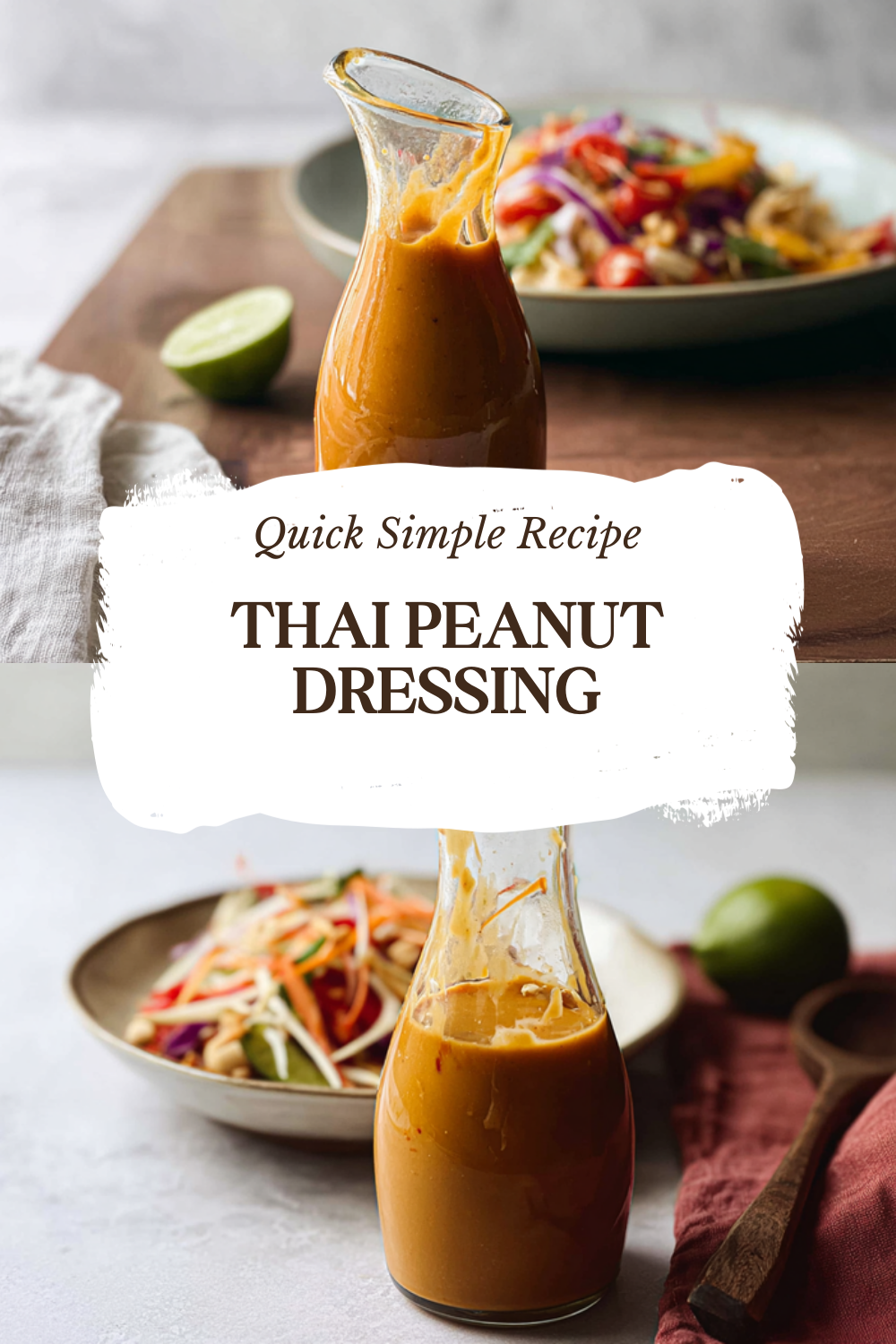
To prepare Thai peanut dressing, whisk all the ingredients together in a bowl until smooth. If you prefer, place them in a sealed jar and shake well. Add water or coconut milk gradually to reach your desired thickness. The dressing can be served immediately or stored in the refrigerator for up to one week. Stir or shake well before each use.
Can I make Thai peanut dressing spicier or milder?
Yes, you can easily adjust the spice level of Thai peanut dressing. Adding more sriracha or cayenne pepper will increase the heat, while reducing or omitting these ingredients will create a milder flavor. For added freshness, you can mix in chopped cilantro or basil, which also complements the dressing’s flavor profile.
What are some good ways to use Thai peanut dressing in meals?
Thai peanut dressing is versatile and works well as a salad dressing for leafy greens or crunchy slaws. It’s also excellent tossed with cold noodle salads, drizzled over stir-fried vegetables or grilled meats, and served as a dipping sauce for fresh spring rolls or raw vegetables. Its creamy texture and robust flavor enhance many types of dishes.
Is Thai peanut dressing suitable for people with gluten intolerance?
Thai peanut dressing can be made gluten-free by substituting regular soy sauce with tamari, which is a gluten-free alternative. Always check the labels of other ingredients like vinegar or sweeteners to ensure they do not contain gluten. This makes the dressing a safe and tasty option for individuals with gluten sensitivity or celiac disease.
Thai Peanut Dressing
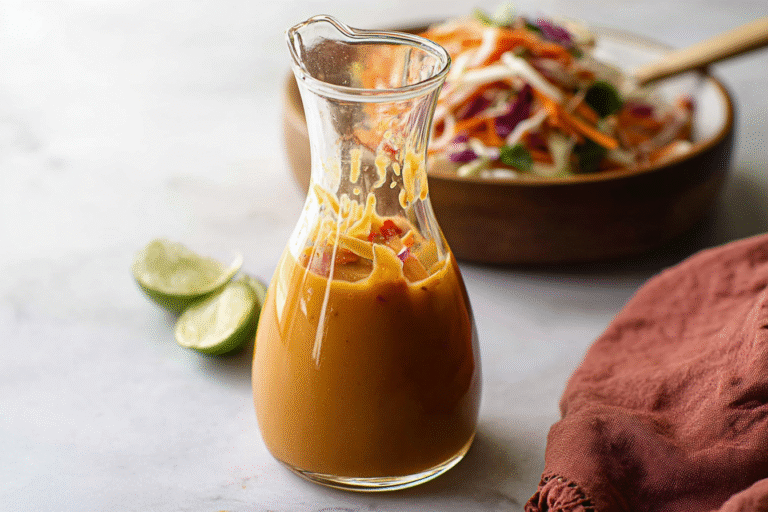
🥜 Thai Peanut Dressing offers a rich, creamy texture combined with tangy lime and sweet honey for a perfect flavor balance.
🌿 This versatile dressing enhances salads, noodles, and roasted vegetables, adding a deliciously fresh and spicy kick.
- Total Time: 10 minutes
- Yield: About 3/4 cup
Ingredients
– 1/2 cup creamy peanut butter forms the rich, nutty base
– 2 tablespoons fresh lime juice adds bright acidity to balance the richness
– 2 tablespoons low-sodium soy sauce or tamari for a gluten-free option provides savory umami
– 1 tablespoon honey, maple syrup, or agave nectar offers natural sweetness
– 1 teaspoon grated fresh ginger brings a warm, spicy note
– 1 teaspoon sriracha optional, adjust to spice preference introduces optional heat
– 1/4 teaspoon sesame oil optional, omit for a plant-based version adds subtle depth
– 1 clove garlic, roughly chopped enhances aroma and flavor
– 1 to 2 tablespoons water or coconut milk used to adjust consistency
Instructions
1-Gather ingredients: Use fresh items for best results
2-Whisk base ingredients: Start slow to avoid lumps
3-Add flavors and adjust: Taste as you go
4-Serve or store: Shake before using if stored
Last Step:
Please leave a rating and comment letting us know how you liked this recipe! This helps our business to thrive and continue providing free, high-quality recipes for you.Notes
🌶️ Adjust sriracha quantity to control the heat level to your liking.
🌿 Add 1/4 cup chopped fresh cilantro for a herbier flavor profile.
🍜 This dressing is versatile and delicious on salads, pasta salads, warm noodles, stir-fries, as a dip for vegetables, or with roasted vegetables and proteins.
- Prep Time: 10 minutes
- Category: Dressing, Sauce
- Method: Whisking
- Cuisine: Thai
Nutrition
- Serving Size: 2 tablespoons
- Calories: 120 kcal
- Sugar: 5 g
- Sodium: 250 mg
- Fat: 10 g
- Saturated Fat: 1.5 g
- Unsaturated Fat: 7 g
- Trans Fat: 0 g
- Carbohydrates: 8 g
- Fiber: 2 g
- Protein: 4 g
- Cholesterol: 0 mg