

Why You’ll Love This Thai Red Curry
If you are looking for a dinner option that packs a punch of flavor without keeping you in the kitchen all night, this Thai Red Curry is about to become your new go-to weeknight meal. It is the perfect balance of creamy, spicy, and savory, bringing the taste of a Thai restaurant right into your home. Whether you are cooking for yourself, feeding a hungry family, or meal prepping for the week, this dish ticks every box for convenience and taste.
Ease of preparation
One of the biggest hurdles to cooking international cuisine at home is the fear of complicated techniques or hard-to-find procedures. However, this recipe is incredibly forgiving and straightforward. With a prep time of only 5 minutes and a cook time of just 20 minutes, you can have a steaming hot, aromatic meal on the table in under half an hour. The process is simple: sauté the paste, simmer the liquids, add your protein and veggies, and finish with herbs. It does not require any specialized equipment beyond a large skillet or wok. This makes it accessible for everyone from university students looking for a quick meal to busy parents who need to get dinner on the table fast.
Health benefits
Beyond its incredible taste, this Thai Red Curry is packed with nutritional value. The dish relies heavily on fresh vegetables like pumpkin and green beans, which are excellent sources of vitamins, fiber, and antioxidants. The base of coconut milk provides healthy fats that can help keep you satiated, while the spices used in the curry paste, such as turmeric and ginger, are known for their anti-inflammatory properties of spices like turmeric and ginger. Chicken thighs offer high-quality protein to support muscle repair and energy levels. By controlling the amount of salt and sugar, you can create a wholesome meal that nourishes the body without sacrificing flavor.
Versatility
This recipe is wonderfully adaptable to suit whatever you have in your fridge or your specific dietary requirements. It is naturally gluten-free, making it safe for those with gluten sensitivities. If you are dairy-free, you are in luck because Thai curry traditionally uses coconut milk instead of dairy cream. You can easily swap the chicken for tofu, shrimp, or beef, and change the vegetables based on the season. Whether you are strictly vegan, watching your carbs, or just feeding picky eaters, you can tweak this dish to fit your needs effortlessly.
Distinctive flavor
The flavor profile of this curry is what truly sets it apart. It is a complex harmony of spicy, sweet, salty, and creamy elements. The red curry paste provides a deep, earthy heat that is tempered by the sweetness of the coconut milk and pumpkin. The fish sauce adds that essential savory depth known as umami, while the kaffir lime leaves and Thai basil impart a fresh, citrusy, and anise-like aroma that perfume the entire dish. Unlike a generic curry powder mix, this dish uses whole ingredients that layer upon each other to create a multi-dimensional taste experience.
Jump to:
- Why You’ll Love This Thai Red Curry
- Ease of preparation
- Health benefits
- Versatility
- Distinctive flavor
- Essential Ingredients for Thai Red Curry
- Special Dietary Options
- How to Prepare the Perfect Thai Red Curry: Step-by-Step Guide
- First Step: Bloom the Aromatics
- Second Step: Deglaze and Reduce
- Third Step: Build the Sauce Base
- Fourth Step: Add Vegetables
- Fifth Step: Finishing Touches
- Dietary Substitutions to Customize Your Thai Red Curry
- Protein and Main Component Alternatives
- Vegetable, Sauce, and Seasoning Modifications
- Mastering Thai Red Curry: Advanced Tips and Variations
- Pro cooking techniques
- Flavor variations
- Presentation tips
- Make-ahead options
- How to Store Thai Red Curry: Best Practices
- Refrigeration
- Freezing
- Reheating
- Meal prep considerations
- FAQs: Frequently Asked Questions About Thai Red Curry
- What is Thai red curry?
- Is Thai red curry spicy?
- What is the best Thai red curry paste brand?
- What vegetables can I add to Thai red curry?
- Why does Thai red curry sauce look split or oily?
- Thai Red Curry
- Ingredients
- Instructions
- Last Step:
- Notes
- Nutrition
- Did you make this recipe?
Essential Ingredients for Thai Red Curry
To create an authentic and delicious curry, gathering the right components is key. Below is the comprehensive list of everything you need to make this dish a success. I have included precise measurements to ensure your results are perfect every time.
- 5 to 6 tablespoons Thai red curry paste (store bought)
- Extras for jar curry paste only: 2 large garlic cloves (minced), 2 teaspoons fresh ginger (finely grated), 1 tablespoon lemongrass paste or finely chopped fresh lemongrass
- 3 tablespoons vegetable oil (or canola or peanut oil)
- 1 cup (250 ml) low sodium chicken broth or stock
- 400 ml (14 oz) full-fat coconut milk
- 6 kaffir lime leaves
- 1 tablespoon sugar (white, brown or palm sugar)
- 2 teaspoons fish sauce plus more to taste
- 350 grams (12 oz) boneless, skinless chicken thighs, cut into 0.75 inch (1/3 inch) thick slices
- 150 grams (5 oz) pumpkin or butternut squash, cut into 1.5 cm (3/5 inch) cubes (about 1 heaped cup)
- 120 grams (4 oz) green beans, trimmed and cut into 5 cm (2 inch) pieces
- 12 Thai basil leaves
Optional garnishes and serving:
- Fresh red chili slices (small chili is spicier, large chili less spicy)
- Fresh coriander/cilantro leaves
- Serve with steamed rice or alternatives like sticky rice or coconut rice
Special Dietary Options
If you are looking to adapt this recipe for specific diets, here are a few quick swaps:
- Vegan: Substitute the chicken with firm tofu or extra veggies, and replace the fish sauce with a vegan fish sauce or soy sauce.
- Gluten-free: Ensure your curry paste and stock are certified gluten-free, as some brands add soy sauce or wheat-derived thickeners.
- Low-calorie: Use light coconut milk, though the sauce will be less rich, and increase the ratio of vegetables to chicken.
How to Prepare the Perfect Thai Red Curry: Step-by-Step Guide
Cooking Thai food at home does not have to be intimidating. By following these steps, you will unlock the secrets of creating a restaurant-quality curry that rivals your favorite takeout spot. The most important thing to remember is to taste as you go, adjusting the seasoning to suit your personal preference.
First Step: Bloom the Aromatics
Start by heating 3 tablespoons of vegetable oil in a large heavy-based skillet over medium-high heat. Once the oil is shimmering, add 5 to 6 tablespoons of Thai red curry paste. If you are using a jarred paste, this is the perfect time to add your extras: 2 large minced garlic cloves, 2 teaspoons of finely grated fresh ginger, and 1 tablespoon of lemongrass paste. Sauté this mixture for about 2 minutes. You want to cook the paste until it looks slightly dry and oil begins to separate around the edges. This process, known as “blooming,” is crucial because it releases the essential oils in the spices and herbs, maximizing the flavor potential of your curry. Your kitchen will start to smell amazing at this stage!
Second Step: Deglaze and Reduce
Pour in 1 cup of low sodium chicken broth or stock. Use your spoon or spatula to scrape up any browned bits stuck to the bottom of the pan. Stir vigorously to dissolve the paste into the liquid. Let this mixture simmer rapidly for about 3 minutes. You want the liquid to reduce by roughly half. Concentrating the broth at this stage ensures that the base of your curry is flavorful and not watered down once you add the coconut milk later.
Third Step: Build the Sauce Base
Lower the heat slightly and add the 400 ml of full-fat coconut milk, 6 kaffir lime leaves, 1 tablespoon of sugar, and 2 teaspoons of fish sauce. Stir everything together to combine. Now, gently add the sliced chicken thighs, spreading them out so they are mostly submerged in a single layer. Simmer this over medium heat for 8 to 10 minutes. During this time, the sauce will reduce further, thickening up nicely, and the chicken will cook through. Using chicken thighs is recommended here because they remain juicy and tender even after simmering, unlike chicken breasts which can dry out.
Fourth Step: Add Vegetables
Once the chicken is cooked and the sauce has started to thicken, it is time to add the vegetables. Add the 150 grams of pumpkin or butternut squash cubes and the 120 grams of trimmed green beans. Stir gently to coat them in the sauce. Cook for another 3 minutes. You want the pumpkin to be tender but not mushy, and the green beans to be bright green and slightly crunchy. The starch from the pumpkin will also help thicken the sauce slightly, giving it that desirable, gravy-like consistency that is perfect for pouring over rice.
Fifth Step: Finishing Touches
Taste your curry! This is the most important step. If it needs more salt, add a splash more fish sauce. If it is too salty, a squeeze of lime juice (if you have it) or a bit more sugar can balance it out. If you like it sweeter, add more sugar. Once you are happy with the balance, remove the skillet from the heat. Stir in the 12 Thai basil leaves. The residual heat from the curry will wilt the basil perfectly, releasing its distinct aniseed aroma. Serve immediately, garnished with fresh red chili slices and coriander leaves if desired.

Dietary Substitutions to Customize Your Thai Red Curry
One of the best things about this recipe is how easily it morphs to fit different ingredients and dietary needs. Whether you are out of a specific item or have a strict allergy, you can still enjoy a delicious bowl of Thai Red Curry.
Protein and Main Component Alternatives
While chicken thighs are the traditional choice for this dish due to their rich flavor and juicy texture, you can easily swap them out. For a lighter option, chicken breast or tenderloins work, just be careful not to overcook them. Seafood lovers can use shrimp or chunks of white fish like cod or halibut; just add them during the last few minutes of cooking so they do not become rubbery. For a vegetarian or vegan version, firm tofu or tempeh are excellent additions that soak up the curry sauce beautifully. You could even use lentils for a hearty, fiber-rich stew.
Vegetable, Sauce, and Seasoning Modifications
Feel free to play around with the vegetables based on what is in season or what you have in your crisper drawer. Sweet potato makes a fantastic swap for pumpkin, offering a similar sweetness and texture. Bell peppers, carrots, bamboo shoots, and baby corn are also classic additions that add crunch and color. If you are watching your fat intake, you can use light coconut milk, though the benefits of coconut milk in cooking include providing that signature rich texture that makes curry so satisfying. For seasoning, if you cannot find fish sauce, soy sauce can work in a pinch, though the flavor profile will shift slightly.
Mastering Thai Red Curry: Advanced Tips and Variations
Once you have made this recipe a few times, you might want to elevate your game or try something a little different. These tips will help you get the most out of your ingredients and maybe even impress your dinner guests.
Pro cooking techniques
To really improve the flavor of store-bought jar curry paste, always sauté it with garlic, ginger, and lemongrass first. This freshens the taste and masks the preserved flavor of the jar. Another pro tip is to be patient when reducing the liquids. Don’t rush the simmering stages; allowing the sauce to reduce concentrates the flavors and creates that velvety texture.
Flavor variations
If you like things spicy, do not be afraid to add chopped fresh chilies along with the curry paste. You can also add a teaspoon of curry powder for an extra layer of warmth. For a sweeter profile, use palm sugar instead of white sugar, as it adds a deep, caramel-like note.
Presentation tips
Serving your curry with style makes the meal feel special. Serve it in a large bowl surrounded by steaming jasmine rice. Garnish generously with fresh herbs like cilantro and Thai basil, and perhaps some crispy fried shallots on top for a nice crunch.
Make-ahead options
This curry actually tastes better the next day as the flavors have more time to meld. You can prepare the entire dish ahead of time and store it in the refrigerator. Just reheat it gently on the stove, adding a splash of water or broth if the sauce has thickened too much.
How to Store Thai Red Curry: Best Practices
If you have leftovers (which is rare because it is so good!), storing them properly will ensure your curry remains safe and delicious to eat later.
Refrigeration
Allow the curry to cool to room temperature before transferring it to an airtight container. It can be stored in the refrigerator for up to 3 to 4 days. The sauce may thicken considerably in the fridge, but this is normal due to the coconut milk solidifying.
Freezing
Thai Red Curry freezes very well. Portion it into freezer-safe bags or containers. It can be frozen for up to 2 to 3 months. Thaw it overnight in the refrigerator before reheating.
Reheating
The best way to reheat curry is on the stove over low to medium heat. Add a splash of water or broth to loosen the sauce. Stir occasionally until heated through. Avoid microwaving if possible, as it can cause the oil to separate unevenly, though it is safe to do so.
Meal prep considerations
This recipe is ideal for meal prep. You can batch cook it on Sunday and portion it out for lunches throughout the week. Keep the rice separate from the curry so it does not get mushy.
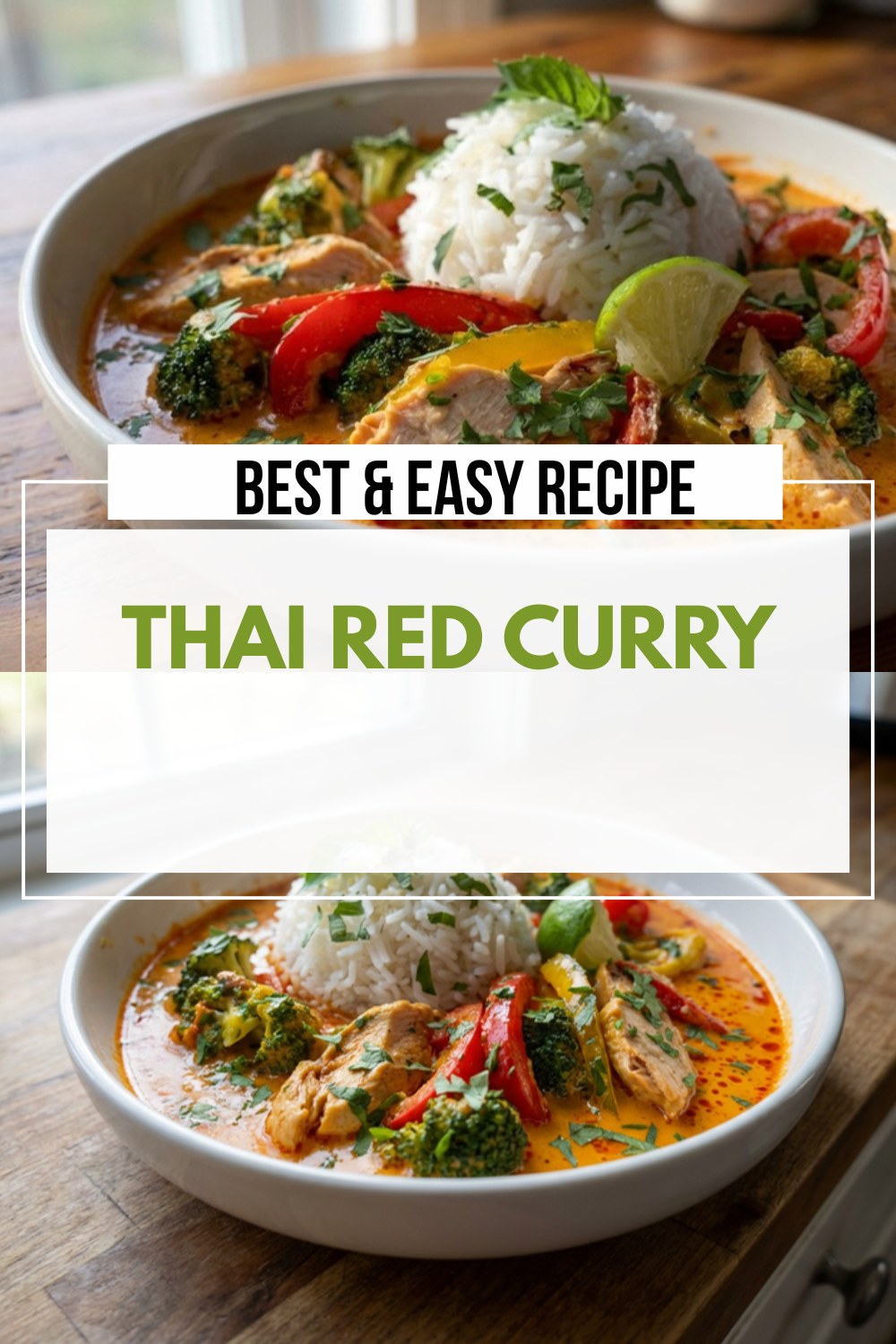
FAQs: Frequently Asked Questions About Thai Red Curry
What is Thai red curry?
Thai red curry, known as “Gaeng Phed” in Thai, is a popular dish made with red curry paste, coconut milk, meat or tofu, and vegetables simmered into a creamy sauce. The paste gets its vibrant red color from dried red chilies, garlic, galangal, lemongrass, and shrimp paste. Key flavors include sweet coconut, savory fish sauce, and aromatic herbs like kaffir lime leaves and Thai basil. It’s served over jasmine rice. Traditional versions use chicken, beef, or seafood, but vegetarian options work well with eggplant and bamboo shoots. Prep time is about 10 minutes, cook time 20-25 minutes for 4 servings. Start by frying the paste in oil, add protein, then coconut milk and veggies for layered taste. (92 words)
Is Thai red curry spicy?
Thai red curry is typically mild to medium spicy, not overwhelmingly hot despite the red color from chilies. Restaurant versions are often adjusted to mild for broader appeal, but homemade spice depends on the curry paste amount and chili quantity. Maesri or Mae Ploy pastes rate 3-5/10 on heat scales. To control heat, use 1-2 tablespoons paste per 14-oz can coconut milk, taste, and add fresh chilies or chili flakes later. For less spice, remove chili seeds from paste or dilute with more coconut milk. Pair with rice to mellow intensity. Most people find it balanced with sweet and savory notes dominating. (98 words)
What is the best Thai red curry paste brand?
Maesri Thai red curry paste stands out for its authentic balance of spicy, salty, and herbal flavors without excess sweetness found in some jarred brands like Thai Kitchen. It’s made with real dried chilies, galangal, lemongrass, and shrimp paste, sold in small cans for freshness (4-oz, about $1.50 each). Find it at Asian markets, large grocers like Whole Foods, or online via Amazon. For best results, fry 2-3 tbsp in coconut oil with garlic and ginger before adding coconut milk. It yields enough for 4-6 servings and stores refrigerated up to 6 months after opening. Avoid pre-sweetened pastes for true taste. (102 words)
What vegetables can I add to Thai red curry?
Add vegetables that hold shape and absorb sauce like green beans, bamboo shoots, bell peppers, pumpkin, or butternut squash for sweetness and texture. Traditional picks include Thai eggplant (small round purple ones) and snake beans. Use 2-3 cups total for 4 servings: simmer firm veggies like carrots first (5 minutes), then softer ones like zucchini last (3 minutes) to avoid mushiness. Frozen mixed veggies work in a pinch but thaw first. For color and crunch, include red peppers and snow peas at the end. Always taste and season with fish sauce or soy sauce after adding. This keeps the curry vibrant and balanced. (104 words)
Why does Thai red curry sauce look split or oily?
Authentic Thai red curry sauce often looks split with oil separating on top—this is normal and desirable, coming from coconut milk fats and curry paste oils releasing during cooking. It adds richness without creamers. To achieve pourable, gravy-like consistency (not watery or pasty), use full-fat coconut milk (shake cans well), simmer gently 10-15 minutes, and stir occasionally. If too thick, add ¼ cup water or broth; if split excessively, blend briefly with immersion blender. Avoid boiling hard. Serve as-is for restaurant-style look, garnished with basil and lime. Leftovers may separate more but reheat smoothly on stove with stirring. (99 words)
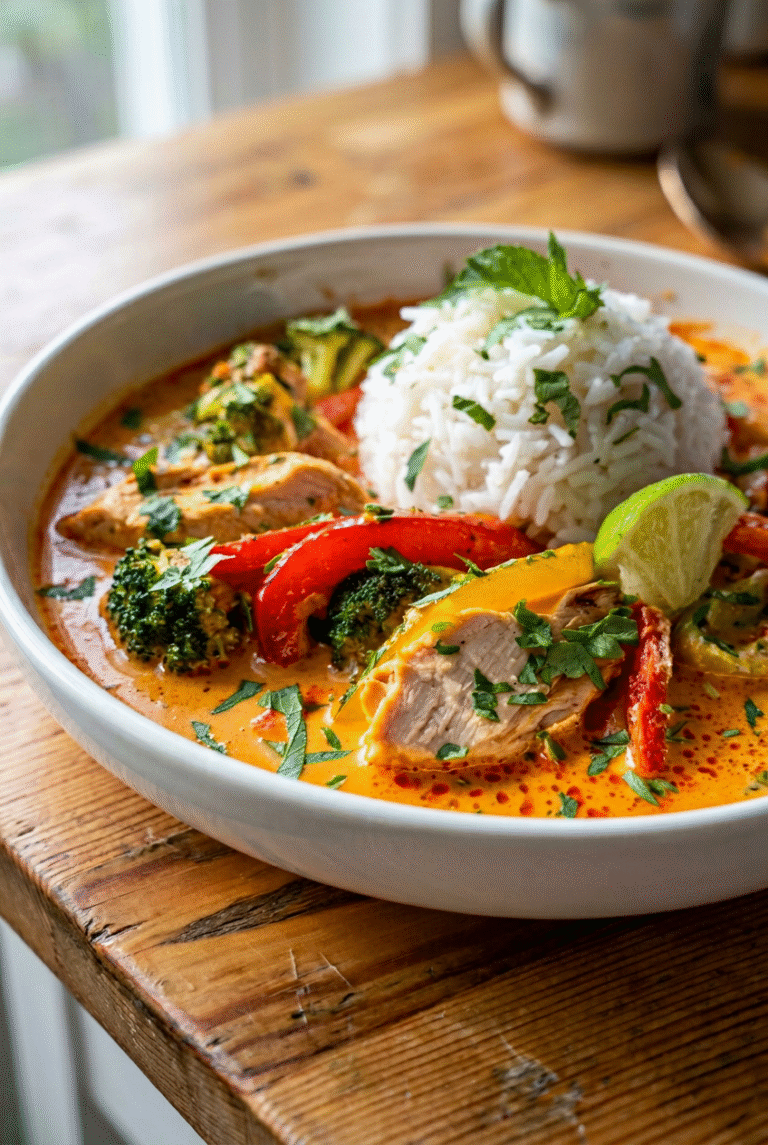
Thai Red Curry
🌶️ Indulge in the aromatic, creamy Thai red curry chicken bursting with bold spices, tender meat, and fresh veggies for an authentic, restaurant-quality meal at home!
🍗 Quick to make with juicy chicken thighs and nutrient-rich coconut milk, this mildly spicy dish is perfect for cozy dinners and easy flavor-packed weeknights.
- Total Time: 25 minutes
- Yield: 4 servings
Ingredients
– 5 to 6 tablespoons Thai red curry paste
– 2 large garlic cloves (minced) for jar curry paste only
– 2 teaspoons fresh ginger (finely grated) for jar curry paste only
– 1 tablespoon lemongrass paste or finely chopped fresh lemongrass for jar curry paste only
– 3 tablespoons vegetable oil
– 1 cup (250 ml) low sodium chicken broth or stock
– 400 ml (14 oz) full-fat coconut milk
– 6 kaffir lime leaves
– 1 tablespoon sugar
– 2 teaspoons fish sauce plus more to taste
– 350 grams (12 oz) boneless, skinless chicken thighs
– 150 grams (5 oz) pumpkin or butternut squash
– 120 grams (4 oz) green beans
– 12 Thai basil leaves
– fresh red chili slices
– fresh coriander/cilantro leaves
Instructions
1-First Step: Bloom the Aromatics Start by heating 3 tablespoons of vegetable oil in a large heavy-based skillet over medium-high heat. Once the oil is shimmering, add 5 to 6 tablespoons of Thai red curry paste. If you are using a jarred paste, this is the perfect time to add your extras: 2 large minced garlic cloves, 2 teaspoons of finely grated fresh ginger, and 1 tablespoon of lemongrass paste. Sauté this mixture for about 2 minutes. You want to cook the paste until it looks slightly dry and oil begins to separate around the edges. This process, known as “blooming,” is crucial because it releases the essential oils in the spices and herbs, maximizing the flavor potential of your curry. Your kitchen will start to smell amazing at this stage!
2-Second Step: Deglaze and Reduce Pour in 1 cup of low sodium chicken broth or stock. Use your spoon or spatula to scrape up any browned bits stuck to the bottom of the pan. Stir vigorously to dissolve the paste into the liquid. Let this mixture simmer rapidly for about 3 minutes. You want the liquid to reduce by roughly half. Concentrating the broth at this stage ensures that the base of your curry is flavorful and not watered down once you add the coconut milk later.
3-Third Step: Build the Sauce Base Lower the heat slightly and add the 400 ml of full-fat coconut milk, 6 kaffir lime leaves, 1 tablespoon of sugar, and 2 teaspoons of fish sauce. Stir everything together to combine. Now, gently add the sliced chicken thighs, spreading them out so they are mostly submerged in a single layer. Simmer this over medium heat for 8 to 10 minutes. During this time, the sauce will reduce further, thickening up nicely, and the chicken will cook through. Using chicken thighs is recommended here because they remain juicy and tender even after simmering, unlike chicken breasts which can dry out.
4-Fourth Step: Add Vegetables Once the chicken is cooked and the sauce has started to thicken, it is time to add the vegetables. Add the 150 grams of pumpkin or butternut squash cubes and the 120 grams of trimmed green beans. Stir gently to coat them in the sauce. Cook for another 3 minutes. You want the pumpkin to be tender but not mushy, and the green beans to be bright green and slightly crunchy. The starch from the pumpkin will also help thicken the sauce slightly, giving it that desirable, gravy-like consistency that is perfect for pouring over rice.
5-Fifth Step: Finishing Touches Taste your curry! This is the most important step. If it needs more salt, add a splash more fish sauce. If it is too salty, a squeeze of lime juice (if you have it) or a bit more sugar can balance it out. If you like it sweeter, add more sugar. Once you are happy with the balance, remove the skillet from the heat. Stir in the 12 Thai basil leaves. The residual heat from the curry will wilt the basil perfectly, releasing its distinct aniseed aroma. Serve immediately, garnished with fresh red chili slices and coriander leaves if desired.
Last Step:
Please leave a rating and comment letting us know how you liked this recipe! This helps our business to thrive and continue providing free, high-quality recipes for you.Notes
🧄 Sauté store-bought curry paste with garlic, ginger, and lemongrass to freshen and enhance its flavor.
🥥 The sauce may separate slightly due to natural oil content; this is normal and adds richness.
🔥 Adjust spiciness by using less curry paste or choosing a milder brand to suit your taste.
- Prep Time: 5 minutes
- Cook Time: 20 minutes
- Category: Main Dish
- Method: Simmering
- Cuisine: Thai
- Diet: Gluten-Free, Dairy-Free
Nutrition
- Serving Size: 1 cup
- Calories: 530 kcal
- Sugar: 12g
- Sodium: 1200mg
- Fat: 42g
- Saturated Fat: 28g
- Unsaturated Fat: 12g
- Trans Fat: 0g
- Carbohydrates: 22g
- Fiber: 3g
- Protein: 25g
- Cholesterol: 80mg